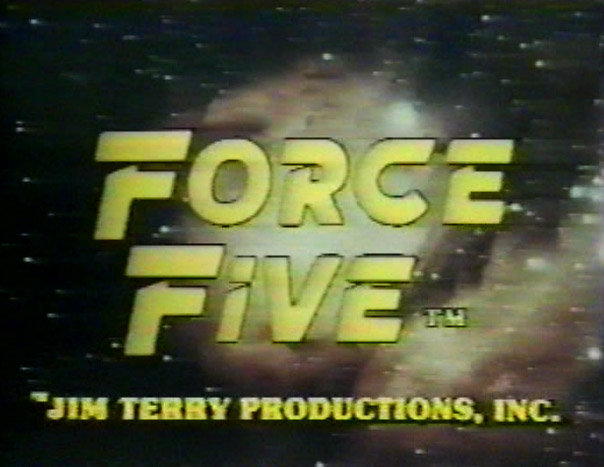
Force Five! Not a wind strength measured with the Beaufort scale. Not the 1981 Robert Clouse action movie starring Hapkido master Bong Soo Han. Instead, five different Japanese animation science-fiction sockeroos entertaining us in the early 80's! If you were watching syndicated TV in those days, you might have caught any one of the five on your local UHF station, localized and packaged by Jim Terry's production company and released en masse to independent stations across North America.

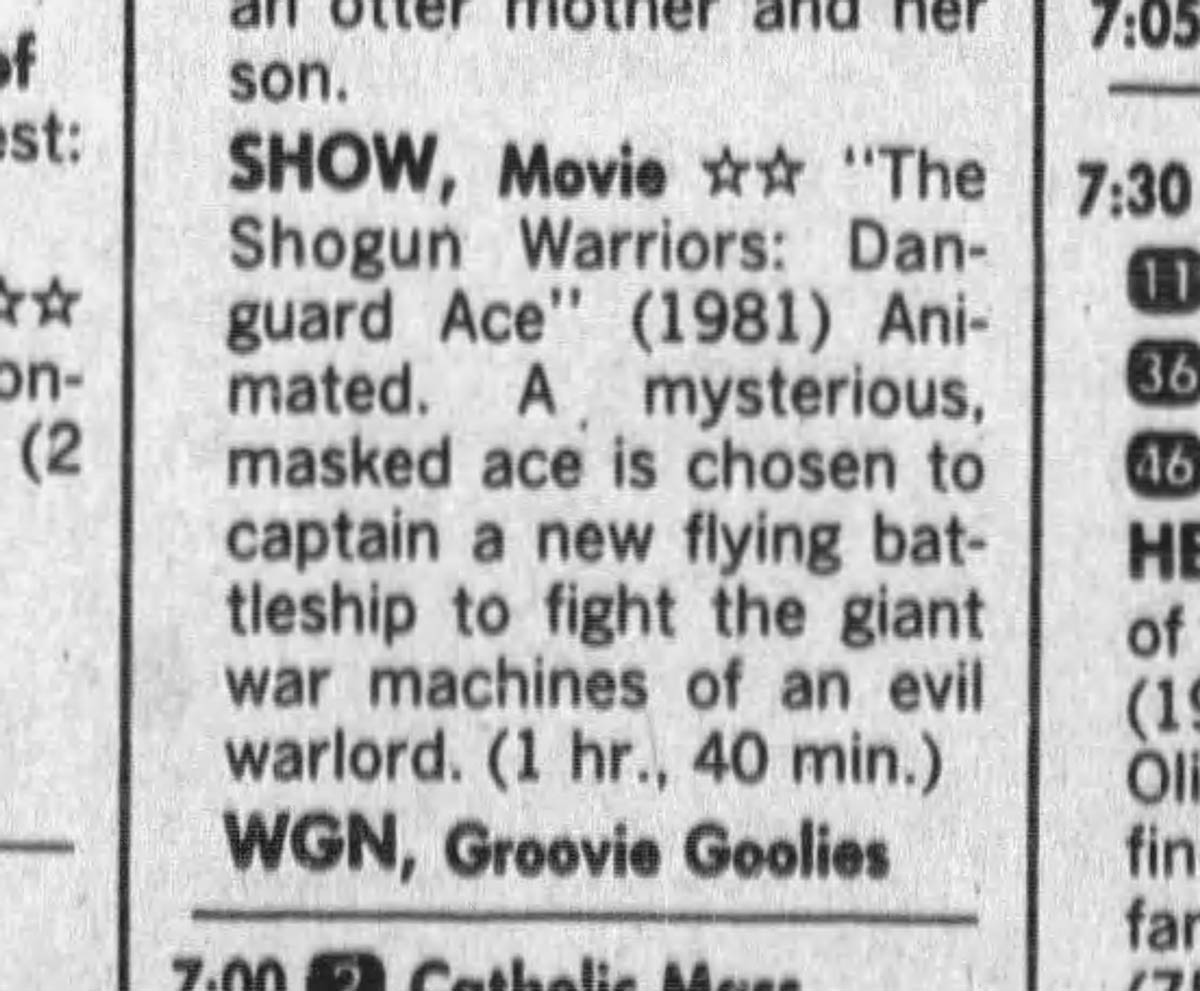
Many times this show is identified as "Shogun Warriors", which is, let’s say, in the right ballpark, but the wrong seating section. Shogun Warriors is a Mattel toy line that repackaged Japanese toys for sale in the American market. This is how us 70's kids got die-cast Mazingers, Raideens, and Daimoses in our Lionel Playworlds and our Toys R Usses along with marketing tie-ins that included a Marvel comic. But there isn't a TV cartoon with the "Shogun Warriors" title, and the question is, why not? Why didn't some exec package the Mattel toys along with the Jim Terry cartoons? This isn't rocket-punch science here. Then again, this is the 70's we're talking about, who knows what kinds of handshake deals were going down in the hospitality suites at the big TV distribution conferences? Jim Terry knows, and he ain’t tellin’ why Force Five compilation films were indeed listed as "Shogun Warriors" in the TV Guides.

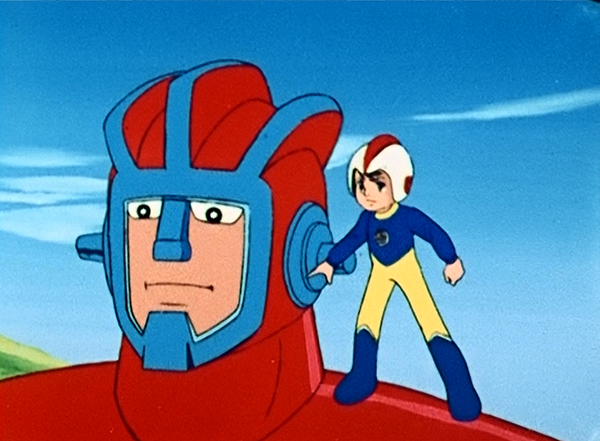
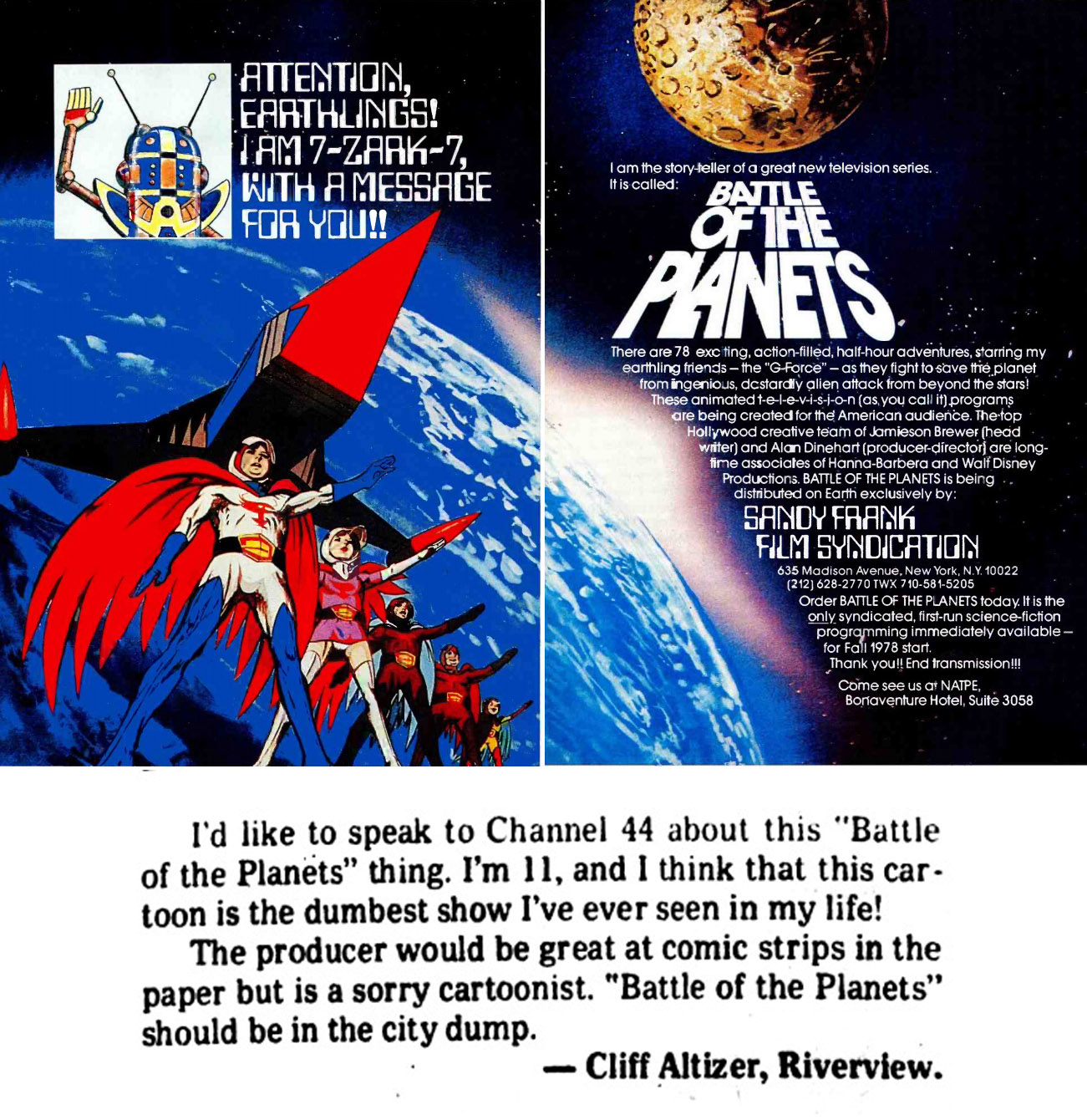
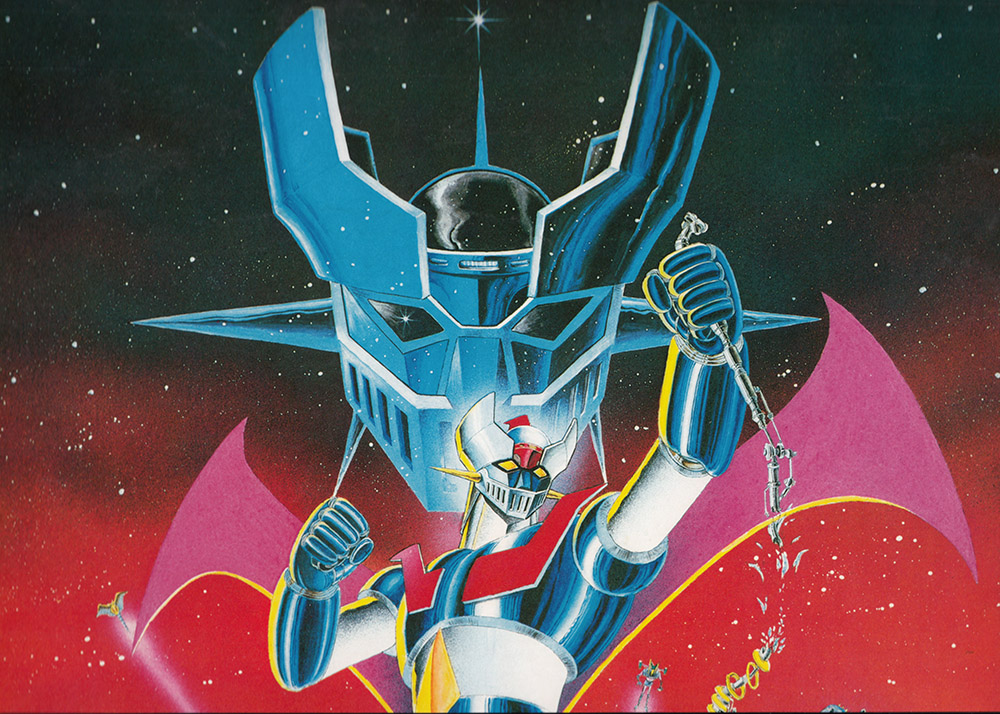
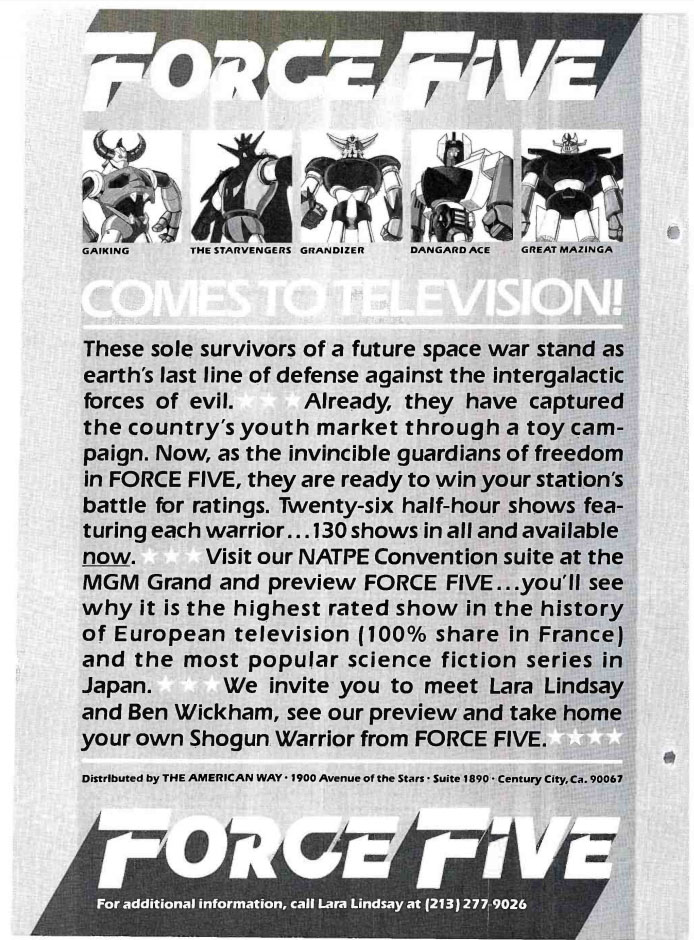
You can see the early Force Five marketing materials in industry trade magazines, an all-star lineup of UFO Robo Grendizer, Getter Robo G, Space Dragon Gaiking, Planet Robo Danguard Ace, and Great Mazinger. One of these shows would, for some reason probably involving Go Nagai's lawyers, not make the final Force Five team.
Unless you lived in a city with a Japanese-language UHF station, you might not have had a chance to watch the cartoons starring your favorite Shogun Warriors. In fact you might not even know these amazing toys had cartoon tie-ins at all. For a lot of us, the Force Five broadcast was the first time we’d be able to experience something we might have only seen glimpses of, and that something was the Japanese super robot cartoon, brought to us by Jim Terry Productions.

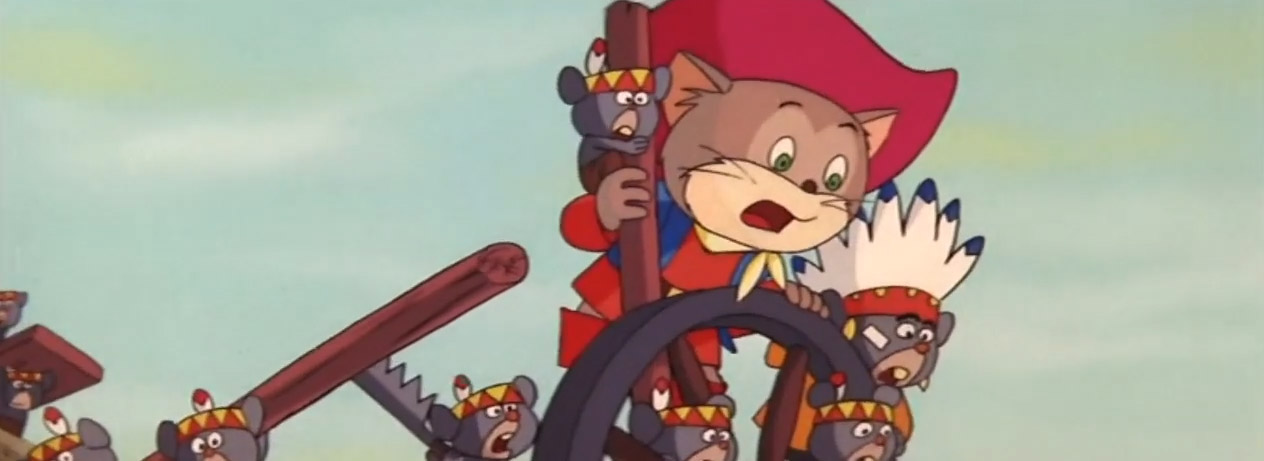
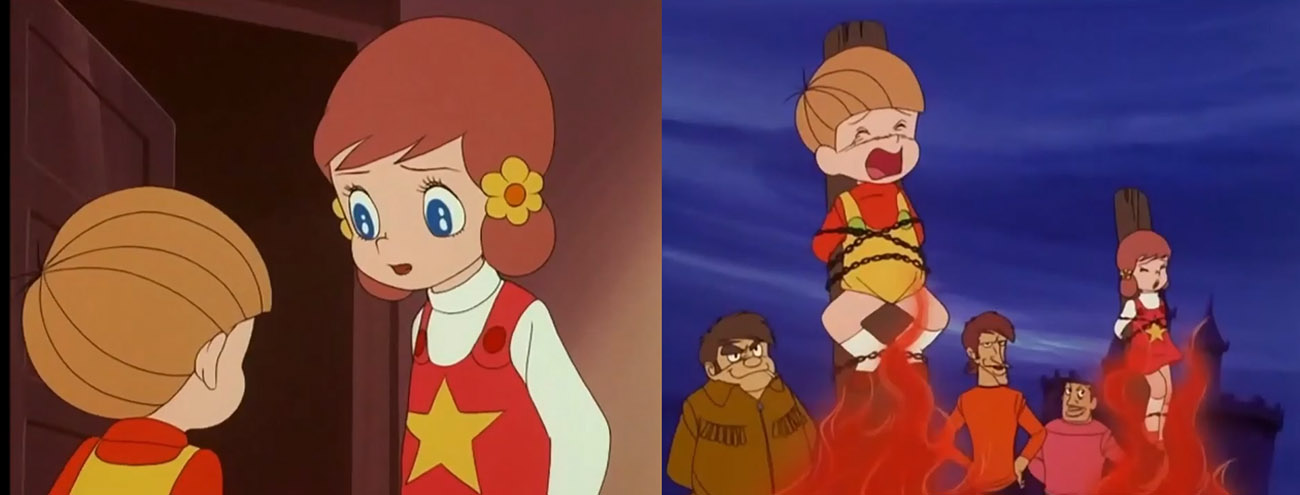
Jim Terry would spend the 80s retooling Japanese shows for the American market, producing several Toei titles for ZIV (Captain Harlock, Candy Candy) and packaging shows from all over the map for a wide variety of home video outfits – Timefighters (Time Bokan) from Tatsunoko, Ninja The Wonder Boy (Manga Sarutobi Sasuke) from Knack Studio, and the Russo-Japanese coproduction he'd retitle Scamper The Penguin. Terry's crew was also responsible for the infamous “Crushers” dub of the Nippon Sunrise film Crusher Joe. Most of the later works would feature musical accompaniment by Mark Mercury's “Bullets” but Force Five thankfully leaves the original music library in place, substituting instrumental versions for tracks with vocals, which work surprisingly well, a testament to composer Shunsuke Kikuchi’s talent.

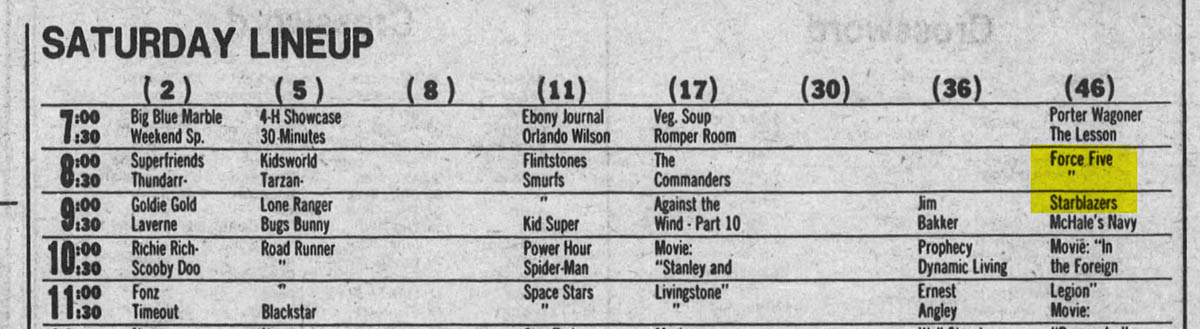
The final Force Five package wound up being 26 episodes each of the Toei series Danguard Ace, Gaiking, Grandizer, Starvengers aka Getter Robo G, and SF Saiyuki Starzinger, under its new title Spaceketeers. You'll notice how Great Mazinger was mysteriously absent from the final lineup, and we can only speculate as to what kind of letter Dynamic Pro's lawyers sent to Toei's licensing division. How exactly these Force Five episodes aired was dependent on the whims of your home town TV station's program director. For example, Atlanta's Channel 46 aired an hour block of Force Five before a half-hour of Star Blazers on Saturdays for a year or so, making that Saturday morning must-see TV for what we'd later call "anime fans" and leading to any number of conflicts with other, less cartoon oriented Saturday activities. For example one Saturday I had to be at the church yard sale that morning, so I brought a portable B&W television and an extension cord from home, plugged that cord into the wall socket inside the fellowship hall, and ran it out to our garage sale space in the parking lot, just so I wouldn't miss an episode of Danguard Ace and Spaceketeers. Now there's a public display of nascent otakuhood if ever there was one.
As an early 80s Saturday morning TV experience, Force Five met all of our childhood needs by combining super robots, space princesses, evil overlords and wholesale destruction punctuating those Kikuchi soundtracks. Jim Terry's localization is remarkably hands-off, leaving a surprising amount of mayhem and destruction present. The English dubbing is goofy but serviceable, the low points being a few bad celebrity impersonations and some poor attempts at British accents. The least satisfying aspect of Force Five is the limited set of each series, all of which had longer Japanese runs. In practical terms this ensures we never find out if the Krell Corps is defeated or if the Cosmos Queen ever makes it to the galactic center. Of course, compilation versions edited from TV episodes of all five shows aired on cable TV and were released on VHS, so we were able to see a few series' respective climaxes.
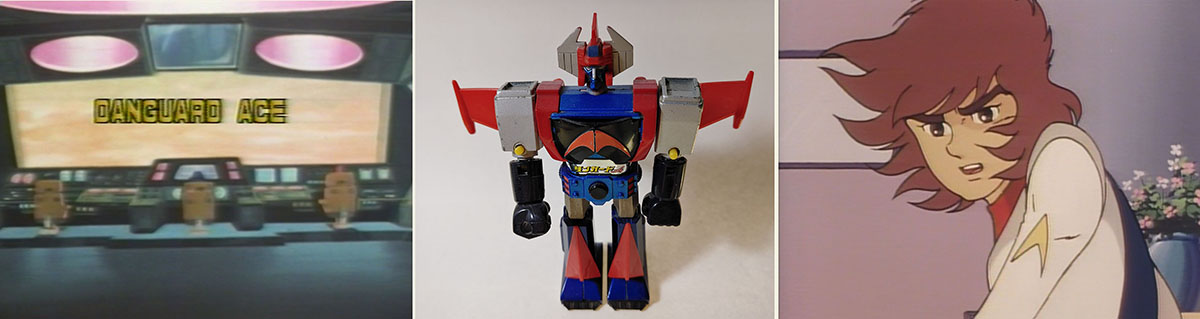
Everyone has their Force Five Favorites, but in the interests of fairness we're going to discuss these shows in alphabetical order, and that means Danguard Ace is at bat first. I wasn't a fan of the show when it aired. I was settled into Grandizer and Starvengers and was annoyed at the replacement. Danguard Ace was developed by Leiji Matsumoto and behind the 70s super robot window dressing you can see bits of Space Battleship Yamato, Captain Harlock, and Submarine Super 99 trying to take over. The titular robot itself only appears on the last page of his manga (serialized in Akita Shoten's Boken Oh), and I don't blame him, I don't want to draw the thing either. Danguard is about the race to colonize the tenth planet Promete, one of those mysterious wandering planets Matsumoto would use to good effect later in Queen Millennia. Commissar Krell ("Doppler" in Japan) claims this new planet for his own evil purposes. To back this up he commands the evil Krell Corps from his secret Himalayan base, attacking with legions of mind-controlling-mask-wearing zombies and high-tech robot monsters. The only force defying Krell is the super-weapon Danguard Ace, a collection of clunky aerial vehicles combining into a clunky super robot. Danguard's chief pilot is the young Windstar (Ichimonji Takuma), raised in the shadow of his space pilot father, who vanished mysteriously after betraying his comrades on the first mission to Promete ten years earlier.

Turns out Dad was under the control of Krell all along. Eventually he manages to escape with his freedom, but without his memories, still wearing that Krell mind control mask. When Dad, now dubbed "Captain Mask," shows up at the Danguard base in a stolen Krell fighter, he's immediately put in charge of training pilots for the Danguard program, which he does with rigor and ruthlessness. All the while, father and son are oblivious to their familial bond. Oh, what pathos. Windstar learns to pilot the Danguard, Mask grapples with his missing memories, Commissar Krell sends robot monster after robot monster to destroy the Danguard base, and Danguard Ace the robot finally shows up in episode 11. Eventually the entire cast, which includes the comedy relief kid, the comedy relief robot, and the comedy relief monkey, blasts off for Promete.

Suddenly the show's aesthetic becomes more Space Battleship Yamato and less Mazinger Z, reflecting then-current trends in anime. Captain Mask regains his memories and (spoilers) dies a heroic death, mostly because the kids watching the show in Japan hated that character with a passion. Jim Terry's release didn't include the climax of the series, in which the secret of Promete is revealed and Shingo Araki's character designs depict mysterious space women as well as the charismatic and handsome Krell commander Harken, who tries manfully to bring a spark of drama to an otherwise tedious show.

Gaiking may seem like yet another super robot series starring the usual science-center robot team battling the usual alien plot to take over the Earth. What makes Gaiking special is instead of three or five robot pilots, a team of 68 crews the huge Space Dragon, out of which the Gaiking fighting robot is launched piecemeal. The Space Dragon is an impressive Asian-style mecha-dragon, and the feuding between the former baseball-star Gaiking pilot and the rival Dragon pilot leavens the mood as they struggle against Planet Zela's Emperor Darius and his Dark Horror Corps.

The sidekick characters get to pilot dinosaur-shaped sidekick fighting vehicles, most notably in the last story arc featuring a huge pitched battle on the slopes of Mt. Fuji (the American version reflects then-current events and labels the volcano as "Mt. St. Helens") that's fun and well-animated, as is an earlier subplot about a Zelan-built robot spy-child who turns against his programming and attacks his masters with his robot Pegasus.


Lots of these unique touches make Gaiking something more than standard super-robot fare, and I can't help but think staff like Akio Sugino and Yoshinori Kanada helped to bring a little spark to the show. I wish I'd paid a little more attention to it during the Force Five days, which as I learned later wasn’t the first time Gaiking had been dubbed into English. In the 70s Toei contracted Honolulu-based outfit M&M Communications to dub Mazinger Z and Gaiking. While the Mazinger Z episodes gained fame due to American cable TV broadcasts and the phonetically-sung Isao Sasaki theme song, the Gaiking dub remained obscure, at least to me, until fairly recently. Also obscured was the Go Nagai/Dynamic Pro origins of the Gaiking concept, which Nagai pitched to Toei in the early ‘70s. Toei later developed the series and credited Sugino, which purportedly came as a surprise to Go Nagai and led to some super robot legal battles.

Go Nagai was, however, fully credited for the next series on our list, UFO Robo Grendizer, or as Jim Terry spells it, Grandizer. It's about a guy named Duke Fleed (in America, "Orion Quest"), whose home planet was attacked by the evil Vegans, from the star Vega, not Las Vegas, tough guy. Fleed ditched his doomed planet in the top secret giant saucer-robot Grandizer, or Grendizer, whichever. Escaping to Earth, he was promptly adopted by the local scientific research institute's Professor Valconian and given a job at the ranch next door, run by Wild West fanboy/UFO enthusiast Panhandle and his daughter Brenda.

 |
| Johnny, Lance, and the Panhandle clan |
Soon enough the Vegans show up to conquer the Earth, while the science center gets a visit from former Mazinger Z star Koji Kabuto, or Lance Hyatt as he's known here. In Grandizer, Koji coasts as a supporting character, flying his homemade UFO against the Vegans, who are a fun bunch of weirdo aliens of varying shapes and sizes. Vegan General Bellicose will belt out ineffectual orders to his subordinate Commander Ding and every once in awhile, Bellicose's face will split open and his four-inch tall wife Lady Gandar will just erupt out of his empty skull to holler at everybody.
 |
| peek-a-boo! |
When the Vegan scheme of the week threatens Earth, Orion Quest does his thing. Meaning, jumping into the emergency exit chute, zipping through a series of tubes and tunnels, soaring into the Grandizer hangar, exclaiming "Orion Quest!", transforming into his flying outfit, and finally being deposited into the cockpit of the Grandizer robot-saucer combo. When Orion/Duke Fleed feels the situation calls for hand-to-hand action, Grandizer just leaps right out of that saucer and starts kicking robot monster butt with any number of really impressive weapons that include the screw-crusher punch (like a rocket punch, only more pointy), the rainbow beam, the hydro-phasers, the hand beam, the shoulder boomerang, the double sickle, and the Space Thunder.

When our heroes aren't blasting alien saucers there's time for romance; Duke and Hikaru/Brenda have a tentative thing while Koji Kabuto says “Sayaka who?” and crushes hard on Duke Fleed's sister Maria, who also survived their home planet's destruction and appears just in time for Grandizer's mid-show power-up which includes zippy new mecha for Lance and Brenda to pilot, and which is also right around the time Jim Terry quit dubbing episodes for us. So we never get to see the awesome combination robot vehicles featured in the second half of the series, and we never get to see Emperor Vega sliced in two with Grandizer's double sickle. Ooh, what a giveaway. Famously popular in Europe, Grendizer’s record-breaking ratings in Italy were used to sell Force Five to American markets.

Spaceketeers, or SF Saiyuki Starzinger, is the wild card in this pack of shows, one with a female lead and nary a combo super-robot to be seen. This science fiction version of the “Journey To The West” Monkey King legend swaps ancient China for outer space. American audiences might not get the Asian mythological references, so Jim Terry renamed the show Spaceketeers, after the Three Musketeers, which fits the show’s aesthetic reasonably well, I suppose. This series was developed by Leiji Matsumoto to replace Danguard Ace in the original Fuji-TV broadcasts, a fact which will become obvious the minute you spot Spaceketeers’ star, the willowy blonde Princess Aurora, one of a long line of ethereal Matsumoto beauties.

As our Spaceketeers story opens, mysterious radiation from the center of the galaxy is turning all animal and plant life into weird monsters rampaging through the galaxy. Princess Aurora’s palace on the moon is destroyed and the Empress, or Dr. Kitty as she’s known in Japan, sends Aurora in the spaceship Cosmos Queen to travel to Galactic Center and deal with whatever crazy thing is causing all this chaos. Three mighty space warriors are assigned as her bodyguards for this journey. The cool, aloof Sir Jogo/Aramos, master of the pocket calculator and the Star Copper, is the leader of a water planet. Porkos, or Don Hakka, is our plump comedy relief guy hailing from some kind of mud planet and whose personal craft is the Star Boot. Jan Kugo aka Jesse Dart is the invincible cyborg bad-boy Monkey King character who must learn patience and courtesy when he'd rather be destroying things in his Star Crow.

Episode after episode our heroes launch from the Cosmos Queen to battle animoids and vegemoids on the way to the Deklos system while the Princess stands around, worries, and changes in and out of various outer space mini-skirts and outer space prom dresses. Characters zip around space in their little space scooters dodging zap rays and giant monsters to encounter the various villainous space armadas that have been warped into action by the Deklos system radiation.

The series has a certain charm, the mythological context works with the SF setting, but the show lacks momentum- at one point the Cosmos Queen just turns around and goes back to Earth because they forgot to turn the TV off, or something. There’s a vagueness to the galactic menace and a weird lack of purpose to the galactic journey of the Spaceketeers, but I guess we should just enjoy the ride; 70s kids across Asia and Europe certainly did.

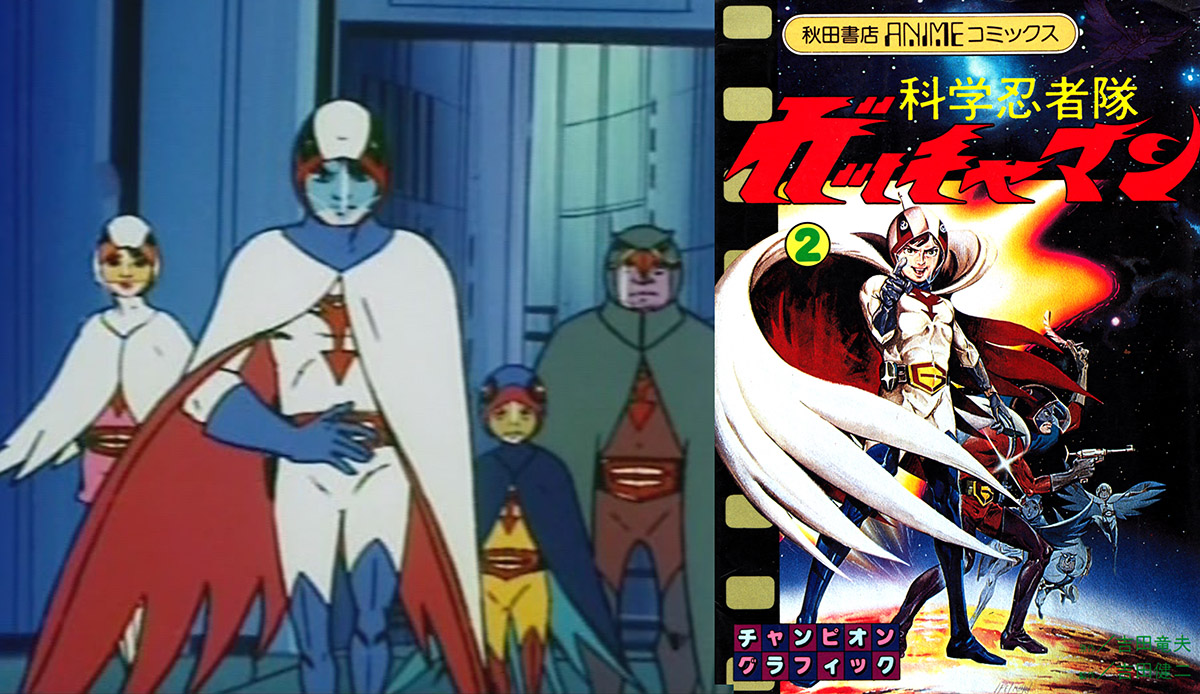
Last but not least we arrive at my favorite of the Force Five series, Starvengers. This series is the localized version of Getter Robo G, itself a sequel to Getter Robo, the seminal Go Nagai/Ken Ishikawa combination robot series that gave us jet planes that slam into each other to create super robots and battle the underground Dinosaur Empire. Jim Terry didn’t bother with this first series, an understandable move considering the animation is a little primitive and things get a little bloody there when the dinosaurs start getting ripped in half. American viewers began with the fiery funeral of the original Getter Robo robot, and we’re thrown right into Dr. Copernicus building a new, improved Starvengers mecha, finding someone to replace the pilot who died at the end of the first series, and doing both of these things in time to confront the new menace threatening mankind.

The evil hollow-Earth armies of the Pandemonium Empire seek to conquer the surface world with an army of giant robots and secret agents who communicate via mechanical horns (all the Pandemonium people have horns, because in Japan, they're known as the Hundred-Demon Empire, and devils have horns, obviously). Our Starvengers, in their new Star Dragon, Star Arrow and Star Poseidon machines, must battle for the fate of the entire world. Hero pilots Ryo (now Hummer, yes, Hummer) and aloof anti-hero Hayato, or “Paladin”, are joined by comedy relief baseball fanatic Benkei or “Foul Tip.”

The three spend the rest of the series piloting their Starvengers machines against Pandemonium menaces, supported by Dr. Copernicus in his science center and his daughter Ceres/Michiru flying her Space Glider. There are several reasons this series is my favorite. The robot violence is intense and never-ending, the characters are all either driven by revenge or... well, revenge, mostly, and the villains are bizarre Dick Tracy-style freaks and weirdos, including Captain Fuhrer, whose Japanese name was, yes, "Captain Hitler.”
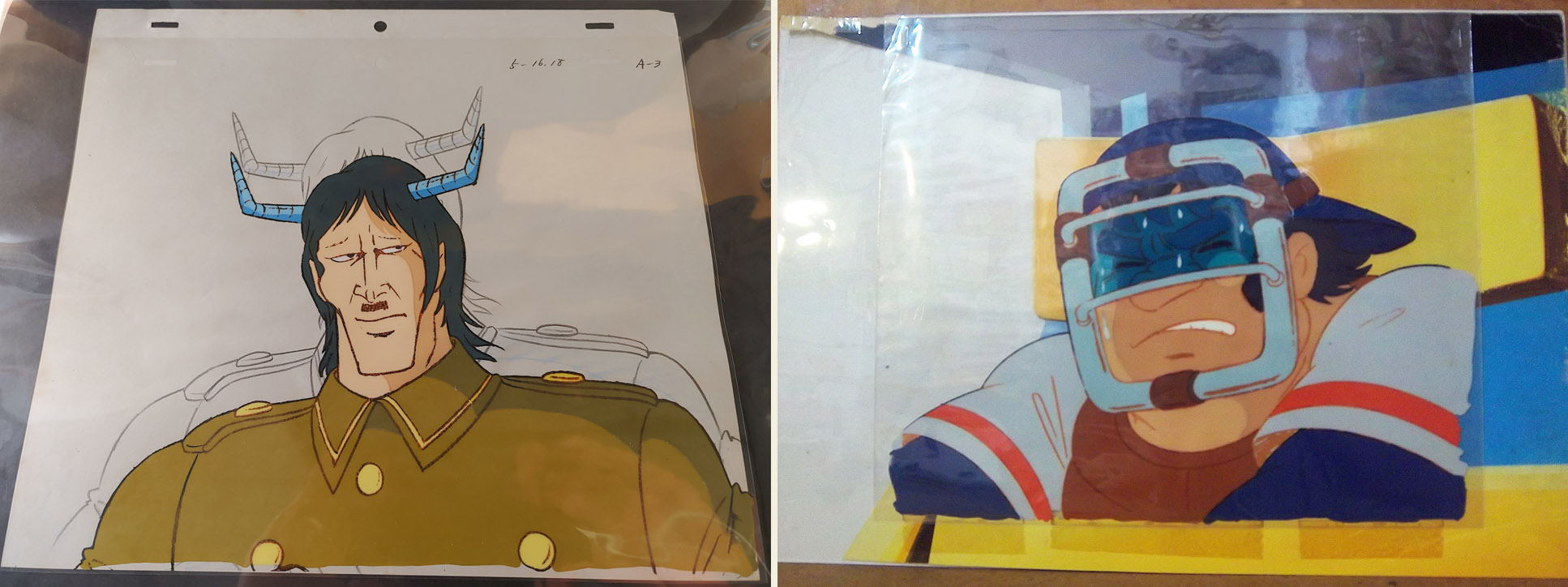 |
| I only have two Getter Robo G cels, but I like the ones I have |
The design of the various Starvengers vehicles are sleek, powerful and bold. Both as aircraft and as robots, their 70s muscle car look makes them my favorites. Starvengers subverts expectations as Ceres falls for Paladin, because he’s the coolest, proven as he single-handedly destroys the flying fortress of the Pandemonium Empire in a climax we’ll only see in the compilation film.

Force Five was off the air by ‘83 in most markets, but the series lived on in home video. Family Home Entertainment released compilation films and a few episodes from all five series to the growing home video market, the tapes landing in the children’s sections of many local video rentals across the country. Two different cheap labels would later release the same episodes under the titles “Roboformers" and "Z-Force” on bargain-bin SLP-recorded tapes to fill discount retailer shelves. Best Film & Video would also take a turn with those master tapes, and eventually they’d appear in Suncoast Video as part of the infamous “Spaced Out Japanimation” collection.

In recent years some of these former Force Five properties would make their way to North America in various new forms. William Winckler would produce newly-dubbed compilation films for Starzinger, Gaiking, and Danguard Ace, while crowd-pleasers Discotek Media would put a subtitled version of Gaiking on both DVD and Blu-Ray. However, English-language media still lacks any iteration of UFO Robo Grendizer and Getter Robo G. In a world where children of the 80s still have a soft spot in their heart for Jim Terry’s Force Five, and where properties thought lost or abandoned are being reissued with alarming frequency, can it be merely a matter of time before our 1981 TV Guide dreams are reawakened, and Force Five returns to us in all its Mr. Angelo-dubbed glory?
-Dave Merrill
Thanks
for reading Let's Anime! If you enjoyed it and want to show your
appreciation for what we do here as part of the Mister Kitty Dot Net world, please consider joining our Patreon!