It might not feel like it, but right now we're living in a golden age! A golden age of English releases of classic Japanese manga, that is. The pile of localized old-school manga seems to get taller every day, with venerable titles like Hisashi Eguchi's Stop! Hibari-Kun, Tetsuya Chiba's Tomorrow's Joe, and Tsukasa Hojo's Cat's Eye and Cityhunter getting new releases and straining bookshelves already filled with earlier releases. Back in 2019 Seven Seas published Space Battleship Yamato after Devilman and Captain Harlock in 2018. Kodansha's Queen Emeraldas release was reviewed right here. Viz Communications' Golgo 13 and Dr. Slump were almost twenty years ago, and Tokyopop's edition of Shotaro Ishinomori's 1960s Cyborg 009 manga dates from 2005. Dark Horse's first flipped release of Tezuka's Mighty Atom/Astro Boy was back in 2002. Vertical's lovely set of Keiko Takamiya's To Terra (aka Towards The Terra) saw print here in '07, when sales figures for that title echoed the then-prevailing wisdom that "old manga simply won't sell" in our market. This doesn't seem to be the case any more. For instance, the 2022 Seven Seas release of Ishinomori's Kamen Rider manga already commands collector's prices.
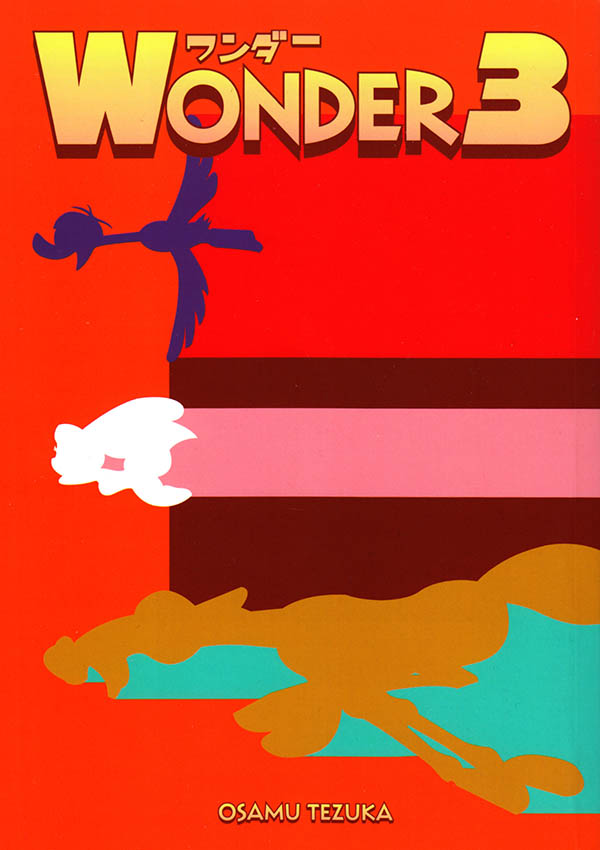
Udon's handsome Rose Of Versailles release was a long time coming, but worth the wait. Viz recently saw the light and re-released Rumiko Takahashi classics Maison Ikkoku and Urusei Yatsura in new editions with new translations. Montreal's Drawn & Quarterly has made a cottage industry out of Shigeru Mizuki's Kitaro, while DMP released significant works by Osamu Tezuka including Princess Knight, Wonder 3, and Tezuka's version of Crime And Punishment. Even DC Comics got into the vintage manga act with their release of Jiro Kutawa's bold take on Batman, while Fantagraphics seems to have cornered the market on big hardcover releases of Moto Hagio's shojo masterpieces like The Poe Clan and Heart Of Thomas. Spanish publisher Fanfare/Ponent Mon is putting Hideo Azuma's essential Disappearance Diary back into English language print. Meanwhile, Ryan Holmberg, PhD, is the go-to guy bringing experimental, avant-garde, buried-trash-treasure Japanese comics to North American audiences, localizing Yoshiharu Tsuge, early Tezuka, Suehiro Maruo, and Sanpei Shirato's Legend Of Kamui! And only recently Kodansha announced they were putting Tezuka's Phoenix back in print, while Manga Mavericks will be releasing Yumiko "Candy Candy" Igarashi's The Sword Of Paros, the first Igarashi manga to make it over here in English.
Like we said, if you want to wallow in old Japanese comics in English, your time is now. But if we know anything about Japanese comics, we know that beyond this mountain, there's always another mountain, always more titles waiting for release or re-release. To further immanentize this particular eschaton, we reached out to the smartest, handsomest, and hippest people we know - the readers of Let's Anime - and we asked them to name some of the vintage Japanese manga they'd love to see released in our language. The enthusiastic responses range from the obvious to the obscure, from the family-friendly to the absolutely not for children, from trash to treasure; in short, the wonderful world of Japanese comics. So let’s take a look at what they recommend!
 |
| Honey Honey |
Let’s just get this one out of the way first since everyone knows it’s coming. It's way past time Hideko Mizuno's The Wonderful Adventure of Honey Honey manga was published in English. Mizuno brought girls' manga away from classroom romances and into fantasy, myth, adventure, and youth culture, and we'll be seeing her set that world on and in Fire soon, but what we here at Let's Anime really want to see is Honey Honey, the rollicking around-the-world chase about a girl, a cat, a gemstone, and the balance of power in Europe prior to World War One. Honey Honey was serialized in Ribon in 1966-67 and released in two volumes by Asahi Sonorama's Sun Comics, and later in the 00's by Futabasha. On this side of the Pacific all we got was a CBN broadcast of the 1981 MIC anime show, but someday Honey will return to our shores.
 |
| Prefectural Earth Defense Force |
Koichiro Yasunaga’s zany pop culture high school SF comedy-action-comedy Prefectural Earth Defense Force had a two-year run in mid 1980s Shonen Sunday, detailing the adventures of a gang of low-rent hero teens versus an inept crew of wanna-be world conquerors. You might know the 1986 OVA, but the manga deserves some English language love!
 |
| Blazing Transfer Student |
Another Shonen Sunday title, Honō no Tenkōsei (炎の転校生) or Blazing Transfer Student was our first look at the work of Kazuhiko Shimamoto, when we got to see the 1992 Gainax OVA, an out of print classic about a new student at a school where disputes are settled by ridiculous logic-trainwreck arguments or in the boxing ring. Shimamoto's gutsy, loopy manga style betrays his love of Shotaro Ishinomori cinematics and Go Nagai impact, a melodramatic look brought to life in the live action version of his semi-autobiographical manga Blue Blazes. In fact, why isn't Blue Blazes in English already? The manga began in 2007 and is still going today! We'll have to be satisfied with Shimamoto's salaryman superhero manga Hero Company coming soon from Manga Mavericks!
 |
| Battlefield |
Leiji Matsumoto's Battlefield series began in Big Comic in the mid 1970s and continued on and off for the next thirty years in Weekly Shonen Sunday, COM, Play Comic and Big Comic Original, under titles like "Battlefield, "The Cockpit," "Heavy Ballistics," and "Hard Metal." Leiji's love for WWII weapons and equipment is on full display as legions of hapless grunts on every side of the conflict find themselves knee-deep in the bloody, muddy confusion of war, where sometimes the difference between life and death could be chance, fate, or preventative maintenance. Battlefield's only English language appearance is a short story in the back of Fredrik Schodt's Manga Manga, and that was more than forty years ago!
 |
| Locke The Superman |
I managed to wring an entire Let's Anime column asking why Yuki Hijiri's long-running Locke The Superman manga, featured in a range of stories across a range of publications, has yet to appear in English print. And I'm still asking why, because his stylish SF ESPer action blurs the line between Star Wars, the X-Men, and shojo manga, inspiring a high-tech outer space aesthetic that still informs manga today. Of course Hijiri had an immense manga career beyond Locke, adapting anime properties like Space Battleship Yamato and Fighting General Daimos while rendering rock legends Rod Stewart, Billy Joel and the Go-Gos into manga form. ALL of this should be in English.
 |
| Gekiga Roadshow features by Gosaku Ota |
Speaking of manga that demands an English translation, Dynamic Pro manga-ka Gosaku Ota churned out a surprising variety of strips for the magazine Gekiga Roadshow based on popular American films. I'm talking about Bad News Bears manga, Wilderness Family manga, and Blazing Saddles manga. Every 70s kid needs this whether they know it or not. What's Ota been up to lately? Well, he spent time illustrating junk science comics about how white sugar rots the brain, and sadly passed away from COVID-related illness in 2022.
 |
| Cobra: The Psychogun |
Buichi Terasawa's far-future adventures of the man with the psycho-gun, Cobra, began in Shonen Jump in 1982, thrilling readers with Terasawa's vision of a Heavy Metal inspired universe filled with bodacious space babes and nasty space criminals, all after Cobra's hide. After switching publishers from Shueisha to Kadokawa the series was retitled Cobra The Space Pirate, but continued intermittently in Comic Flapper until Terasawa's death in 2023. Terasawa was always pushing the creative envelope with his art and 1995's Cobra: The Psychogun was completely rendered using digital tools for its appearance in Super Jump.
 |
| Golgo 13 |
Manga legend Takao Saito came out of the gekiga movement and built an empire out of quiet, dangerous men, sudden acts of intense manga violence, and using the heat from his cigarettes to dry the white-out on his manga pages. The final product of this hard boiled approach is Golgo 13, the most feared assassin in the world. Since Golgo's debut in a fateful 1968 issue of Big Comic, 220 volumes of Golgo 13 have appeared, roughly sixty thousand pages, only a small percentage of which have been published in English. Saito's own Lead Publishing entered the market in the late 1980s with now-rare volumes with titles like Ice Lake Hit and Into The Wolves Lair, along with some 32 page newsstand type comics to capitalize on Golgo 13's NES game. Viz picked up the license and in the 00s released a 13 volume "Best Of" featuring Golgo's greatest hits (pun intended) and supplementary editorial material by manga professional Carl G. Horn. Since then Golgo 13’s English-language whereabouts are unknown. Perhaps he likes it that way, but we do not.
 |
| Dirty Pair |
Adapted from episodes of the Sunrise TV anime, Monthly Shonen's Dirty Pair manga by Kazunari Ikeda appeared from June until November 1985. We've seen Dirty Pair drawn by Yasuhiko Yasuhiro, we've seen Adam Warren's Dirty Pair, we've seen the Tsukasa Dokite version on TV, we've had Dirty Pairs thrown at us in all configurations, but it looks to me like Ikeda perfectly nailed that mid 80s aesthetic. These comics haven't even been collected in Japan, apparently Ikeda dropped out of sight soon afterwards, let's make something happen here, WWWA!
 |
| Area 88 |
 |
| Phantom Burai |
Several respondents mentioned Kaoru Shintani titles. Back in the 1980s, his tragic jet fighter saga Area 88 was one of the first manga to get localized and distributed in America by a major American comic book publisher; trust me, this was a big deal at the time. Shogakukan and Eclipse soon parted ways and Area 88 was published by Shogakukan's Viz Media directly for the last six issues, sporting photo covers of military aircraft instead of Shintani artwork. Viz cancelled the title at 42 and the series hasn't appeared in English since, leaving the series unfinished here. Come on Viz, bring Shin Kazama home. An assistant to Leiji Matsumoto, Shintani's artwork is filled with the clean-line beauty shots of military and SF hardware he was doing for Matsumoto, and that's evident in all Shintani's work. His first hit was Phantom Burai, running in Weekly Shonen Sunday from 1978-84. The adventures of F-4 Phantom pilots flying for the JSDF out of Misawa, Burai was scripted by former JSDF pilot Sho Fumimura. Another Shintani reader suggestion is Queen 1313, pronounced "double thirteen", which appeared in My Anime from 1981-85 and is the tale of the free-trader starship QUEEN1313 as they trade through outer space. Other Shintani suggestions include the rollicking corporate teenager story Cleopatra DC and Desert Rose, starring the dedicated commando Marie and her worldwide anti-terror campaigns. Shintani has enjoyed tremendous Japanese success but most of his work remains unseen here, and we hereby petition the powers that be to change this state of affairs.
 |
| Firefighter! Daigo Of Fire Company M |
Daigo's a hot-headed 18 year old who thinks he knows everything there is to know about firefighting. Like most 18 year olds with this attitude, he's wrong, and he finds out through 20 volumes of Firefighter! Daigo of Fire Company M by Masahito Soda, which put out fires in Shonen Sunday from 1995 until 1999 and sparked subsequent short anime films, TV dramas, and a recent manga sequel. Viz released the original Daigo manga in English in 2002, and we think the time is hot for a reprint!
 |
| Shota's Sushi |
Can a mom and pop sushi joint in Hokkaido compete against the big chains - even after illness and injury strike the family? It's time for teen itamae Shota to step up and save the family business! Daisuke Terasawa's Shota no Sushi had a five year run in mid 90s Weekly Shonen and as yet has never been served to sushi-starved English language customers!
 |
| Kyomu Senki |
Unfolding on Earth and in far-off galaxies! In the past, the future, and across dimensions! The final battle between light and darkness begins, has begun, will begin shortly in Ken Ishikawa's Kyomu Senki, or "Records Of Nothingness", a sprawling re-imagining of Ishikawa's earlier works into one cosmos-spanning saga, incorporating works like Tiger of 5000 Light Years, Skull Killer Jacki-Oh, Evil Demon King Explosion, Honnoji Temple Ninja Techniques - Kashin Koji's Sorcery, Shinrashomon, Dogra Chronicles, and Kyomu Senshi Miroku. Kyomu Senki appeared in Futabasha's Action Comics from 1999 to 2000. Apart from Ishikawa's Getter Robo Go manga, published in America by Viz as "Venger Robo," work by this titan of SF-mecha action manga has been thin on the ground here.
 |
| Cooking Papa |
Kazumi Araiwa is an outstanding cook, but he doesn't want his job to know this big, imposing, rough looking guy knows his way around a kitchen. He manages to keep his secret and keep his family well fed in the manga Cooking Papa by Tochi Ueyama, which began in Kodansha's Morning in 1985 and... let me see here... the manga is still running! The Eiken anime series, in contrast, had a mere 151 episodes. This manga's motto is "Cooking Is Fun!" We here at Let's Anime agree, and we say it's way past Cooking Papa time here.
 |
| Georgie! |
Georgie! Mann Izawa and Yumiko Igarashi's Georgie! is the story of Georgie! She's an orphan raised in Australia who travels to England to find her true family, accompanied by her adoptive brothers, who both may harbor more than brotherly feelings for Georgie! The manga appeared from 1982 to 1984 in Shogakukan's Shōjo Comic. Discotek released the TMS anime series from 1983 here in the West on Blu-Ray, and the show is also available on some streaming platforms, but so far the English language manga world has not been blessed with Georgie!
 |
| Natsuko's Sake |
Natsuko Saeki quits her Tokyo ad agency job, returns to her family business, and takes on the challenge of making the best sake in Japan! Natsuko's Sake tackled the problems of women moving into traditionally male occupations, as well as the underlying structural and agricultural issues facing the sake industry. This 12 volume manga series by Akira "First Love Scandal" Oze ran in Kodansha's Weekly Morning from 1988-91 and has been called the "masterpiece of sake manga," inspiring a Fuji-TV drama series, the production of which started years in advance because they actually planted the rice they were going to harvest for the sake in the show. Now that's dedication. Twelve volumes of Natsuko's Sake are out there, and none of them are in English.
 |
| Ai to Makoto |
Can love blossom between the high-class daughter of a respected family and a scarred delinquent from a broken home, both tangled in struggles between youth gangs, political rivals, and right-wing machinations? That's the story of Ai and Makoto in Ai to Makoto, the Ikki "Tomorrow's Joe" Kajiwara scripted manga drawn by Takumi Nagayasu that ran for 16 volumes worth of tragic melodrama in mid 1970s Weekly Shonen. Plenty of live-action adaptations and a reputation as a "masterpiece of the Showa era" prove this story appeals to wider audiences, why not let English-language readers enjoy this?
 |
| various Goblin Moriguchi works |
Former Toshio Maeda assistant Goblin Moriguchi's work can charitably be described as "insane metal murder manga," cheerfully transgressive works of lurid, shrieking gore single-handedly dragging manga back down into the gutter. I dare any American publisher to put this work into print. I DOUBLE dare them.
 |
| Mad Bull 34 |
In 1985 Weekly Young Jump exploded as "Sleepy" John Estes and his new NYPD partner Daizaburo "Eddie" Ban began their two-man assault on crime. Carbines, shotguns, axe handles, pistols, bayonets, knives, brass knuckles, and a submachine gun, along with rocket launchers, explosives, and the pile-driver fists of Estes himself, made the 34th precinct a war zone, and among the criminal community Estes' nickname became "Mad Bull." Written by Lone Wolf & Cub legend Kazuo Koike and delineated by the luridly detailed penwork of Noriyoshi Inoue, Mad Bull 34 smashed its way through seven volumes of late 80s manga adventures in the war zone of what NYC was like in the popular imagination of the time. Why not let NYC enjoy this manga for itself?
 |
| Sasori aka Scorpion |
In 1970 Toru Shinohara began a manga serial in Shogakukan's Big Comic about an unjustly imprisoned woman who embarks on a bloody trail of revenge against all who have wronged her. Sasori, or "Scorpion," would go on to inspire a series of live action films starring Meiko Kaji as Female Prisoner 701: Scorpion, popular here with film buffs and exploitation hounds, all of whom would love to buy these comics, hint hint.
 |
| Godzilla manga through the ages |
Speaking of movie stars, they don’t come any bigger than Godzilla. When we think of Godzilla comics, we think, of course, of the Marvel Godzilla comic book from the 1970s, a Herb Trimpe-penned romp that put Godzilla into the Marvel Universe and brought a level of smashy fun to a line that was already creaking under the weight of its own continuity. But in Japan Godzilla has been a manga star since the 1950s, with the big G starring in dozens and dozens of manga adaptations across a wide variety of publications, adventures, and art styles for decades. It's high time our scaly hero's Showa-era manga adventures were brought to English audiences!
 |
| Chie The Brat, aka Downtown Story |
Jarinko Chie, or Chie The Brat, or Downtown Story as Futabasha and TMS would like us to call it, is Etsumi Haruki's manga about cranky Chie Takemoto, growing up in a rough part of Osaka constantly having to solve the problems caused by her chronically under-employed dad who spends half his money on gambling and alcohol. The other half? He just squanders meaninglessly. Haruki's Chie manga started in Action in 1978 and ran for nineteen solid years, selling thirty million copies of collected volumes, and never once making it into English. Isao Takahata's anime, on the other hand, is available here from Discotek.
Mikiya Mochizuki, sometimes working under the pseudonym "M. Stryker," produced a mountain of manga during his career, drawing war manga, cop manga, auto racing manga, soccer manga, and manga based on the Styx album "Kilroy Was Here" and its hit single "Mr. Roboto" for Shogakukan's magazine "FM Recopal," because of course. His most popular series was Wild 7, the hard as nails story of some hard as nails reformed-convict biker cops using their motorcycles and a wide variety of powerful firearms to wage a war on crime. Wild 7 ran for ten years in Shonen King and inspired a live action TV series that was cancelled because it was too violent for Japanese TV, let that one sink in for a minute. Wild 7 got an English language release from Bay Area publisher Comics One, but when they vanished without a trace in 2005, the adventures of our dirty seven were interrupted. Someone grab this license, get the motor running, and head out on the Wild 7 highway!
 |
| Wild 7 |
 |
| Kilroy Was Here by Styx and Mikiya Mochizuki |
Mikiya Mochizuki, sometimes working under the pseudonym "M. Stryker," produced a mountain of manga during his career, drawing war manga, cop manga, auto racing manga, soccer manga, and manga based on the Styx album "Kilroy Was Here" and its hit single "Mr. Roboto" for Shogakukan's magazine "FM Recopal," because of course. His most popular series was Wild 7, the hard as nails story of some hard as nails reformed-convict biker cops using their motorcycles and a wide variety of powerful firearms to wage a war on crime. Wild 7 ran for ten years in Shonen King and inspired a live action TV series that was cancelled because it was too violent for Japanese TV, let that one sink in for a minute. Wild 7 got an English language release from Bay Area publisher Comics One, but when they vanished without a trace in 2005, the adventures of our dirty seven were interrupted. Someone grab this license, get the motor running, and head out on the Wild 7 highway!
 |
| Ambassador Magma |
Part of Osamu Tezuka's mid-60s manga masterpiece speedrun, Ambassador Magma's robot rocket family and their battle against the emperor of the universe first appeared in Shonen Monthly in 1965, with a live-action P-Productions teleseries following the next year. Legendary in the US as "Space Giants," the spectre of litigation has tied up the show here for decades. An overworked Tezuka had staff ghostwrite the back half of the manga series, which leans less "monster" and more "weird alien" and "existential crisis" than the TV show. Apart from an 80s OVA series starring a dog that barks "blarg," we've been deprived of this electronic space family for decades, and it's way past Magma manga time.
Go Nagai's Cutey Honey and Devilman have made the jump into English, but Nagai's Violence Jack, the story of a destroyed Japan descending into darkness and savagery where only the giant jack-knife of Violence Jack can mete out justice to the lawless, has yet to appear in English language comics. 38 volumes of Violence Jack have appeared since his 1973 introduction in Weekly Shonen, Monthly Shonen, and Weekly Goraku, spawning OVAs, novels, and sequel manga including 2021's Violence Jack 20XX.
 |
| Violence Jack |
Go Nagai's Cutey Honey and Devilman have made the jump into English, but Nagai's Violence Jack, the story of a destroyed Japan descending into darkness and savagery where only the giant jack-knife of Violence Jack can mete out justice to the lawless, has yet to appear in English language comics. 38 volumes of Violence Jack have appeared since his 1973 introduction in Weekly Shonen, Monthly Shonen, and Weekly Goraku, spawning OVAs, novels, and sequel manga including 2021's Violence Jack 20XX.
 |
| Mazinger Z |
Koji can swim in the sky, he can fly beneath the sea, in his robot man Mazinger Z. Now why can't we get Go Nagai's Mazinger Z manga in English? Everyone involved is leaving money on the table here, because this would sell like crazy. Is it because Shueisha first published Mazinger Z in Shonen Jump, and then Kodansha later published Mazinger Z in TV Magazine? They've both published Mazinger Z collections, somebody get cracking and get this out in English already, we're dyin' here.
Speaking of giant robots and manga, Mitsuteru Yokoyama's Tetsujin 28-go is a foundational figure in the wild world of mechanical monster heroes, and not only are we the poorer for lacking this work in English, we are absolutely crippled by a lack of any English language version of any of Yokoyama's immense body of manga whatsoever. Yokoyama gave us magic ninjas, psychic teens, super robots, and magical girls, and single-handedly made historical manga a top selling category. Put Giant Robo in English, publish Babel II in English, give us Witch Sally in English, get Mars and Romance Of The 3 Kingdoms and Ninja Akakage in English already. It is way past Yokoyama O'Clock.
The manga/anime field was growing in 1964 and Mitsuteru Yokoyama figured he could put together a crew to help market their work across the wide world of merchandising and licensing. That's when Yokoyama and four other artists started Hikari Productions. Hideoki Inoue was one of that Hikari crew and Planet Boy Papi, or Yusei Shonen Papi, or Prince Planet, was Inoue's most popular series, based on an original concept by "Shoichiro Yoshikura," a pseudonym for five authors. Papi was a multi-media franchise with a TCJ anime series and a Glico candy contract and toys, records, merchandising, all driven by Inoue's Papi manga serialized in Kobunsha's Shonen in 1965 and '66. That Papi manga would look great in English, and we here at Let's Anime have already taken the first steps in making this happen. Now it's up to the Glico Candy Company, or some other corporate entity, to take over and give North America the Prince Planet comics they desperately need.
This has merely been a sample of the unreleased Japanese comics that wait patiently for North American releases. You probably have a few favorites waiting in limbo yourself that we overlooked. Well, it’s our intention to let this Let’s Anime be a call to arms, a stirring battle cry for everyone with the ear of Japanese publishers, a line of credit at a reputable printing company, some translators on speed dial, and a few good distribution deals to keep the classic manga localization train fully loaded with more classic manga. I want to holler a big THANK YOU to everyone who chimed in at our Facebook group with suggestions! Your recommendations led me on a deep research dive into manga I’d barely heard of, or never knew existed in the first place – and that, my friends, is where the magic happens. Thank you again, and I'll see you in the funny classic manga pages!
-Dave Merrill
 |
| Mitsuteru Yokoyama's Giant Robo, Tetsujin 28-go, and Babel 2 |
Speaking of giant robots and manga, Mitsuteru Yokoyama's Tetsujin 28-go is a foundational figure in the wild world of mechanical monster heroes, and not only are we the poorer for lacking this work in English, we are absolutely crippled by a lack of any English language version of any of Yokoyama's immense body of manga whatsoever. Yokoyama gave us magic ninjas, psychic teens, super robots, and magical girls, and single-handedly made historical manga a top selling category. Put Giant Robo in English, publish Babel II in English, give us Witch Sally in English, get Mars and Romance Of The 3 Kingdoms and Ninja Akakage in English already. It is way past Yokoyama O'Clock.
 |
| Prince Planet aka Planet Boy Papi |
The manga/anime field was growing in 1964 and Mitsuteru Yokoyama figured he could put together a crew to help market their work across the wide world of merchandising and licensing. That's when Yokoyama and four other artists started Hikari Productions. Hideoki Inoue was one of that Hikari crew and Planet Boy Papi, or Yusei Shonen Papi, or Prince Planet, was Inoue's most popular series, based on an original concept by "Shoichiro Yoshikura," a pseudonym for five authors. Papi was a multi-media franchise with a TCJ anime series and a Glico candy contract and toys, records, merchandising, all driven by Inoue's Papi manga serialized in Kobunsha's Shonen in 1965 and '66. That Papi manga would look great in English, and we here at Let's Anime have already taken the first steps in making this happen. Now it's up to the Glico Candy Company, or some other corporate entity, to take over and give North America the Prince Planet comics they desperately need.
This has merely been a sample of the unreleased Japanese comics that wait patiently for North American releases. You probably have a few favorites waiting in limbo yourself that we overlooked. Well, it’s our intention to let this Let’s Anime be a call to arms, a stirring battle cry for everyone with the ear of Japanese publishers, a line of credit at a reputable printing company, some translators on speed dial, and a few good distribution deals to keep the classic manga localization train fully loaded with more classic manga. I want to holler a big THANK YOU to everyone who chimed in at our Facebook group with suggestions! Your recommendations led me on a deep research dive into manga I’d barely heard of, or never knew existed in the first place – and that, my friends, is where the magic happens. Thank you again, and I'll see you in the funny classic manga pages!
-Dave Merrill
Thanks for reading Let's Anime! If you enjoyed it and want to show your appreciation for what we do here as part of the Mister Kitty Dot Net world, please consider joining our Patreon!