Saturday, November 17, 2007

anime comics

Megazone 23 and Mospeada animation comics


Back before filesharing, before DVDs, even before cheap VHS tapes, anime fans had it tough. How could we experience Japanese cartoons beyond the once-weekly television schedule? The problem was solved in Japan by several different means - Roman Albums about Yamato or Harlock or Gundam, the five or six monthly magazines like Animage devoted to anime movies and TV shows, and of course comics and toys and stationery and t-shirts and menko cards and the rest of the gigantic merchandising industry that churned out colorful junk that we in the States could only wish for. They also had these things called "animation comics".

Cyborg 009 Legend Of The Super Galaxy animation comics


Captain Harlock animation comics

Anime Comics were squarebound paperback books with color pages and glossy dust covers. They were comic photo-novels with artwork shot directly from the cel art and dialog added later by underpaid Kodansha employees. For American fans without access to these TV shows or movies, this was almost as good as having the show on videotape.


Tetsujin-28 and Queen Millennia (TV) animation comics

For budding translators the simplified dialog (with "ruby" style kanji aids) was a godsend. Plus you could take them to school and mystify classmates because you had some kind of book that seemed to be full of pictures from that Cliff Hanger videogame from down at the arcade.

Lupin III Castle Of Cagliostro animation comics


Of course we never thought we'd see anything like this available in English. So when we saw this ad in the Comics Buyers Guide sometime in 1982, we were pretty excited.


Star Blazers animation comics?? Since the local UHF station was being remarkably unhelpful in re-running the show to allow those of us with VCRs to tape it, this was great news! Books Nippan, the LA outfit supplying anime product to a hungry North America, promoted the release with a full color flyer that featured typos corrected in ball point pen.


I recall a frustrating delay in the actual arrival of the books. Once they apppeared, they quickly became a staple item on the bookshelf of every anime fan. The artwork was right from the TV series, arranged manga-style with sound effects and dialog set in type.


 Extras included Yamato production artwork, diagrams, the big cutaway Yamato blueprint illustration... all the stuff we'd pored over in Roman Albums. The dialog was taken directly from the Star Blazers shooting script, odd for a book produced and printed in Japan, but then again West Cape always stood firmly behind their American version of Yamato. They may have not known exactly what to do with it, but behind it they were.


Nowadays of course with the advent of cheap home video, laserdiscs and especially DVD box sets, the need for photo-novel versions of cartoons has passed. However, back in 1982 these books were the high point of my Star Blazers fandom, at least until I came across a flyer advertising a Star Blazers fan club in Texas. But more about that later. 

-Dave Merrill

Thanks for reading Let's Anime! If you enjoyed it and want to show your appreciation for what we do here as part of the Mister Kitty Dot Net world, please consider joining our Patreon!


Monday, November 5, 2007

you know the game of King Kong

A few years back when the Peter Jackson remake of the famous giant ape movie King Kong was released, anime fans got a little bonus in the shape of a DVD release of the 1966 King Kong cartoon. Why anime fans, you say? Because the 1966 King Kong cartoon was a co-production between Toei Animation Company (you know, Sailor Moon, Dragonball, Captain Harlock, Mazinger Z, etc) and Rankin/Bass(you know, the Hobbit, those stop-motion Christmas specials, etc). If you didn't catch the show on ABC in 1967, you might have seen it in syndication on your local UHF station in the afternoons, as I did, along with episodes of Mighty Heroes and Journey To The Center Of The Earth.


At the time of the discs' release I reviewed them for (the now defunct) Anime Jump. This review is now back online here at Let's Anime. What I DIDN'T have at the time was the King Kong board game. Yes, a Milton Bradley board game based on the 1966 cartoon, thanks to a 60s cartoon licensing boom that I missed out on having not yet been born. I'd sighted the game once years before in an antique mall in Georgia and it was stupidly overpriced, so I didn't buy it. Well, yesterday I saw it again and it was NOT stupidly overpriced, so buy it I did.


The board art features characters from the show - Professor Bond, his children Bobby and Susan, steamer skipper Captain Englehorn, and of course King Kong and that dinosaur he's always fighting. Not pictured is the series' nemesis, the evil Doctor Who. I love that jazzy King Kong logo that never seems to be in the same exact typeface twice. One might surmise it was created by someone for whom English was not their first language, but I'm guessing. But what about the game itself?


Well, you roll a die and move your Milton Bradley plastic marker around the board, avoiding dangers. Not exactly setting new standards in game play, no.


Still, the board has some great jazzy 60s graphics of ships and islands and birds and the Various Moods Of King Kong, which can't help but captivate the monster-infatuated youngsters of the 60s. Anyway, the important thing is that I have the game now, and one more example of obsessive-compulsive behavior can be safely put behind me. A double victory!


-Dave Merrill

Thanks for reading Let's Anime! If you enjoyed it and want to show your appreciation for what we do here as part of the Mister Kitty Dot Net world, please consider joining our Patreon!

Wednesday, October 31, 2007

gigantor the space age robot

Here's a fun ad from an industry magazine circa 1966, courtesy D.T.!


Why not wreak havoc on YOUR competition with Gigantor?

Thanks for reading Let's Anime! If you enjoyed it and want to show your appreciation for what we do here as part of the Mister Kitty Dot Net world, please consider joining our Patreon!

Friday, October 26, 2007

Unico in the Island of DVDs

editors note: this post has been completely revised as of March 2013 to reflect new information.


The cute little unicorn Unico first entered my world thanks to a giant poster for the Columbia videocassette release, prominently displayed in the window of the Record Bar at the local mall. VHS, Record Bar, you know we’re talking 1980s here. I was a mopey teen with a jones for Japanimation in any form and the big-eyed anime style was unmistakable, even across the crowded mall.

Upon closer examination I noticed the “Tezuka Productions” logo on the poster, which gave Unico an anime world pedigree of the finest caliber. The next week the poster was gone from the window, but a word with the manager and that same poster was mine to take home and haul around for the next few decades. 


Unico, of course, is a magical blue unicorn whose only desire is to make people happy. This leads to trouble with the powers-that-be, who happen to be gods. Their wrath sends Unico on a never-ending journey via the gentle spirit of the West Wind, and wherever Unico winds up there’s somebody needing to be made happy, so it all kind of works out.

First serialized in Sanrio’s magazine “Lyrica”, Osamu Tezuka’s original Unico manga is aimed solidly at children, though not without the occasional touch of a socially relevant or moralistic storyline. A later, even simpler version ran in Shogakkukan’s “First Grader”. 

Unico prepares to destroy industrial capitalism

 Sanrio, having animation experience with films like The Mouse And His Child and the Nietzschean survival saga Ringing Bell, co-produced a Unico pilot film in 1979 as the springboard for a possible TV series. The television show didn’t pan out, but a few years later Sanrio would team up with anime studio Madhouse to produce a Unico feature. Like their previous Ringing Bell, the Unico film is a well-animated and surprisingly dark fantasy, with cute characters and humor countered by ominous and at times threateningly dangerous situations, all lushly rendered and strikingly designed. The followup feature, 1983’s Unico In The Island Of Magic, features Moribi “Lensman” Murano’s angular character designs and the haunting threat of living puppets. 

box art for Unico pilot film


Both Unico features are fully realized motion pictures filled with interesting characters, some of whom are devils and others who turn into teenage girls and are seduced by mysterious barons. When things get scary and/or dangerous, Unico himself turns into a giant adult unicorn, perfectly capable of killing the bad guys. Perhaps Unico is, again, like Ringing Bell, maybe a bit intense for younger children.  Regardless, both films received a fairly well-promoted home video release in the United States back in 1984. As a staple of the children's video section, Unico and its Magic sequel did journeyman work as video babysitters for the youngsters who would later grow up, become anime fans, and start to remember this crazy thing they saw when they were kids about a little unicorn. 


Sadly, for years the only way to see Unico was to dig out your old VHS copy. Vaporware outfit “New Galaxy Anime” announced a DVD release but failed to generate anything but a website.  It took Discotek Media to finally return Unico to American audiences with a fine pair of DVDs that feature the Columbia English dubs and the original Japanese language track (with English subtitles). 


Bringing the story of Unico full circle, the original Tezuka manga was recently released in English by Digital Manga, after a successful Kickstarter fundraising campaign. Has America now reached full Unico saturation?  Nope; another short Unico anime film, “Saving Our Fragile Earth,” was produced for the Kyoto Osamu Tezuka World museum. The film is exclusive to the museum, making Kyoto the perfect vacation destination for Unico fans.  See you there!


-Dave Merrill

Thanks for reading Let's Anime! If you enjoyed it and want to show your appreciation for what we do here as part of the Mister Kitty Dot Net world, please consider joining our Patreon!

Wednesday, October 24, 2007

all this time...

All this time I'd been thinking the name of this show was "Rampoo", but a more accurate translation is "Ranpou".


This image of the Ranpou OP 45 single comes from Snow Records Japan.

Ranpou is a show about Ranpou, a crazy kid who invents things along with his pet mouse and they cause trouble at school. I mean wacky 80s anime crazy, which means laser guns that cut down office buildings, giant cockroaches harassing teachers, and entire episodes that lampoon Captain Harlock, Nausicaa, Future Boy Conan, and Macross, all in 15 minutes. People ask me what kind of anime I'm looking for, this is it, all I have is crappy copies of 2 episodes, somebody buy me the DVDs for Xmas, okay? If there ARE DVDs, which I doubt. (2021 says otherwise - there ARE Ranpou DVDs!)

Thanks for reading Let's Anime! If you enjoyed it and want to show your appreciation for what we do here as part of the Mister Kitty Dot Net world, please consider joining our Patreon!

Thursday, October 18, 2007

It's Big Marine Boy

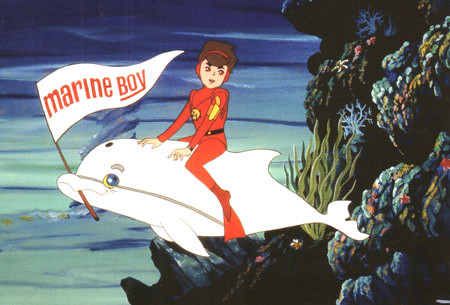
Not as famous as Astro Boy or as automotive as Speed Racer, Marine Boy was a '60s Japanese cartoon (from Japan Tele-Cartoons aka TV Films) dubbed by the Peter Fernandez/Corinne Orr/Jack Grimes team. Apart from quick glimpses on hotel TVs while on vacation in other markets, I never got to see this show as a kid. Currently languishing in the vaults of Time Warner Turner Whoever, this show really ought to get a proper DVD release (and has, says 2013). Anyway, I bring it up to show you this clipping that D. Thompson found in a 1966 issue of a TV broadcasters magazine:


What's interesting about this article is how Frish's Big Boy Restaurants purchased Marine Boy in Ohio, Kentucky, and Florida markets. Was this a promotional tie-in? Did the Big Boy and Marine Boy ever meet in the pages of those free promo comics? Was there a "Marine Boy Surf And Turf" special on the menu? The mind boggles.

That's a pretty cool Marine Boy illustration up there with the article, pity it isn't in color. Hold on a minute...


And on the back...

signed by Marine Boy voice talent Corinne Orr and Peter Fernandez! 

Thanks for reading Let's Anime! If you enjoyed it and want to show your appreciation for what we do here as part of the Mister Kitty Dot Net world, please consider joining our Patreon!


Sunday, October 14, 2007

the captain harlock archive

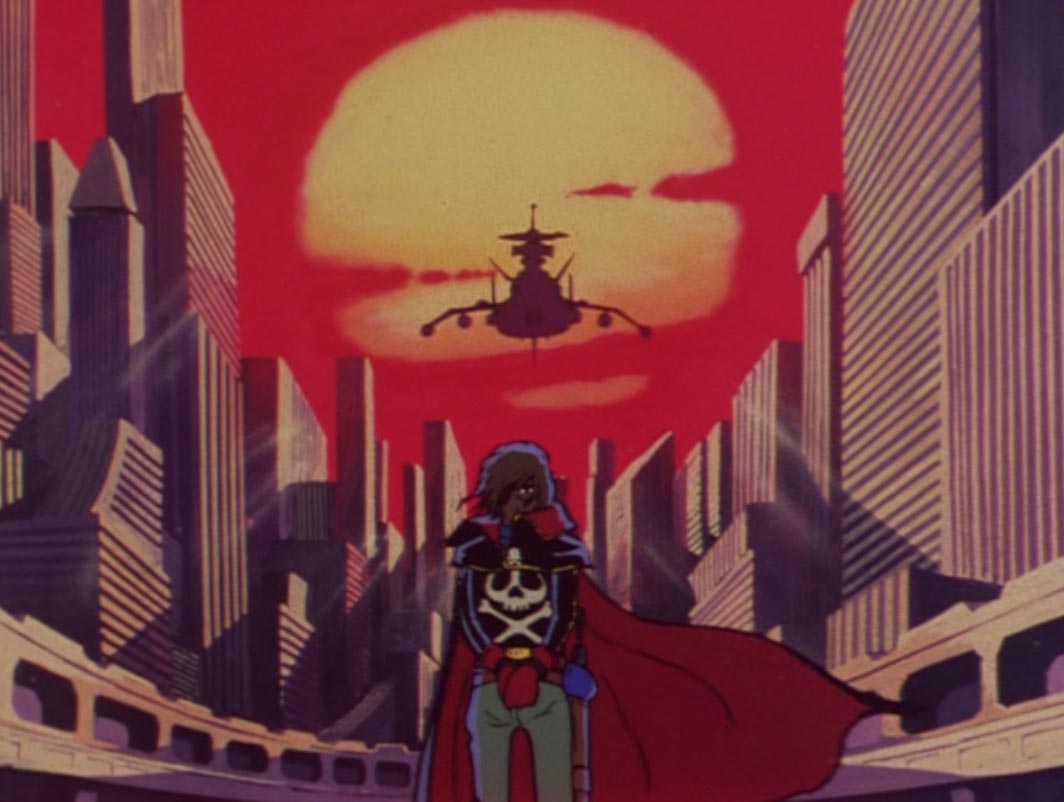
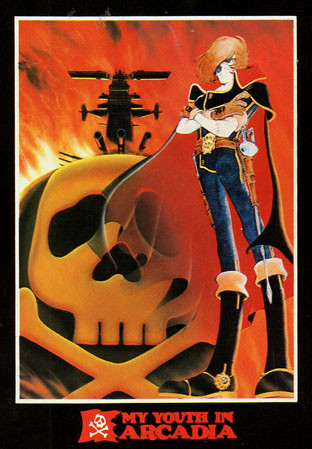
One of the things my pal Matt Murray has done, besides making wacky short films as part of the Corn Pone Flicks filmmaking collective, is set up a comprehensive website all about Leiji Matsumoto's space pirate hero, Captain Harlock.


Matt's website covers every anime appearance of Captain Harlock, his spaceship the Arcadia, its crew of willowy girls and potatoheads, the aliens and bureaucrats who try to destroy him, and the various continuities and timelines they all appear in. It also means that I never have to write about Captain Harlock on this blog, I can just point everybody to Matt's website.


For instance, didja know that Harlock's pal Tochiro, the guy who built the Arcadia, has at least three separate, completely different animated death scenes? That there are two Arcadias? That most of Harlock's animated appearances completely contradict each other? It's this kind of incongruity that keeps Matsumoto's work fresh and gives scholars things to argue about for years and years.


So do yourself a favor and check out Matt's Harlock website, if only to learn about "Malibu Graphis" (sic) and their amazingly bad late 80s Harlock video release. Tell 'em Dave sent you!


Thanks for reading Let's Anime! If you enjoyed it and want to show your appreciation for what we do here as part of the Mister Kitty Dot Net world, please consider joining our Patreon!