Wednesday, February 25, 2009

the little prince and the new power revolution

It's time once again for another exciting installment of our popular high-tech feature ANIME ON CED! That's right, Capacitance Electronic Disc AKA RCA Selectavision, possibly the most useless video format ever created! Was it a temporary home for Japanese anime home video releases in North America? Yes it was, and it's our mission to seek out and document all examples of... ANIME ON CED.


The best part about buying CED discs is that invariably you find enormous piles of them in thrift stores and antique malls, and once you start thumbing through them, somebody will always come up to you and (1) ask you if you know what they are, (2) inform you that they are laser discs, and (3) ask you if you have a player for them.


All these things happened when I came across today's offering, THE LITTLE PRINCE. Based on the 1943 children's book by Antoine de Saint-Exupéry, this tale of the boy who lives on the asteroid B612 was very freely adapted by the Japanese anime studio Knack into a 39 episode series that aired in 1978 and '79.


The original novel is a popular and influential work that's influenced readers around the world with its charming, dreamlike qualities. The anime series, not so much; our little Prince spends each episode hitching comets down to Earth so that he can express amazement at all the wonderful things and help people with their problems. Broadcast on Nickelodeon in the 80s, the American version's Little Prince was voiced by Katie Leigh, who would later go on to do voice work for "Dungeons & Dragons" and "Totally Spies".


It's tough writing about this show because it's really dull. It doesn't have the crazed thievery of other Knack series like Groizer X or Astroganger, and it lacks the total sub-standard lousy of Ninja The Wonder Boy. My Nickelodeon time was spent watching "You Can't Do That On Television" and "Tomorrow People", so I have no fond memories to fall back on. You can see Knack's team trying to emulate the Nippon Animation Company's World Masterpiece Theater Miyazaki-Takahata style of vaguely Europeanish characters - and it gives Little Prince a class not normally found in Knack productions -but "Heidi" this ain't. On the other hand, the animation style is downright sophisticated for Knack, probably due to series director Yoshikazu Yasuhiko. The series pairs nicely with Nickelodeon's other Euro-style anime offerings Belle & Sebastian and Mysterious Cities Of Gold. 


The two episodes on this CED feature the Little Prince helping a mountain-climbing kid climb the Andes only to be rescued by a surrealistic balloon decorated with a giant eye, and then he visits London where he aids a chimney sweep in his star-crossed romance with a nanny - wait, I mean, with a ballet dancer. Many life lessons are learned.

This disc actually does NOT feature the scene illustrated on the back cover, which seems to be from a "very special" episode of The Little Prince, one endorsed by NAMBLA.

Unlike so many other shows, The Little Prince has been released on DVD, so you're in luck. The bargain retailer East/West also released at least two Little Prince DVDs, one of which coincidentally contains the same exact two episodes that are on CED. I guess somebody at East/West knows what Selectavision discs are, and has a player.


If you have fond memories of watching the show on Nickelodeon, then by all means I would seek this show out in whatever format currently is in vogue. If, on the other hand, your psyche was not imprinted at an early age with the story of the little asteroid guy who loves a rose and tends volcanoes, this one might make for some tough watching.


-Dave Merrill

Thanks for reading Let's Anime! If you enjoyed it and want to show your appreciation for what we do here as part of the Mister Kitty Dot Net world, please consider joining our Patreon!

Tuesday, February 17, 2009

THE TERROR OF TINY TOYS

The Japanese robot explosion of the 1980s may only properly be appreciated by the shock waves it generated on the other side of the world. The swelling pressure of thousands of suppliers creating millions of plastic toys, mounting to alarming strength, could only be relieved by using the children of America as a safety valve- children who hungered for toys from these shows and yet DID NOT EVEN KNOW THEY EXISTED. Is this evidence of the fantastically creative work of Japan's anime designers, or were they tapping into a collective unconscious of juvenile desire that knows no nationality? DO STRANGE FORCES FROM BEYOND THE STARS CONTROL OUR DESTINIES?

Well, I don't know. What I DO know, though, is that years of sifting through trays of toys at garage sales and flea markets have yielded a bounty of Japanese robot plastic that neither knows nor cares of its origins or ultimate destinations. Where did these toys come from? Carnival prizes? Party favors ordered through the mail from the Oriental Trading Company? Bubblegum machine prizes from the local Zayre's or Treasure Island or K-Mart? Let me tell you, when you see a Kroger bubblegum machine advertising GOD MARS robots in a decaying strip mall in College Park Georgia, it will turn your entire worldview upside down.

But enough of that. Allow me to show you photographic evidence of the startling penetration these "orphan" Japanese toy robots had made into American society - circa, let's say 1985.


MAZINGER Z shows off his metal muscles in this tiny super-deformed style inch-high rubber figurine hastily spraypainted a neon green. Yes, the Jet Scrambler is majestically attached to his tiny green back.


Meanwhile a pink Real Robot from FANG OF THE SUN DOUGRAM raises his articulated arm in defiance. in 1984, this two-inch rubber figure was individually wrapped and sold in Spencer's Gifts in the mall with a triangular label reading "Leadworks Taiwan" affixed thereon. I could get an entire column out of the crazy anime stuff I found in Spencer's Gifts, but that's for another time.


Meanwhile, MOBILE SUIT GUNDAM is here represented by a printed cardboard target mounted on a plastic base. This was packaged with a dart gun, encouraging America's youth to regard the "White Mobile Suit" as an enemy. Influence of Zeon spies in the toy industry, I imagine.


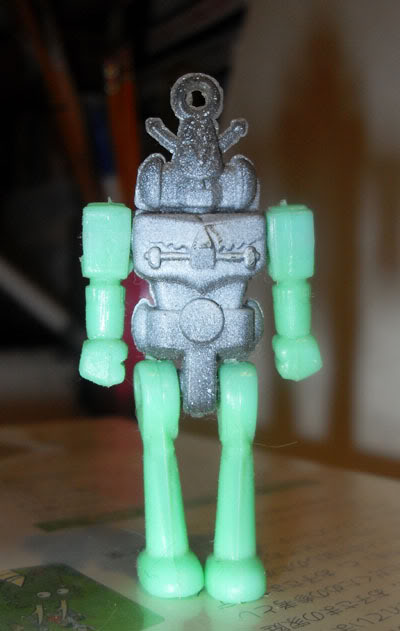
If you ever wanted a tiny super robot to wear as a good luck charm to ward off evil, this COMBATTLER V charm fits the bill, coming complete with a little ring for threading and jointed arms and legs. Hard to believe this super robot actually weighs 550 tons, let alone could threaten us all with his super electromagnetic yo-yo.


He never made it to television as part of the VOLTRON series, but DALTANIAS here proudly stands as tall as he can, being only two inches in length. Still, his regal bearing inspires confidence.


For some reason I have a whole bunch of tiny figures from GALACTIC WHIRLWIND SASURAIGAR, the third of Kokusei Eigasha's J-9 series of early 1980s robot cartoons. Unlike Daltanius or most of these other robots, the J-9 never got within a hootin' holler of an American TV release. Not wild enough to be "super robots", way too improbable to be "real robots", shows like Sasuraigar defy categorization by anal-retentive anime fans. At any rate, our tiny inch-high Sasuraigar poses with gun in hand, molded in soft yellow plastic.


The actual mecha from the show is a lot closer to this Takatoku toy. Of course the actual mecha from the show transforms into a space-faring steam engine railway train, the better to allow it to wander freely through space fulfilling the pun in the show's name ("sasurai" means "wandering").


The cast of the show was also tastefully rendered in the medium of multicolored tiny plastic figurines. Why don't more artists express their vision thusly? From left to right we have Rock Anrock, Beat McKenzie, Birdie Show (in pink) and suitably green is I.C. Blues, the computer-genius zillionaire who built the Sasuraigar in order to win a bet. (Character names courtesy C/FO MAGAZINE VOL. 2 # 10, 1985.)


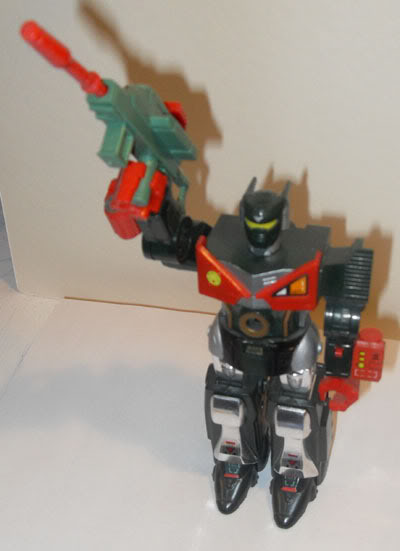
More familiar to American audiences will be this MOSPEADA figure. Is that Stick Bernard or Rook Bartley inside that Cyclone? We may never know. This little snap-together model came in one of those plastic eggs you bought for twenty five cents of your VERY OWN MONEY. The little bit of kneaded eraser at the foot there is to keep him standing up, them little toys aren't so balanced.


And here we have the little GOD MARS robot purchased in the Kroger bubblegum machine. Actually this was a transforming robot, if you got all six robots - Gaia, Sphinx, Uranus, Titan, Shin, and Ra - you could stick them all together to assemble God Mars, just like Takeru does in the show! However, they will NOT, repeat NOT, combine to make a bomb designed to destroy the entire Earth.


Who knows what tiny anime toy treasures lurk in the crevices of automobile upholstery, the corners of toy boxes, under sofa cushions across America? Can the history of Japanese cartoons in America be written in rubber and plastic? We here at Let's Anime say YES.

Thursday, February 5, 2009

the yamatocon excuse

I realize Let's Anime posts have been thin on the ground since Christmastime, and I do apologize. Part of why this is, is because I wrote an article for the Star Blazers fan website about Yamatocon, the 1983 Star Blazers convention in Dallas Texas. This article is now up at COSMO DNA, aka ourstarblazers.com, for you to read and enjoy!

I also wrote a short review for the upcoming OTAKU USA magazine, and that took a little time away from the dear Let's Anime. And of course every week over at Mister Kitty I provide commentary for items of questionable quality culled from our vast comic book collection. So it's not like I ain't been busy.

At any rate we should have something goofy for you here in a little while - so don't touch that dial!

Tuesday, January 27, 2009

THE MANY MOODS OF CYBORG 003

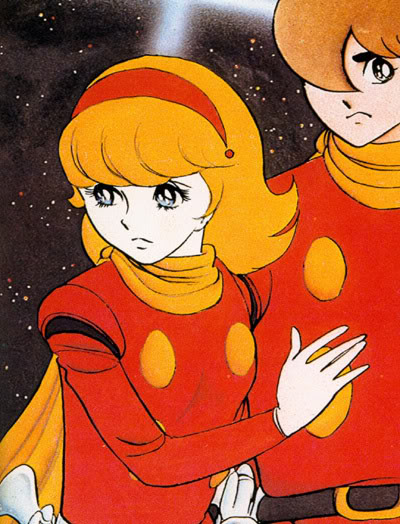
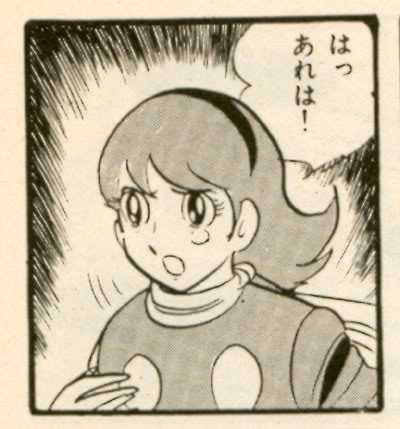
Francoise Arnoul, AKA Cyborg 003, is the only female member of the Cyborg 009 team. Throughout the 45-year history of the series, she's known for exhibiting a wide range of expression and emotion, as we see here. Come with us as we explore... the many moods of Cyborg 003.

1. Concerned


2. Nervous


3. Apprehensive


4. Worried


5. Tense


6. Anxious


7. Fearful


8. Uneasy


9. Wacky (with funny hat)


Cyborg 009 is based on the popular manga by Shotaro Ishinomori . Images taken from the CYBORG 009 manga, the 1968 CYBORG 009 TV series, the 1979 CYBORG 009 TV series, the 1980 film CYBORG OO9 LEGEND OF THE SUPER GALAXY, and the 2001 CYBORG 009 TV series, as well as original illustrations by Shotaro Ishinomori and others.

Tuesday, January 20, 2009

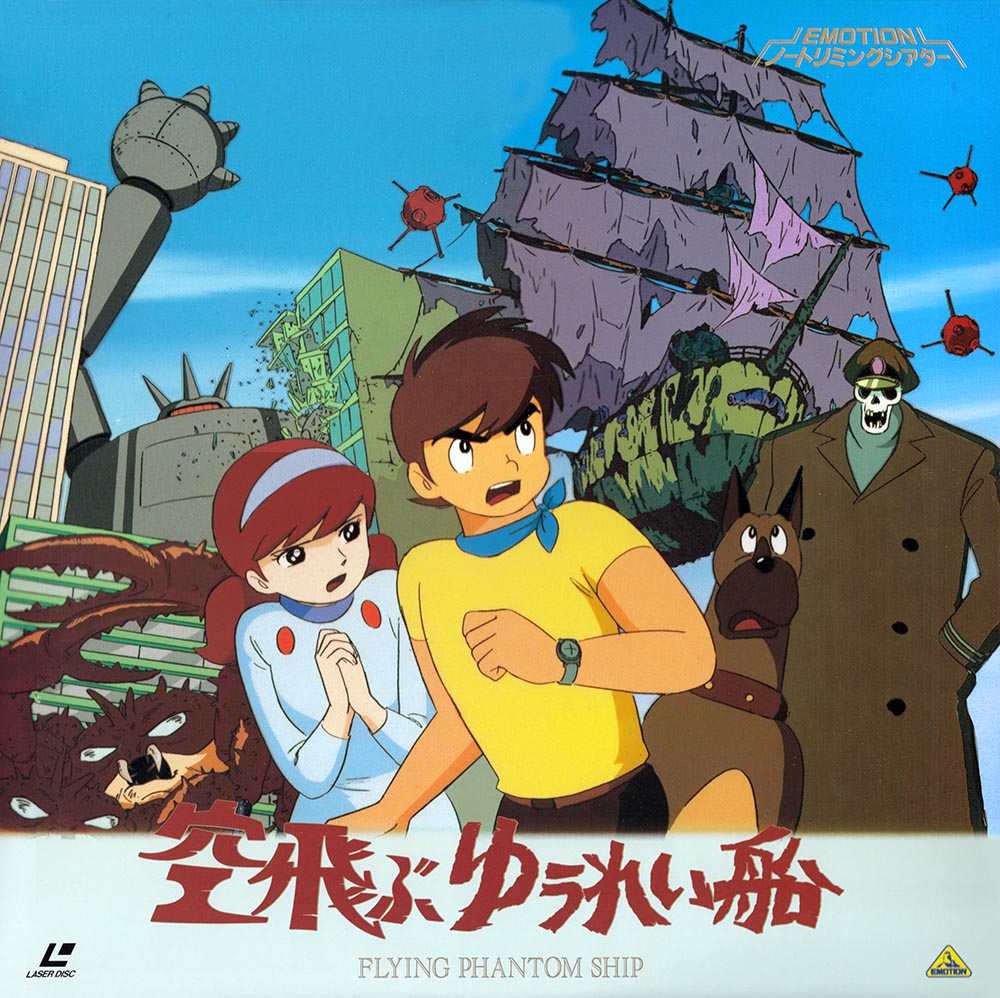
THE FLYING PHANTOM SHIP


FLYING PHANTOM SHIP and I got started at roughly the same time, the summer of 1969.  I was busy being born, and the rest of the world was grooving in the mud to Sha Na Na at Woodstock, the fine folks at Toei unleashed this film as part of their summer Manga Matsuri. FLYING PHANTOM SHIP could be considered a shorter and less ambitious followup to HORUS PRINCE OF THE SUN, but, apart from the excellent key animation by the Hayao Miyzazki / Isao Takahata combo, it's that film's exact opposite. While HORUS is an ambitious, prehistoric fairy tale epic full of symbolism and deep mythological import, FLYING PHANTOM SHIP is a paranoid Space Age actioner built to deliver kid-sized kicks and thrills. And as such, it's an unqualified success. 


We are speaking, of course, of a film that features a giant flying derelict sailing ship, captained by a ghostly apparition in a skull mask, a ship actually a super-scientific aerial battlewagon equipped with lasers and missiles. Its mission? To defeat an international mankind-defying conspiracy armed with giant robots, enormous talking crabs, and a popular, addictive soft drink that eventually dissolves you into mush. Rush-hour Tokyo is interrupted by Self-Defense Force tanks manoeuvring to attack an enormous rocket-firing robot Golem bent on smashing the city to bits.Our hero Hayato is tragically orphaned in the midst of a worldwide crisis, and he reels in disbelief as he uncovers the awful truth behind his zillionaire zaibatsu benefactor. Hayato's attempt to warn the world via live TV is halted by the invasion of enormous crustaceans. He eventually learns the secret behind his true parentage and finds himself captaining a super scientific undersea battleship on a kamikaze mission to the bottom of the ocean. Most other films would get away with one or maybe two of those concepts. Not FLYING PHANTOM SHIP, which cheerfully shoehorns enough insanity for eight or nine movies into its mere sixty minutes.


Is it thematically deep? No. Did it win awards from parents groups or arts councils? No sir. If you mention it in film class, will the other students be impressed? I wouldn't try it. But-- does it satisfy 1000% percent of your daily recommended allowance of EFFING AWESOME - the whole reason you watch these darn Japa-heeno cartoons anyway? Yes. Yes it does.

Based on a 1960 SHONEN MAGAZINE story by legendary manga-ka Shotaro Ishinomori, FLYING PHANTOM SHIP, or "Soratobu Yurei Sen" as the Japanese know it, might have seen an odd choice to film. However, Toei had had earlier success with Ishinomori's CYBORG 009 film and TV series, full of the same sort of super-science action. Toei would later release another Ishinomori-based Matsuri-fest film - 30,000 MILES UNDER THE SEA, another aquatic-themed SF movie - and while a unique and entertaining film, it's no FLYING PHANTOM SHIP.


FLYING PHANTOM SHIP is pure distilled cartoon excitement delivered with the slick 60s style of your favorite period spy films or sci-fi TV shows, and if this doesn't push your buttons, you need to go to the doctor and get your buttons checked out. The film is an hour-long reminder of the outlandish cartoon fun that made me fall in  love with Japanese anime to begin with, and I happened to first see it in 1990, when my interest in the media was at an all-time low. Apart from the occasional Miyazaki film and the procedural pandemonium of Patlabor, the early 90s were a moribund time of weak, derivative OVAs and limp sequels sucking the life out of once-powerful franchises. In this muddled environment the boldness of FLYING PHANTOM SHIP was a breath of fresh yet thirty-year-old air.

Too nutty and violent to be "educational", FLYING PHANTOM SHIP wasn't based on a fairy tale or a storybook like many of Toei's '60s releases. It didn't win any Parents Awards or Certificates Of Merit from Self-Important International Organizations Of Children's Cinema. What it DID do was entertain the livin' shit out of audiences, a hint of juvenile sci-fi actioners like MAZINGER Z and CAPTAIN HARLOCK that would later cement Toei's reputation as an energetic (if not overly concerned with technical brilliance) animation powerhouse.


And yet in spite of my cheerleading the film's nonsensical sugar-coated kookery, FLYING PHANTOM SHIP can't help but make you think. The script's bolted-together combination of H.P. Lovecraft, Jules Verne, and Ian Fleming might ONLY work set in a postwar Japan in which the industrial giants fuelling the nation's economic miracle are the same economic giants who profited from the wholesale rape of China, Korea, and the Philippines during the Pacific War. The notion that things are not what they seem, that behind the skyscrapers and advertising and rock and roll of boom-time Japan lurk horrifying monsters, this notion underlies the entire movie. The film's insistence that those who claim to be fighting the menace are actually CAUSING the menace (for their own evil ends)  is a hallmark of paranoid screeds stapled to telephone poles and posted on the Internets throughout the world. And Hayato's futile attempt to warn us- via cheerfully hosted TV chat show - puts a media-saturated spin on every child's nightmare of Not Being Listened To.


Drink enough Boa Juice and win a trip to the bottom of the sea! Or get dissolved, maybe
 
The big-eye Ishinomori character designs are sometimes at odds with the more naturalistic animation, particularly the tanks-in-Tokyo scene that Miyazaki would later use for a Lupin III television episode. There's a real effort made at realism in portrayals of the city, the military equipment, and your nautical spars and yardarms, right down to the undersea flora and fauna that the Flying Phantom Ship moves through. Yet director Hiroshi Ikeda's primary-colored, full-animation style makes it a very 60s-looking, almost visually dated movie, a surprising choice for a 1969 animated release in a then-psychedelic world of New Cinema. However, the apocalyptic, paranoid tone fits right in with the adult films of the period. The nervous undercurrents, jammed up against typical children's adventure movie cliches like Comedy Relief Dog, Tacked On Girlfriend, and Guess Who Your Real Dad Is, make it hard to tell whether this is a really dark kids movie, or the first attempt at an anime film aimed at older audiences, the kind that would dominate the field in the 70s and 80s. Perhaps it's both.


My fanzine article about FLYING PHANTOM SHIP from 1991. I'm old.

Ignored for years by anime fandom, FLYING PHANTOM SHIP is needed now, more than ever, to remind the world why we got into this stuff in the first place; that sense of outlandish did-I-just-see-that nonsense that engages the big kid in us all. At the end of the day don't we all want to be Captain Hayato, master of his own vessel, sailing into a bright future? Go ahead Captain Hayato!!
 
-Dave Merrill


Thanks for reading Let's Anime! If you enjoyed it and want to show your appreciation for what we do here as part of the Mister Kitty Dot Net world, please consider joining our Patreon!

Wednesday, January 7, 2009

anime zines of the 1990's

A little while ago LET'S ANIME explored the Japanese-cartoon-fandom fanzine culture of the 1980s, a self-published world of anime show synopses and iffy translations illustrated with anime fan artwork ranging from bad to beautiful. Now let's move the clock forward a bit and take a look at what was happening to anime zines in the decade of grunge, Clinton, clear beverages and America Online - the 1990s! Zine culture was America's underground - a fiercely independent self-published universe of crude comics, biased journalism, conspiracy theories, and reviews of whatever record labels would send you that you could later sell for beer money. Distributed by an ad hoc network of comic shops, telephone poles, record stores, and your hipper bookstores; held together by comprehensive review journals like Factsheet Five; the world of zines was embraced by the pop culture tastemakers and became as emblematic of "Generation X" as a copy of Nirvana's "Nevermind" or one of those tribal tattoos that white people once felt they could get away with. And much like Mudhoney or free zines for prisoners, Japanese cartoon zines were a part of that world.


For many anime zines, the early 1990s were merely a flashier version of the 1980s. Fan fiction in particular had yet to make the digital transition and fanfic was still being published in giant plastic-comb bound volumes like the "Anime House Presents" shown here, featuring a lovely Char Aznable cover and stories about Mospeada, Lupin III, Saint Seiya, Dirty Pair, Catseye, and a recurring comic strip mashup between Voltron and Bloom County. Meanwhile in the Yamato world, Star Blazers fans were presenting their Star Blazers/Yamato fan tales in APAs like this one, named after the queen of Iscandar because all Yamato zines were named after female characters. They just were, okay?

But new and strange forces were looming, Godzilla-like, over the horizon. The "desktop publishing revolution" meant that graphic design and typography were no longer the private reserve of print shops and linotype operators. Suddenly regular folks with a couple thousand bucks to blow on computers and printers could create professional-looking documents at a fraction of the cost of traditional methods. The new wave of computer-aided fanzine design, combined with the falling prices of high-quality photocopier equipment and the seemingly unstoppable march of Kinko's across the land, meant anime zines could be made better, faster, and stronger than ever before.


One early computer-aided zine was Anime No Shimbun, the offical publication of the Japanese Animation Network, a former EDC chapter in Richmond VA headed by the late Roy Bruce. Anime No Shimbun featured synopses of current and not-so-current titles such as Odin, Nadia, and early moe fave Video Girl Ai, along with reprints of Baycon synopses and reviews of the Robotech II: The Sentinels comic by local favorites John and Jason Waltrip. Fan fiction, Japanese cultural information, general animation news, and a fan comic story entitled "Urusei Gakira" written and drawn by future perennial anime-con guest Steve Bennett helped to fill the zine's pages.


The East Coast was definitely representin' as we see from another 1992 zine, Atlantia, which is the offical news bulletin of the Atlantic Anime Alliance. What is it with fan clubs publishing "official" newsletters? Was somebody out there printing unofficial newsletters? Judging from the editorial in this issue the AAA seemed to be made up of New Jersey area fans determined to become the focal point of anime fandom on the east coast. Let me know how that's working out, guys. A big 3X3 Eyes article by the late Steve Pearl, an article about the AnimEigo Bubblegum Crisis releases and a synopsis of Ranma 1/2 "Get Back The Brides" rounds out the issue.


If we're talking about trying to get anime fans to come together in peace love and understanding, for my money the must-have zine of 1992 was The Anime Source. Like the cover says, it lists contact information for 26 APAs, 153 computer BBSes, 111 (count' em!) anime clubs, 54 fanzines, 24 magazines, 171 stores, and 88 games. If you couldn't get your anime freak on with this zine then there is simply no hope for you. Publisher Alec Orrock also was behind the zine From Side To S.I.D.E., a entertaining magazine with a focus on Orange Road, Gundam, Yawara, and a fan translation of the wacky crossdressing idol singer manga "Twinkle Idol Stars".


Meanwhile back on the East Coast the Baltimore anime club JASFA was continuing to crank out their newsletter, a short and snappy monthly that cut through the nonsense and let you know what the club was watching and when. Translated episode titles make back issues of this zine priceless, unless you already knew that episode #46 of Saver Kids was titled "The Earth Breaks Up In Five Minutes!!" This issue not only has a great Ren & Stimpy cover - yeah, you KNOW it's the '90s when they start hauling out the Ren & Stimpy references!!- but also features a mention of some new show called "Sailor Moon". I wonder if that will be popular. Another 80s survivor was The Rose, the newsletter of Anime Hasshin, which continued to provide news and information to readers around the country. Always tons of reviews and fan art in the Rose, and this issue was no exception with articles about Ge Ge Ge no Kitaro, Speed Racer, Haruka Takachiho and his Dirty Pair, Dragon Half, and fanart by, among others, Robert "Slow Bob" DeJesus.


And if we rumble way up north for a change of scenery, we might come under guitar-playin' natural distaster attack from the National Anime Terrorist Organization of Minneapolis MN and their zine, Psychommu Gaijin! Pgaijin, as it came to be known, was the low rent punk rock cut and paste fuck you antidote to the rest of the anime fanzine world, much of which could be politely described as, shall we say, slightly anal-retentive. Not Psychommu - spearheaded by young clubbing indy-rock insomniacs, burnt-out fandom gurus, and trouble-making beer enthusiast anarchists, the PGZine cheerfully mixed medical illustrations, band flyers, Kennedy assassination cartoons, Votoms drinking games, a anime version of Battlestar Galactica and weed-huffing Ninja High School parodies with reviews of Macross videogames and con reports. Psychommu Gaijin transmogrified into a website, a Yahoogroups mailing list, and a blog, yet continues to appear sporadically as a free zine handed out at various anime conventions, to the obvious dismay of the authorities.


Across the pond in Belgium the euroanime fans were doing it for themselves with the handsome, glossy-covered, English-language (thanks!) Japanese Anime & Manga Magazine or J.A.M.M. for short. Yes, even in Europe fans felt the need to name themselves with awkward acronyms. The sophisticated European zine culture thought nothing of producing long, detailed essays on Urotsukidoji and ero-anime in general, complete with illustrations (!). Of course there's also some Dr. Slump to take the edge off.


From Florida came the first and perhaps only issue of Anime Zeta, probably the only anime zine to (a) review the Bible cartoon Flying House, and (b) review the Bible cartoon Flying House without once mentioning its religious content. Magazine and newspaper clippings, typewritten articles about Daltanias next to handwritten captions, illustrations lifted wholesale from reference books, and a "news article" about Ted Turner - not Turner Broadcasting or Warner, just Ted Turner - getting the rights to Doraemon (?) make this one a real curiosity.

AWA program book on the left, JACO zine on the right


If there's one thing Florida had a lot of, it's anime clubs. Orlando itself was home to several different outfits, all fussin' and feudin' with each other to see who could be the fussinest and the feudinest. The Japanese Anime Club Of Orlando, a.k.a. JACO, was so impressed by their visit to AWA 2 that they produced a 52-page zine all about the trip. Seriously. Packing up the car, getting traffic tickets, stalking that girl who looks like your ex-fiance, that rocking air guitar performance of the end theme to Megazone 23, photographing their own version of the cover of the con's program book; it's one sloppy love letter of a zine. Not every issue of "Project JACO" was a mash note to AWA, though. Reviews of Bounty Dog, Chirality, and a photo essay of their trip to EPCOT Center rounded out the color-cover Summer 1997 issue. JACO eventually started their own convention, Jacon, thus starting the process which enabled the rest of us to transition from saying "Florida has too many anime clubs" to saying "Florida has too many anime cons."


As the decade sped by in a blur of stonewashed jeans and lackluster techno remixes, anime zines got a lot slicker. Scanners got cheaper and processors got faster and screencaps became something more than just a lucky Polaroid of your TV screen. Section 9, produced by the Grand Rapids Area Anime Club, is representative of its era for several reasons: most of the reviews are for English-language professional releases of titles like Tenchi Muyou, Tekken, Evangelion, and Idol Hunter; the con reports have adopted the modern emphasis on photos of doofuses in costumes, and there is the first mention of some mysterious something called "DVD". Whatever could THAT be? Lots of links to those new-fangled 'web pages' keep this zine squarely in the fast lane of the 'information superhighway'.


The 90s wound down claiming print media was dead and soon we'd all be dot-com millionaires living in a virtual reality world having groceries delivered by Kozmo.com. Zine culture faltered as Jim Goad did jail time, Factsheet Five collapsed under its own weight, and everybody else got jobs working for "Sassy." Anime fan culture transitioned from a club-based fandom to becoming a migrating herd travelling from one hotel ballroom to another. Anime zinesters manned fan tables hawking their anime zines to anime convention crowds who'd rather spend their cash on actual licensed merchandise rather than some homemade pamphlet. Print zines moved towards a "free" model, as exemplified by "Pachi Pachi".


Edited by the mysterious "JobsTurkey", Pachi Pachi was distributed free at whichever conventions the editor found him-or-herself attending. How-to articles on cosplay and anime music videos kept this zine topical and reviews of anime, manga, CDs, etc. were short and to the point. Later issues focused on the anime fan culture itself, which by 1999 had assumed many of its current signifiers - squealing girls, obsession with voice actors, cosplay worship, and general fan entitlement ego-hatting. And in spite of all the editorializing anime zines could muster, the situation hasn't changed much.

Ten years later anime fandom expresses itself online through blogs, through columns on websites large and small, and through a million message boards and livejournals. No longer do we have to sneak copies from the student center office or get a job in the print industry to support the toner monkey on our back. Some of us pine for the good old days of making our marks upon the world with gluestick and X-Acto, but at the same time, nobody misses clearing paper jams or shelling out for PO boxes. We here at Let's Anime look forward to the media-cube digi-zappers of 2029 reminiscing fondly about those quaint, childish "anime blogs" of yesteryear.

-Dave Merrill

(all artwork and text (c) the original creators. Thanks to you, the zine publishers of the 1990s!)

Thanks for reading Let's Anime! If you enjoyed it and want to show your appreciation for what we do here as part of the Mister Kitty Dot Net world, please consider joining our Patreon!