Monday, October 17, 2011

spooky classic anime

At AWA this year, I did a panel about spooky anime of the 60s and 70s. You know, ghosts, scary monsters, supernatural elements, all the things we were promised but didn’t really get here with “Casper The Friendly Ghost”. You see bits and pieces of these shows out of the corner of your eye as you dig through old This Is Animation books and back issues of Animage, but most of them are ignored on this side of the pond by commercial localizers and cosplaying fans alike. I figured it would be a good way to kill an hour at this past AWA, what with the convention being back in October and all, but in researching the topic I learned about shows I’d never heard of, which is always a pleasant surprise. The crowded panel room seemed to agree and most of the comments I got were things like “wow, I had no idea this kind of thing existed”. And that’s why we’re here!


There's only one way to begin a discussion about classic supernatural anime, and that's with Shigeru Mizuki. After a childhood spent drawing comics and listening to ghost stories, Mizuki was drafted into the Imperial Army and sent off to New Britain where he suffered malaria, was listed as KIA, and lost his left arm in an air raid. His wartime experiences would inform his later non-fiction manga that bluntly confronted Japan’s role in the Pacific War, including the unflinchingly brutal semi-autobiography ONWARD TOWARDS OUR NOBLE DEATHS. After a stint working in the kamishibai field, Mizuki broke into manga in 1959 and has kept going ever since.

Available now from Drawn & Quarterly

His most popular series is GE GE GE NO KITARO, the story of a boy in a striped vest who walks the line between the “normal” world and that of the yokai, traditional Japanese spirits who roam the countryside, inhabit various objects or geographical features, and whose interactions with humans can be playful or deadly. Based on ancient Japanese folklore, tales of yokai were widely regarded as embarrassing hillbilly superstition, but Mizuki’s work highlighted their cultural significance and brought these stories to entire new generations of youngsters to boot. 
A bewitching combination of simplistic characters and highly detailed, tightly rendered backgrounds, Mizuki’s artwork is as appealing as any of his monsters or adventures. There’s a classical, hand-tooled look to his work that defies, hell, obliterates the cliché of manga as being slick commercial fad-driven hackwork. 


Kitaro, wanting peace between the yokai world and the humans, is always getting into trouble. Luckily his incredible mystic powers get him out of most scrapes, and his father, reincarnated as an eyeball with legs and arms, is always there to help. Not so helpful is Kitaro’s friend Nezumi Otoko AKA ‘Rat Man’, a wily schemer whose plans usually wind up going awry. A supporting cast of cat-girls, demon umbrellas, and haints & spirits of every description round out the series.

custom hot rods of the monsters, this week in Ge Ge Ge no Kitaro

Mizuki’s KITARO is ridiculously popular in Japan. The original manga ran for ten years in Weekly Shonen, and it was animated for television in 1968, 1971, 1985, 1996, and 2007. There was also a live-action film in 2007. As a manga/anime property KITARO was merchandised like crazy, with all kinds of products like toys, stationery, video games, and utensils; in fact the whole panoply of anime marketing benefited from these creepy folktale characters. There’s even KITARO toilet paper.
 
Oh, you thought I was kidding?

This was purchased at a KITARO-themed shop in Asakusa, Tokyo, where you could outfit yourself head to toe in KITARO gear and go out to bring peace between yokai and human. Naturally a show of such significant pop-cultural importance was completely ignored for years by the American “anime industry.” However, Drawn & Quarterly has since made enlightened the West by releasing a terrific amount of Mizuki's work in English. 

For all your Kitaro needs. Near a rickety old amusement park, too!

But that’s not the only spooky manga Mizuki ever created; his other supernatural manga hit was AKUMA-KUN. First appearing in pay-library manga in 1963, the series was rebooted for Shonen Magazine in ’66, the pay library version was rewritten in 1970, and the character was revived in 1987 and again in 1993.
Double-page spread of AKUMA-KUN awesomeness

AKUMA-KUN has a more Western feel in its approach to demons and monsters but still has that great Mizuki look. The story is about Shingo Yamada, ostensibly a normal boy, but one day when he follows an old man into a cave he finds out that he has the power to control demons, namely Mephisto. Because Shingo is a good boy, he forces Mephisto to help him fight evil demons and monsters! AKUMA-KUN didn’t get animated until 1989 but in 1966 Toei made a live-action series out of the manga starring the kid who played Johnny Sokko in JOHNNY SOKKO AND HIS FLYING ROBOT.

AKUMA-KUN color anime from 1989


In the United States, it took the mid 1960s TV horror hosts and a whole spate of sold-to-TV monster movies to create a “horror boom” that led to things like THE MUNSTERS, Famous Monsters Of Filmland, and “The Monster Mash”. But in Japan Mizuki’s KITARO and AKUMA-KUN manga helped spur a Japan-only “yokai boom” that led to scary kids’ entertainment of all stripes.


Yokai Ningen Bem

And if you want shows that would scare the hell out of childhood me, you need look no further than YOKAI NINGEN BEM. This 1968 color anime series from studio Dai-ichi Doga (who also produced the GOLDEN BAT anime) is about three yōkai, Bem, Bera and Berro, who arrive at a large coastal city and find evil caused by both “immoral humans” and yokai, which they must of course battle. A live-action remake of this series is currently on the air! The anime has a great chunky late 60s feel that evokes JOHNNY QUEST, but with more fangs, drool, and horror.


Kaibutsu-kun and friends

Manga-ka duo Fujiko-Fujio created the worldwide success DOREAMON, but their boundless creative energy had many manifestations; before the blue robot cat conquered the world in 1970 they created KAIBUTSU-KUN. Wouldn’t you like to have monsters for pals? Kaibutsu-kun does! His friends Dracula, Wolfman, and Franken make every day Halloween! They travel from Monster Land to the Human Realm, where they keep mankind safe from the monsters of the demon group Demonish. And fight over who has the better breakfast cereal. The 1968 anime series was from TMS and Studio Zero, the animation studio that Fujio-Fujiko was a part of along with Shotaro Ishinomori and others. KAIBUTSU-KUN joined the ranks of live-action series in April 2010. Is Japan in the grip of another monster boom?


Obake Q-Taro is scared of dogs

Fujiko-Fujio didn’t stop with KAIBUTSU-KUN – another supernatural manga from the prolific duo is OBAKE Q-TARO. Attaching himself to the Ohara family, Q-taro is a “obake”, a ghostly Japanese spirit who comes in many frightening and disturbing forms, none weirder than Q-Taro himself, who resembles one of those targets you knock down with baseballs at the county fair, only with feet and giant comedy lips. Q-taro loves to cause trouble and steal food, but he’s deathly afraid of dogs, so sleep soundly, pet owners. The anime series was produced on 3 separate occasions – 1965, 1971, and 1985, and the Nintendo game was released here as “Chubby Cherub”. No, seriously.

the friendly glow of the Q-Taro Lamp, courtesy R.T.

Speaking of manga legends, Osamu Tezuka’s 1967 manga serial VAMPIRE, though not dealing with the traditional blood-sucking freaks of legend, did star monsters and werewolves! The vampires of the title are beasts who, disguised as humans, walk among us regarding normal people as prey. It’s the law of the jungle when they transform into their animal shapes and hunt humans! Their long term plan is to overthrow civilization and bring us all back to our savage natures. However, young Toppei, a wolf-man, abandons the animal life and moves to Tokyo where he gets a job at Mushi Productions working for Osamu Tezuka, who starred as himself in the TV series, scenes of which were shot in his front yard and at Mushi Productions. When did that guy sleep? And will the vampires let Toppei escape? Meanwhile stock Tezuka character Rock Home, this time a master-of-disguise criminal genius, seeks nothing less than the domination of the entire world. Can he force the vampires to do his bidding? In 1969 the series was turned into a live-action show that, even without the live-action actors interacting with the animated monsters, is a pleasure to watch just for the crazy new-wave camera work.


Toppei as a human, Toppei as a cartoon wolf, Tezuka as himself. Workaholic much?


Kazuo Umezu's work is SPOOOOOOOOOKY.

Kazuo Umezu has a giant body of horror manga, including SCARY BOOK, CAT EYED BOY and THE DRIFTING CLASSROOM. His immensely disturbing work never quite made the jump to full-scale children’s TV anime - the 1976 Wako Productions CAT EYED BOY series used creepy illustrations and cut-paper movements which aren't strictly animation, but in fact are way spookier.
The 1990 anime “The Curse Of Kazuo Umezu” is spooky, too. And of course live-action versions of his manga abound, but make sure the kids are in bed.

sweet dreams, kids


Manga legend Go Nagai is mostly known here for the animated versions of his popular works like MAZINGER Z, GRANDIZER, DEVILMAN, CUTEY HONEY, and KEKKO KAMEN. However, his manga work has yet to really make any kind of headway in the States. Which is a shame because hey, he’s Go Nagai! Fresh off his late 60s high school scandal-comedy HARENCHI GAKUEN ("Shameless School"), Nagai stretched his thematic muscles into more fantastical and horrific areas of thematic musculature, including this story, SUSUMU-CHAN DAI SHOCK (Susumu's Big Shock), which is a short tale of...  well, see for yourself. 


Along with his more science-fictional or naked-girl themed manga, he’s produced lots of spooky, supernatural-themed comics, of which DEVILMAN is probably the best known.


DEVILMAN became more of a super hero kind of thing when it made the transition to television, but another Go Nagai concept, DORORON ENMA-KUN, kept its spooky yokai spirit intact! Enma-kun, our hot-headed, lustful teenage boy protagonist, has eyebrows that can detect spirits and a staff which turns into a giant hammer. Enma-Kun is sent by his uncle, The Great King Enma, the Buddhist King of the Underworld and Judge of the Dead, to straighten things out here on Earth. Aided by ice demoness Yukiko-Hime, the kappa demon Kapperu, and his talking hat Chapeauji, Enma-Kun battles the demons that infest every inch of Japan! The 1973 TV anime was from Toei, but the 2011 remake DORORON ENMA-KUN MEERA MEERA was by Brain’s Base and will be released in North America next year!

Meera meera meera meera meera meera.

So happy Halloween everybody, and when you’re shivering in your bed afraid of spooks, remember that Ge Ge Ge no Kitaro and Dororon Enma-Kun and Kaibutsu-kun and Yokai Ningen Bem and Cat-Eyed Boy are on their way! And that might be good thing, and then again, it might not.

-Dave Merrill

Thanks for reading Let's Anime! If you enjoyed it and want to show your appreciation for what we do here as part of the Mister Kitty Dot Net world, please consider joining our Patreon!

Sunday, September 18, 2011

my yearly excuse

Every year for the past, oh, 17 years, I have the same excuse as to why I can’t get much of anything done in the late August-September time frame. It’s all because I helped start an anime convention in Atlanta back in 1995, and AWA has been such a blast every year that I continue to be involved.


This year is no different, I’m handling several events and panels over the course of the weekend, and preparation for same has taken up the free time I’d normally use to write Let’s Anime columns.

What’s happening this year at AWA 2011? Thursday night at 7 we do this thing called the SUPER HAPPY FUN SELL, where anime fans dig through their closets and bring out their pre-loved manga, DVDs, old VHS and laserdiscs, toys, games, plushies, model kits, prints, cassette tapes, fans, kimono, record albums, and other less identifiable items to sell to you at bargain prices. I find neat stuff at this sale every year and I predict this one will not be any different. Bring money!


Then later on Thursday it’s Dave’s Old School Classroom. I wasn’t going to do it this year, mainly because at previous shows it’s always been this late night Saturday thing and I was tired of spending my Saturday night catching-up-with-friends time in a video room showing “Legend Of Marine Snow”. So this year it’s moved to Thursday at 10pm in the Kennesaw room and I’m going to take the audience through the anime work of Shotaro Ishinomori, including little-seen gems like Sabu & Ichi’s Detective Stories and 30,000 Miles Under The Sea. You’ll need your AWA badge for these events so show up early Thursday to get squared away!


Friday night is of course Japanese Anime Hell; I’ve been doing it at AWA since 1997, a two-hour compilation of entertaining and inexplicable found video that works within the themes of Japan or animation or both. Or neither. To be honest I never thought it would become as popular as it has, but I could say that about AWA in general, which will have more than 12,000 attendees this year.


There’s a whole bunch of stuff going on at the show on Saturday but all I’m responsible for (other than a certain gathering for fans of a certain show) is a panel at 7pm titled “Stone Age Mecha”, anime and manga robots of the pre-Mazinger Z era. Expect some Mitsuteru Yokoyama action in this one.

On Sunday at 1pm I’m on a panel with representatives from other Atlanta anime conventions, and we compare and contrast our various shows, talk about dealing with hotels and vendors, and generally swap trade secrets. I don’t live in Atlanta any more, so my eligibility as an AWA representative is dubious at best, but this gives me a chance to catch up on all the gossip. And that’s important.

At 3:30 there’s a talk entitled “My Life On The Super Robot D-List”, where experts like Richard Hoelsher and Drew Sutton and me discuss various robot anime shows that never quite caught on with the public. And there were a surprising number of these near-misses, some entertaining, some terrible. Then I have to run over next door at 4pm and do a panel on “Spooky Classic Anime”, all about Shigeru Mizuki’s Ge Ge Ge no Kitaro and Akuma-Kun, other shows like Yokai Ningen Bem, Obake Q-Taro and Kaibutsu-Kun, and even some Dororon Enma-Kun thrown in for good measure. And then before you know it the con is over for another year!


Of course AWA’s packed with attractions besides my humble involvement; guests include seiyu Naoko Matsui (Dream Hunter Rem, Katsumi Liqueur in Silent Mobius), artist Yoshitoshi “Serial Experiments Lain” Abe, voice actors Todd Haberkorn, Vic Mignogna, Amy “Nova” Howard-Wilson and Brina Palencia, industry figures like Carl Horn, Neil “Totally Lame Anime” Nadelman and David Williams, animation director Tim Eldred, artist Bob DeJesus, musical acts MOON STREAM and The Suzan, among others. There’s a formal ball, the famous AMV awards, a giant artists alley, classy costume contest, karaoke, maid cafes, video games, a manga library, a huge dealers hall, RPG games, three 24 hour anime video rooms showing damn near everything, a whole programming track dealing with cosplay, Midnight anime parody Madness, several loud dances, and this year a skit event, so you can shut up about your damn skits.

AWA 2011 happens September 29-October 2 at the Cobb Galleria Convention Center/Renaissance Waverly Hotel in what’s technically Atlanta GA! See you there!

Sunday, August 21, 2011

best tattoo ever

I don't have any tattoos, but if I did, they'd probably look something like this...


Reader Gary S. sends us this photo of his incredible Prince Planet-themed body modification. Is that amazing or what? Thanks for sharing this with us, Gary - now excuse me, I need to get over to the local tattoo parlor...

Monday, August 15, 2011

Ten Times As Big As A Man

This review originally appeared on the Anime Jump website in 2005.


Back when UHF television was the great babysitter for the nation, all sorts of crazy shows wound up getting syndicated and parceled out to the upper reaches of the broadcast dial. One of those shows was KING KONG / TOM OF T.H.U.M.B. Long after its original 1967 premiere as part of ABC's Saturday morning lineup, this show got a new lease on life entertaining children on weekday afternoons after school. That’s where I saw it, sandwiched between MIGHTY HEROES and ROCKY & BULLWINKLE. Watched, enjoyed, filed away as a pleasant memory; and only when I got copies of episodes from some guy in Australia did I notice that KING KONG / TOM OF T.H.U.M.B. was animated by the Toei Animation Company of Japan, the same folks who produced many of the other shows that populated my personal pantheon of TV potentates. Who woulda thunk it?


Actually, KING KONG was one of the first co-productions ever attempted between hungry American cartoon outfits and cheap Asian animation studios. It's a system that proved lucrative for both parties and would lead to greater and greater percentages of American TV cartoons being written in the States and animated in Japan or points east. KING KONG's American side, Rankin-Bass, would later become famous as the producer of THE HOBBIT (a Toei co-production) and those endless Christmas specials starring stop-motion puppets of Burl Ives and Fred Astaire and the kicky character designs of MAD MAGAZINE stalwart Paul Coker Jr. Rankin-Bass's predilection towards cherry-picking top American illustration talent is evident in the credits for KING KONG, which lists MAD and EC Comics legend and good ol' Georgia boy Jack Davis as character designer. It's hard to spot after the layers of cleanup, but his touch is visible, especially in the older characters.

bigger than the Beatles

But enough of this trivia. What about KING KONG? Well, for what it is, a 1967 TV cartoon written in one continent and animated in another, this show is pretty entertaining. It's got a great theme song ("TEN TIMES AS BIG AS A MAN!!"), the animation is stripped-down basic, the character designs show the clean-looking international style so popular with all Japanese exports of the period, and the stories are all self-contained 8-minute vignettes with little time for anything but action.


Bobby, Susan, and their hairy friend. And Kong.


Young Bobby Bond lives with his scientist dad and teenaged sister Susan on Mondo Island, home of the giant King Kong (copyright RKO Radio Pictures, Inc). Jimmy and Kong form a fast friendship and together they defeat monsters, invaders from space, centurions from the depths of the earth, evil white hunters, and the machinations of the evil Doctor Who. No, not the BBC guy with the police box, but an evil scientist who looks like Captain Marvel's Dr. Sivana as drawn by Chester Gould, full of dastardly plans to kidnap Kong and use him to either conquer or destroy the world, whichever comes first. You may remember him from the Toho film KING KONG ESCAPES - also a Rankin/Bass co-production.


The Evil Doctor Who

As a cross between JOHNNY QUEST, GIGANTOR, FRANKENSTEIN JR, and ADVENTURE ISLAND the show fits neatly into the mid 1960s, a time when children's TV cartoons were able to feature action and adventure, a glorious age of fun and excitement ended only by the monstrous onslaught of Action For Children's Television. If not for these shrewish bluenoses, American animation might have continued to match Japanese cartoons in the two-fisted entertainment category, and American cartoon fans might now be obsessed with American panty-flashing maid shows instead of the Japanese ones. KONG enjoyed a bit of success in the ‘60s; merchandising included toys, books, and even a board game.


The companion show TOM OF T.H.U.M.B. is just as entertaining, if not more so. A wacky spy romp in the GET SMART vein, TOM stars a secret agent who used to be a janitor. He and his assistant, a stereotypical 60s “Oriental” named Swingin’ Jack, were caught in an experimental shrinking ray and instantly reduced to Smurf proportions. Naturally his minature stature comes in handy when battling the evil plots of M.A.D. (which stands for “Maladjusted, Antisocial, and Darn Mean”, as we’re reminded every episode). The show is still fun to watch. The dialog is deliberately corny, the plots are bare-bones excuses for gags, and the agents of M.A.D. speak in foreign accents that range from Russian to Hispanic to Brooklyn, sometimes in the same sentence. Tom’s outfit, by the way, is the Tiny Human Underground Military Bureau. Yes, I remember all this stuff from when I was 8. And before you bring up INCH-HIGH PRIVATE EYE, this show did it first.


Tom of T.H.U.M.B. blastin' away 'cause he got little-man syndrome.

The DVD release is a swell package, you get 8 Kong episodes, each with 2 Kong segments and 1 TOM OF T.H.U.M.B. segment, separated by the original bumper segments. Vol. 2 has the KONG pilot episode as well. The transfer is sharp, and while the colors seem to be a bit washed out, that's understandable for a show that's been sitting in 16mm reels in somebody's vault for the past 20 years. I noticed some varispeed artifacting in one episode due to cheap time-compression, which is an odd thing to see in a show that hasn’t been broadcast in 20 years. Still, this is a $10 DVD you buy at Target, of a dimly-remembered licensed show from the mid-1960s, released by a now-defunct studio, so you can’t really expect Criterion quality.


New York crowds already have King Kong fever as we can see by this bystander's T-shirt.

Sure, maybe this show is only getting a DVD release because of the current KONG film. So what? If it gets forgotten classics like this show onto home video, I’m all for it. Maybe this series will inspire more outfits to unlock their vaults and share the goodness with us. At $10 a pop (or less, nowadays) that’s hard to beat.

KING KONG VOL. 1&2, released by Classic Media / Sony / Wonder.

-Dave Merrill

Thanks for reading Let's Anime! If you enjoyed it and want to show your appreciation for what we do here as part of the Mister Kitty Dot Net world, please consider joining our Patreon!

Tuesday, July 26, 2011

Gakuen Tokusou Hikaruon


This is the kind of OAV that you get a copy of in 1987, watch once or twice, forget about in favor of the DIRTY PAIR movie or BUBBLEGUM CRISIS videos, and next thing you know it's 2011 and you're digging VHS tapes out of a box wondering what the hell "Hikariyon" is. Except the tape is labeled "Space Sheriff" and that's funny because the guy who labeled it “Space Sheriff", he obviously couldn't read even basic katakana. Yet he was the kind of guy who would insult the Japanese language skills of others. These are the kinds of people one was forced to deal with in "the good old days".

So let's just get this out of the way. You know about KAMEN RIDER and ULTRAMAN, right? You know about all the Sentai shows and the shows like DENJIN ZABOGA and SPACE IRONMAN KYODAIN and STARWOLF and all the wild live-action shows that sell toys to Japanese kids. Well, there's a subset of tokusatsu that's called 'uchuu keiji' which is charmingly transliterated as "space sheriff", though aficionados prefer the term "metal hero". Except there are "metal hero" shows that aren't "uchuu keiji" shows. Anyway... this concerns outer-space lawmen who come to Earth, specifically Tokyo, to battle evil outer space villians and monsters from other dimensions. Our Uchuu Keiji heroes transform into high-tech armor and use ray guns, light sabers, motorcycles, Mazda RX-7s, and the occasional super robot or giant dragon ship to fight for justice. The first "Metal Hero" series was UCHUU KEIJI GAVAN in 1982, followed by UCHUU KEIJI SHARIVAN in '83 and UCHUU KEIJI SHAIDER in 1984. Later the "Metal Hero" genre lost the Star Wars trappings and got more down to earth with shows like METALDAR, WINSPECTOR, and JANPERSON ("Fight For Justice!")


Meanwhile in 1986 the Japanese animation industry was in the midst of an original video animation boom. Home video was hot and rental shops needed product to keep people coming in the door. In America that meant keeping your local video store well stocked with VHS copies of "Down & Out In Beverly Hills" "Runaway Train" and "9 1/2 Weeks". In Japan this meant original, direct-to-video animation releases DIGITAL TARGET GREY, URBAN SQUARE, FANDORA, OUTLANDERS, DEL POWER X, COSMOS PINK SHOCK, something called "Pink Noise Volume 1 Call Me Tonight", and coming up in January 1987, Volume 2 of the Pink Noise series, Gakuen Tokusou ("Campus Special Investigator) HIKARUON.

The OVA boom meant freedom for animators as they were not limited by the constraints of merchandise-driven broadcast television or the dictates of the theatrical film industry Freedom! Expressed in this instance by AIC making the interesting choice to create an animated version of a Uchuu Keiji show. And that’s just what we get with HIKARUON.

Ms. Adzumi, Hikaru

Ms. Adzumi’s class at Ryotoku Academy High School has a new student, Hikaru Shihoudou. It also has a big problem with teenage suicides as we see in a pre-title sequence. Hikaru hasn’t even taken his seat before he runs afoul of the classroom bully, giant gang leader Gomi. Cutesy class vice-president Yayoi Shiina stands up to Gomi’s bullying, but her subsequent assault is interrupted by Hikaru and his ninja darts. Turns out Hikaru is, surprise, actually Hikaruon, a metal hero space sheriff tokusatsu super fighter. Together with Ms. Adzumi he infiltrates high schools, 21 Jump Street style, to battle Uraer, an evil monster from another universe who gains power by stealing the precious souls of high school students.


Classy cars, classy teacher outfits, hideous monsters.

After school, Hikaru walks Yayoi home and they’re attacked by Gomi’s street gang in a well-animated scene involving a tricked out Mitsubishi sports car. Clearly they’re on the track of the bad guys. The next evening Hikaru tracks down the ringleader while Adzumi puts on her miniskirt to investigate some nightclubs, and winds up assaulted by punk rock club ninjas. And I mean “assault” in the “clothes get ripped off and it's pretty clear there's a gang rape about to happen” sense. Because that's what we need in our Space Sheriff story, implied gang rape? Looks like superhero decadence hit the OVA world about twenty years early. If this was an episode of LAW AND ORDER SVU or a more adult-themed anime video like, say, the others in the “Pink Noise” series, sexual assault would be a thematic fit. But this is an animated video about a super hero in metal armor who fights for justice and says so while waving his arms meaningfully, and as such is meant for six year olds, and I don’t know how you raise YOUR kids, but my kids, if I had any, would be at least eight or nine before I start advising them to avoid nightclubs filled with punk rockers possessed by demons from the ultra-dimension.

Henshin!

Luckily the virtue of our female characters is well-protected. Yayoi, tricked into the evil Uraer dimension, is menaced by our evil Uraer monster, but Hikaru waves his hands and becomes, you guessed it, Hikaruon, complete with red and blue metal armor, laser gun, Justice Blade, super motorbike, and a habit of shouting the name of whatever special attack or gadget he's about to use. I am being very serious here when I say that this is a note-perfect animated version of a Uchuu Keiji television show, complete with motorcycle sidecar, flashing light sabers, and a mid-battle dimension jump. With his various high tech super weapons Hikaruon is naturally able to defeat Uraer, who as it turns out was really class president Amakusa in disguise. That’s a win for clean student government if there ever was one.


Backgrounds courtesy ultra dimension. Yayoi's outfit courtesy 1980s fashion sense

As to why AIC figured that the world needed an animated version of a show the world already had 100+ perfectly watchable episodes of - not a parody, not a loving homage, just a standalone episode of a show, as if there was a whole season of HIKARUON and this was just a sample – well, maybe we’ll never know. Director Kazuhiro Ochi worked on a whole raft of different series, from the 1980 TETSUJIN 28 to LADY LADY, FIST OF THE NORTH STAR, the animated version of the live action RAINBOWMAN, GOD MARS, and the HO-scale fighting robot show PLAWRES SANSHIRO and one imagines he’s a director who could handle damn near anything. What we see in HIKARUON is nothing special – you will see the same exact creepy, drippy ultra-gross space monsters in every OVA from this period, from ICZER ONE to YOTODEN to CRYSTAL TRIANGLE, and while the fight scenes are nicely animated, the show neither fully embraces nor breaks free of its source material’s grip as we saw in, say, ASSEMBLE INSERT or PREFECTURAL HIGH SCHOOL EARTH DEFENSE FORCE. However, for those looking for something extra in their animated versions of live-action hero genre shows, we’re given some ultra-creepy attempted rapes. Go HIKARUON! Go right back to 1987 and stay there.

edited to correct my own translation errors

-Dave Merrill

Thanks for reading Let's Anime! If you enjoyed it and want to show your appreciation for what we do here as part of the Mister Kitty Dot Org world, please consider joining our Patreon!

Sunday, July 17, 2011

process of elimination

"HAVE YOU EVER WONDERED HOW ASTRONAUTS GO TO THE BATHROOM?" Visitors to the men's room at the US Space And Rocket Center in Huntsville Alabama were greeted with this question - at least they were the last time I was there, which was a good 25 years ago. A recorded voice led us gently but firmly through the various procedures necessary for elimination of bodily wastes in a zero gravity environment, accompanied with slides and actual examples of the various hoses, nozzles, collection bags, and accoutrements that our brave spacemen and spacewomen used to answer the call of nature outside Earth's atmosphere.

It was right around this time that the Japanese explored this selfsame scenario through the medium of -what else? Comic books. So, in honor of the last flight of America's Space Shuttle, we present a manga tutorial on How Astronauts Go To The Bathroom. Enjoy! WARNING: this deals with how astronauts go to the bathroom.


Mitsu-chan, Don, and Professor Space blast off on board the Space Shuttle for an exciting and educational visit to outer space. Many fascinating facts are revealed concerning rocketry, ballistics, orbital mechanics, radiation, and the behavior of living organisms in low-gravity environments. And in the midst of all this learning, Don's gotta take a space leak.


Everything seems to be fairly straightforward, but there are inherent difficulties involved in the ejection of liquid materials that Don has not taken into calculation.


You thought the restrooms at the ballgame were nasty? Space travel multiplies the ick factor by several thousand million as thoughtless or delinquent patrons can now contaminate, well, pretty much everything via FLYING PEE BALLS.


Thankfully astro-science was thinking ahead and provided our space environment with a handy pee-vacuum designed to clean up after Doofus here.


Proper astro-urination procedure is effected by inserting pee-nozzle apparatus (standard issue) into collection device, activating negative-pressure air control, and then allowing liquid to flow naturally into reservoir compartment. Pee-shy personnel should consult with astro-urologist.


Solid waste collection involves a giant vacuum that collects the, uh, solid waste, and is, uh, charmingly anthropomorphized. Thanks Japan.


Luckily for girls, who can't insert things into other things, there's a sit-down vacuum-enabled space toilet. And luckily for everybody, it has its own room where such things can be done in privacy. Thank goodness.


When you're finished - remember to take an astro-shower! Let's keep it clean in outer space.

Illustrations taken from the educational comic LIVING IN SPACE: SECRETS OF THE SPACE SHUTTLE.


Thanks for reading Let's Anime! If you enjoyed it and want to show your appreciation for what we do here as part of the Mister Kitty Dot Net world, please consider joining our Patreon!


Saturday, June 4, 2011

HOLY GOD THIS ULTRAMAN MANGA IS FREAKING ME OUT


(this article originally appeared on the website Anime Jump in 2004.)

Nostalgia used to be classified as a mental illness. The wiser heads of the Victorian age rightly determined that any personality so warped as to obsess itself with the past was one seriously in need of the finest counselling that the pre-psychoanalytical age could provide.

Knowing all this makes it all the more difficult to appreciate, much less write about, a show like ULTRAMAN. Is your love of the show truly motivated by the actual quality of the show itself? Or are you using the show as an excuse to wallow in a more innocent age, spent wearing footy pajamas, on one of America's more garish sofas, eyes glued to the Superstation Channel 17 as the weird multicolored swirl of what appeared to be latex house paint formed itself into the show's title, to the accompaniment of a discordant jangle of tortured electric guitar strings? Is ULTRAMAN your gateway drug into nostalgia addiction? Or are we, as I suspect, dealing with the effects of sleep-deprivation on young viewers combined with a unique and frequently bizarre television show?


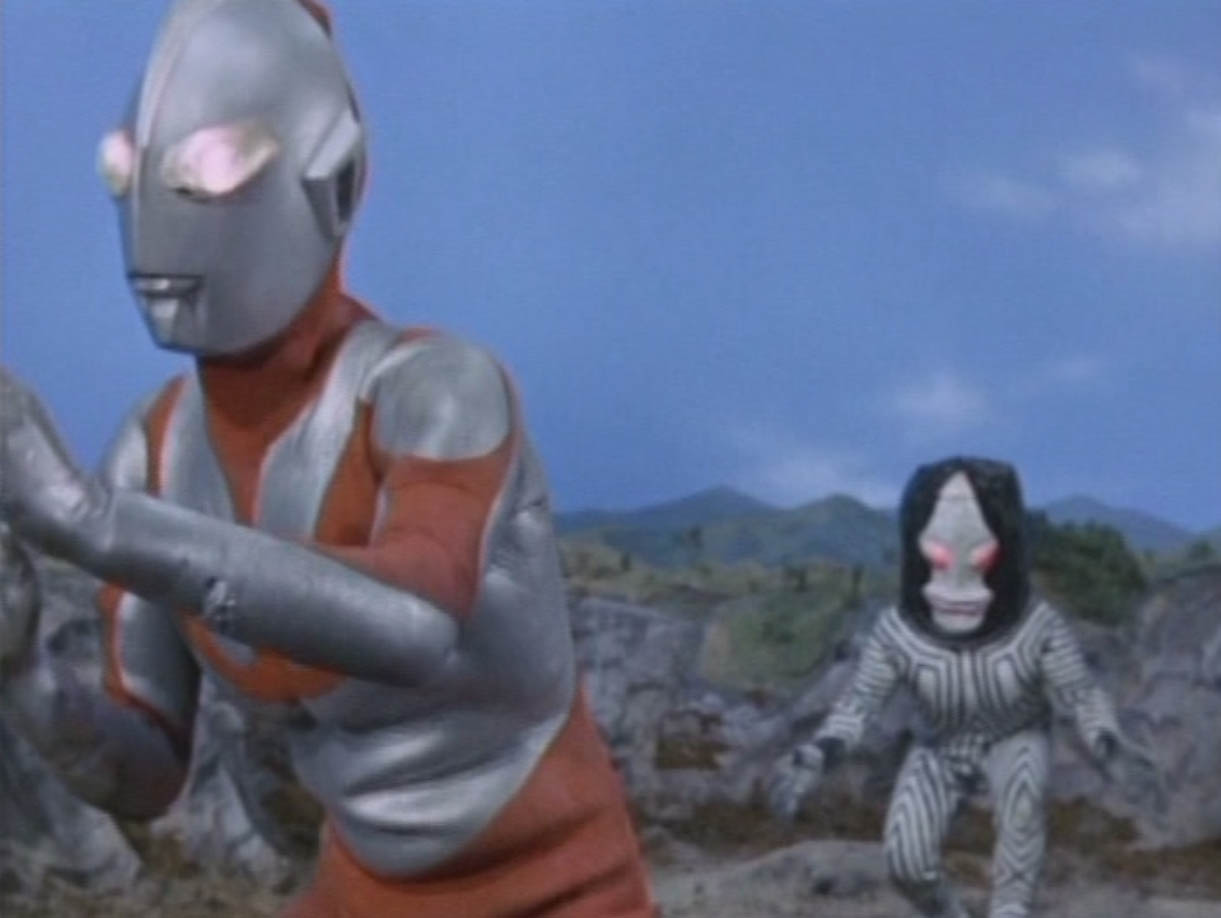
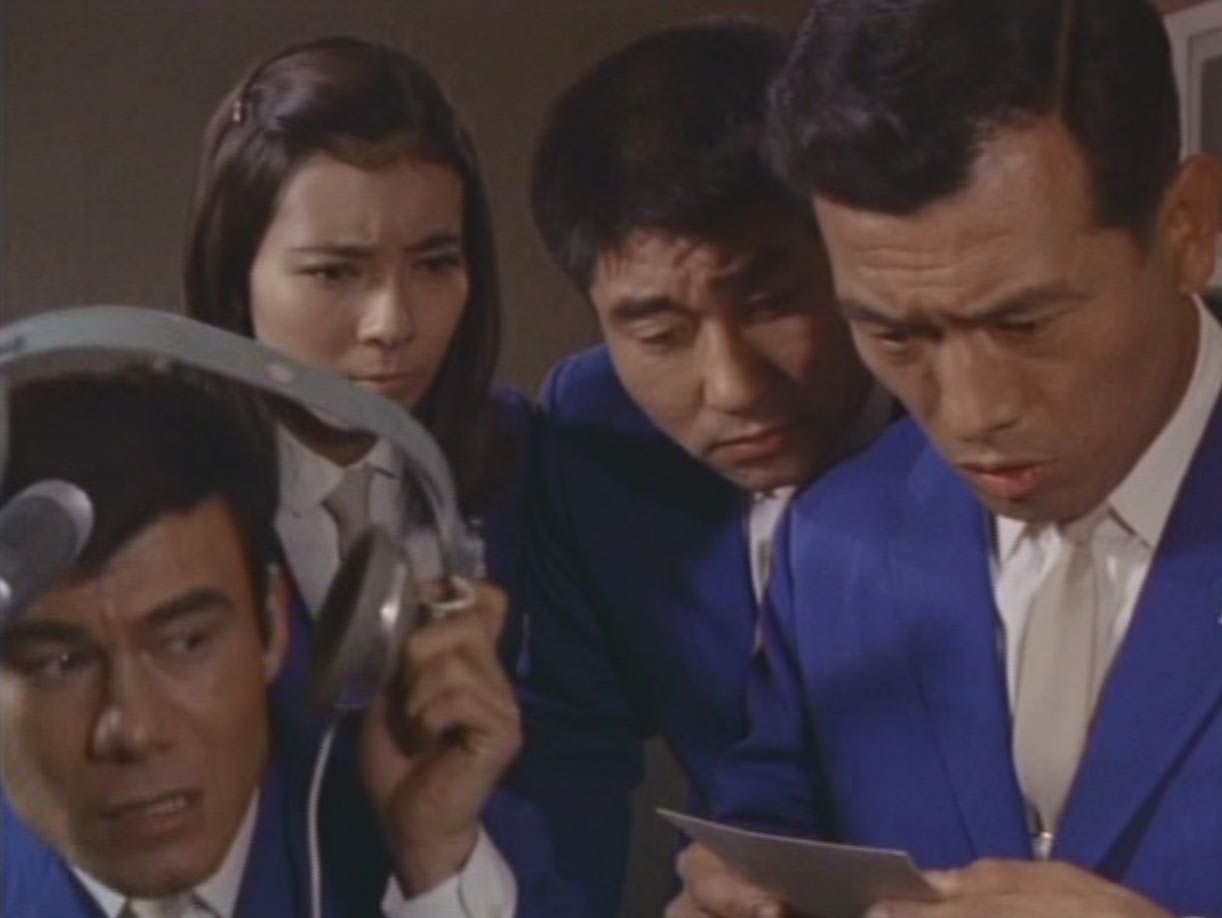
ULTRAMAN first premiered in 1966 on TBS, the Tokyo Broadcasting System. The brainchild of producer Eiji Tsubaraya, ULTRAMAN was a sequel of sorts to a show called ULTRA Q, a monster-laden suspense show along the lines of our OUTER LIMITS. What set ULTRAMAN apart from ULTRA Q was, naturally, the eponymous Ultraman, a giant silvery spaceman visiting Earth to protect us from monsters. In a nation already dutifully trooping to the theater every year for another GODZILLA film, a television show featuring pretty much the same sort of thrill was a natural success. 
 
 ULTRA SEVEN followed ULTRAMAN, which was in turn followed by RETURN OF ULTRAMAN, ULTRAMAN ACE, ULTRAMAN LEO, ULTRAMAN TARO, ULTRAMAN 80, and after a hiatus of nearly 20 years new ULTRA series like DYNA and TIGA have returned to Japanese (and American) television. Even though ULTRAMAN was a Tsubaraya production, I have only Peter Fernandez to thank for it; without his work dubbing the series into English, for me and most Americans it would only be a curiosity alongside FIREMAN, MIRRORMAN, ZONE FIGHTER, RED BARON, etc.
 
I'm not going to bore you with descriptions of Ultraman or the Science Patrol or of their guns and spaceships and uniforms and what-not. All that stuff is pure window dressing -merely the sugar coating the pill of delicious horror that the UHF antenna brought into your home. Who knew what that Saturday's episode was going to bring? A quivering, gelatinous thing, with antennae bristling from its rubbery orfices, menacing Earth simply by daring to exist? The corpse of a monkey-faced mummy, reanimated by ten million volts, vaporizing Tokyo police? Zebra-striped, fetish-masked aliens who walk through walls and collect shrunken scientists in test tubes? The tortured cry of a gigantic, mutated astronaut echoing through the forest? Or, best of all, the echoing laugh of the silver-hued, lobster-clawed Baltan, whose rotating eye-stalks foretold the doom of the human race?


Like the British baby-boomer children who fearfully watched Dr. Who’s Daleks from behind the safety of solid middle-class British furniture, American children found that Ultraman’s monsters were not only best viewed from behind the couch, but that most could be dispatched with a quick burst of Spacium energy from Ultraman’s crossed forearms. In fact, ULTRAMAN inspired my first effort at media journalism; a one-page report delivered to my first grade class on blue-lined notebook paper (though the subtextual subtleties of the show escaped my 6-year old view). The calming presence of that giant, bulb-eyed spaceman assured us all that while monsters may howl and cardboard city blocks might be demolished, safety and order would ultimately triumph.


No, the fact of the matter is that ULTRAMAN is frequently dismissed as a monster-of-the-week show, a GODZILLA imitator starring Clark Kent as a giant silvery wrestling champion defending miniature office buildings. And these dismissals are entirely fair. ULTRAMAN actually is a simplistic, frequently silly show entirely too dependent upon underpaid actors in uncomfortable rubber monster suits. And yet…

And yet, I can’t forget the chill that literally tingles my spine when I recall some of the show’s more effective monsters. The bottom line of this show is – maybe it’s a show intended to frighten (and therefore entertain) children – but if that’s the show’s purpose, than it is a resounding success. 


Because this is a show that scares children. The constant use of location shooting (this takes place in the real world, not some set) –the parade of incidental characters attacked, possessed, murdered, or otherwise affected by the monsters –the New Wave cinema verite camera techniques –all these add to ULTRAMAN’s fear factor. Produced by a society consumed with a love of the bizarre, ULTRAMAN could hardly expect to be anything else – bizarre is the only word for a show utterly consumed by monsters. Monsters big and small – from gigantic horned beasts that shoot fire and emit blinding flashes, to a subterranean race of what would be ordinary looking people, except they have NO EYES. Or the shiny silver alien who creates his own evil Ultraman. Or another alien who tempts a human boy to betray his planet, like Satan tempting Jesus in the wilderness.

Ultraman himself, a monster. Gigantic, unspeaking, with destructive and vaguely defined powers, looking gnarled and lumpy in the close-up shots. Sure, as the franchise continued we’d get a parade of Ultraman and Ultrawomen and Ultrakids, along with backstory about their home galaxy, et cetera, et cetera, ad nauseaum. Thank God that stuff never made it to the States, at least not while I was a kid. I prefer the original- unencumbered by dogma, paint peeling from his shopworn Ultra suit, dedicated to kicking monster ass, occasionally cutting loose with a few meaningless grunts. The silly or contrived moments of his TV show being counterbalanced by the creepy, the bizarre, the monstrous.

America has produced no children’s television quite so menacingly offbeat; the closest one might come is the Sid & Marty Kroftt production LAND OF THE LOST, or the pre-hero monster comics Marvel produced in the early ‘60s. Horror in America is strictly for adults, or for kids smart enough to dodge parents or babysitters.


This nostalgia jag was sparked by a fat volume of Sun Special ULTRAMAN manga from the 60s. I wasn’t expecting too much; so much ULTRAMAN stuff is out there, and very little of it really has much to do with the show I enjoyed as a child. In fact I’d had a volume of SHONEN MAGAZINE’s Ultraman comics by Kazumine Daiji for years –simplistic Mitsuteru Yokoyama-style clean-line SF comics without any distinguishing characteristics. Well, this manga –by horror comics auteur Kazuo "Cat Eyed Boy" Umezu, fer Chrissakes - begins with a story where a crazed scientist takes a big swallow from a gasoline pump, and then his skin peels away and he turns into a Baltan. A disgusting, veiny, chitinous Baltan, who lets Ultraman rip one of his claws off, just so he can set fire to the gasoline draining from the wound and fly off, laughing.


THEN things get REALLY weird.

The stories in this volume have a passing resemblance to the television scripts, but only faintly. Umezu's draftsmanship keeps the characters cartoony and simple, except where monsters are concerned. Monsters, the true stars, are delineated with a loving and detailed hand aimed directly at the primary goal; frightening children.


The boys who read this would grow up to read even more outlandish and violent mens’ comics; the girls would have a whole sub-genre of girls’ horror comics, jam-packed with beheadings, defenestrations, and entrails, some drawn by Umezu, for their entertainment.


The question is, do Japanese kids hide behind the sofa when the Baltans appear on the screen? Do they get the same kind of horror-excitement charge that American children got? Or are they culturally so inured to the bizarre nature of their popular entertainment that such things are seen as a matter of course? If so, that’s a shame. Perhaps you have to be raised in the more restrictive atmosphere (at least as far as television is concerned) of mid-70s America to truly appreciate the creepy vibe of ULTRAMAN.


The other question is, what happened to ULTRAMAN? From genuinely disturbing to shiny and genial in one – okay, two seasons? By the time the 70s rolled around, Ultraman was safe and non-threatening; he might as well have worn glasses and worked at the Daily Planet. It’s probably yet another symptom of Nostalgia As Psychological Disturbance for one to prefer that Tsubaraya keep his show scary and threatening rather than safe and comforting; probably more advertising money with the safe angle, I should imagine.

ATTACK OF THE FIFTY-FOOT FUJI!

Perhaps you can’t return to the pre-teen days of being scared out of your wits by a laughing Baltan. Sometimes, however, nostalgia can be induced merely by a few panels of a out-of-print comic serial, and it all comes rushing back. Minus the footy pajamas, of course.
 

 -Dave Merrill

Thanks for reading Let's Anime! If you enjoyed it and want to show your appreciation for what we do here as part of the Mister Kitty Dot Org world, please consider joining our Patreon!