Tuesday, January 27, 2009

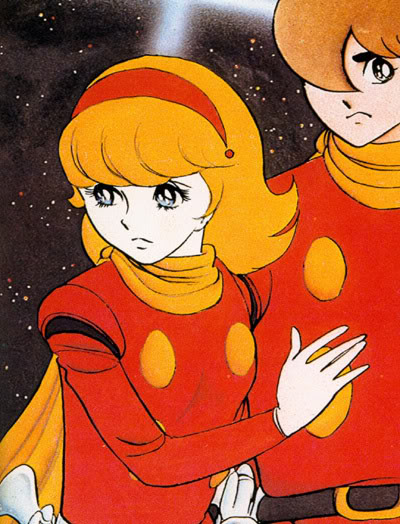
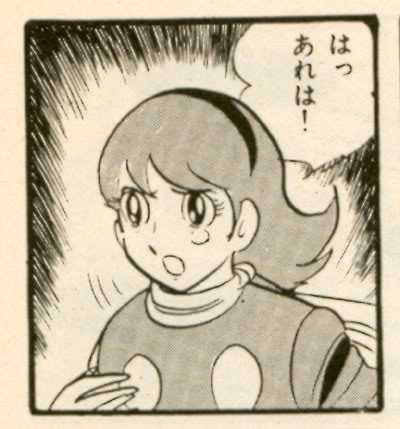
THE MANY MOODS OF CYBORG 003

Francoise Arnoul, AKA Cyborg 003, is the only female member of the Cyborg 009 team. Throughout the 45-year history of the series, she's known for exhibiting a wide range of expression and emotion, as we see here. Come with us as we explore... the many moods of Cyborg 003.

1. Concerned


2. Nervous


3. Apprehensive


4. Worried


5. Tense


6. Anxious


7. Fearful


8. Uneasy


9. Wacky (with funny hat)


Cyborg 009 is based on the popular manga by Shotaro Ishinomori . Images taken from the CYBORG 009 manga, the 1968 CYBORG 009 TV series, the 1979 CYBORG 009 TV series, the 1980 film CYBORG OO9 LEGEND OF THE SUPER GALAXY, and the 2001 CYBORG 009 TV series, as well as original illustrations by Shotaro Ishinomori and others.

Tuesday, January 20, 2009

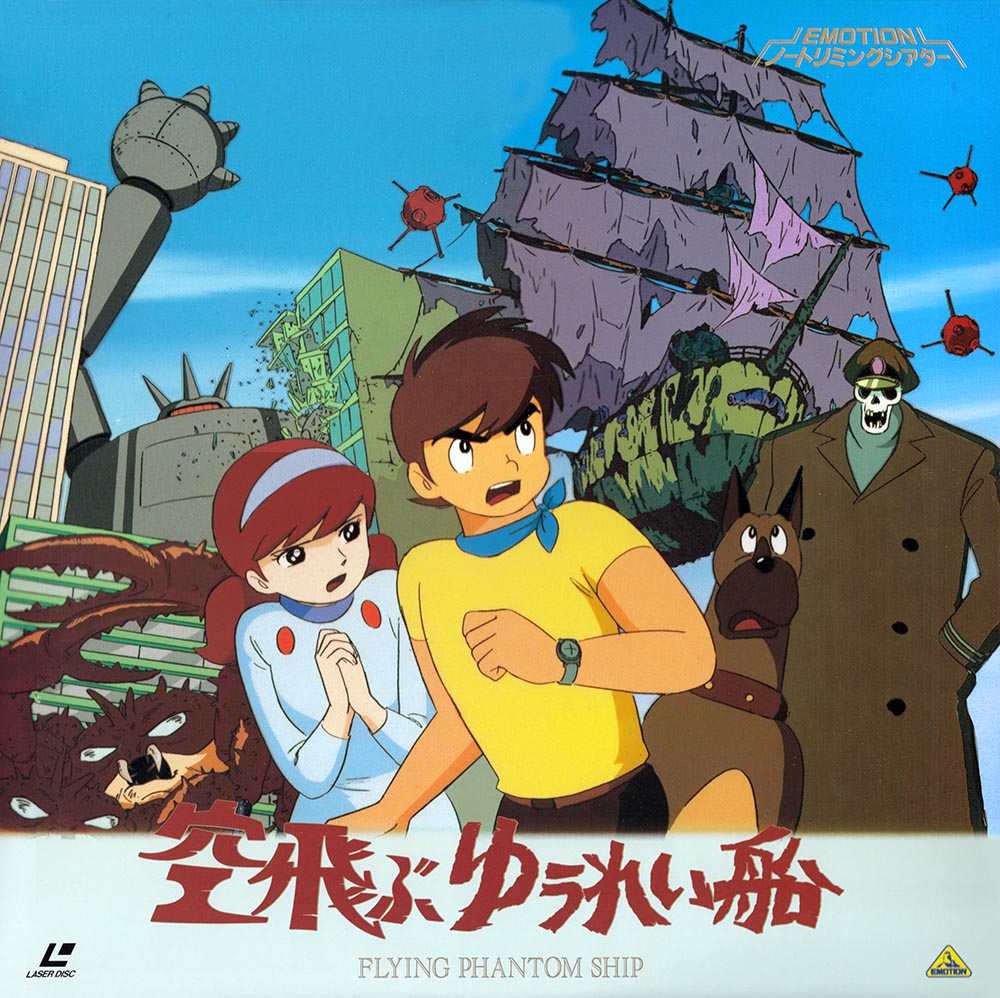
THE FLYING PHANTOM SHIP


FLYING PHANTOM SHIP and I got started at roughly the same time, the summer of 1969.  I was busy being born, and the rest of the world was grooving in the mud to Sha Na Na at Woodstock, the fine folks at Toei unleashed this film as part of their summer Manga Matsuri. FLYING PHANTOM SHIP could be considered a shorter and less ambitious followup to HORUS PRINCE OF THE SUN, but, apart from the excellent key animation by the Hayao Miyzazki / Isao Takahata combo, it's that film's exact opposite. While HORUS is an ambitious, prehistoric fairy tale epic full of symbolism and deep mythological import, FLYING PHANTOM SHIP is a paranoid Space Age actioner built to deliver kid-sized kicks and thrills. And as such, it's an unqualified success. 


We are speaking, of course, of a film that features a giant flying derelict sailing ship, captained by a ghostly apparition in a skull mask, a ship actually a super-scientific aerial battlewagon equipped with lasers and missiles. Its mission? To defeat an international mankind-defying conspiracy armed with giant robots, enormous talking crabs, and a popular, addictive soft drink that eventually dissolves you into mush. Rush-hour Tokyo is interrupted by Self-Defense Force tanks manoeuvring to attack an enormous rocket-firing robot Golem bent on smashing the city to bits.Our hero Hayato is tragically orphaned in the midst of a worldwide crisis, and he reels in disbelief as he uncovers the awful truth behind his zillionaire zaibatsu benefactor. Hayato's attempt to warn the world via live TV is halted by the invasion of enormous crustaceans. He eventually learns the secret behind his true parentage and finds himself captaining a super scientific undersea battleship on a kamikaze mission to the bottom of the ocean. Most other films would get away with one or maybe two of those concepts. Not FLYING PHANTOM SHIP, which cheerfully shoehorns enough insanity for eight or nine movies into its mere sixty minutes.


Is it thematically deep? No. Did it win awards from parents groups or arts councils? No sir. If you mention it in film class, will the other students be impressed? I wouldn't try it. But-- does it satisfy 1000% percent of your daily recommended allowance of EFFING AWESOME - the whole reason you watch these darn Japa-heeno cartoons anyway? Yes. Yes it does.

Based on a 1960 SHONEN MAGAZINE story by legendary manga-ka Shotaro Ishinomori, FLYING PHANTOM SHIP, or "Soratobu Yurei Sen" as the Japanese know it, might have seen an odd choice to film. However, Toei had had earlier success with Ishinomori's CYBORG 009 film and TV series, full of the same sort of super-science action. Toei would later release another Ishinomori-based Matsuri-fest film - 30,000 MILES UNDER THE SEA, another aquatic-themed SF movie - and while a unique and entertaining film, it's no FLYING PHANTOM SHIP.


FLYING PHANTOM SHIP is pure distilled cartoon excitement delivered with the slick 60s style of your favorite period spy films or sci-fi TV shows, and if this doesn't push your buttons, you need to go to the doctor and get your buttons checked out. The film is an hour-long reminder of the outlandish cartoon fun that made me fall in  love with Japanese anime to begin with, and I happened to first see it in 1990, when my interest in the media was at an all-time low. Apart from the occasional Miyazaki film and the procedural pandemonium of Patlabor, the early 90s were a moribund time of weak, derivative OVAs and limp sequels sucking the life out of once-powerful franchises. In this muddled environment the boldness of FLYING PHANTOM SHIP was a breath of fresh yet thirty-year-old air.

Too nutty and violent to be "educational", FLYING PHANTOM SHIP wasn't based on a fairy tale or a storybook like many of Toei's '60s releases. It didn't win any Parents Awards or Certificates Of Merit from Self-Important International Organizations Of Children's Cinema. What it DID do was entertain the livin' shit out of audiences, a hint of juvenile sci-fi actioners like MAZINGER Z and CAPTAIN HARLOCK that would later cement Toei's reputation as an energetic (if not overly concerned with technical brilliance) animation powerhouse.


And yet in spite of my cheerleading the film's nonsensical sugar-coated kookery, FLYING PHANTOM SHIP can't help but make you think. The script's bolted-together combination of H.P. Lovecraft, Jules Verne, and Ian Fleming might ONLY work set in a postwar Japan in which the industrial giants fuelling the nation's economic miracle are the same economic giants who profited from the wholesale rape of China, Korea, and the Philippines during the Pacific War. The notion that things are not what they seem, that behind the skyscrapers and advertising and rock and roll of boom-time Japan lurk horrifying monsters, this notion underlies the entire movie. The film's insistence that those who claim to be fighting the menace are actually CAUSING the menace (for their own evil ends)  is a hallmark of paranoid screeds stapled to telephone poles and posted on the Internets throughout the world. And Hayato's futile attempt to warn us- via cheerfully hosted TV chat show - puts a media-saturated spin on every child's nightmare of Not Being Listened To.


Drink enough Boa Juice and win a trip to the bottom of the sea! Or get dissolved, maybe
 
The big-eye Ishinomori character designs are sometimes at odds with the more naturalistic animation, particularly the tanks-in-Tokyo scene that Miyazaki would later use for a Lupin III television episode. There's a real effort made at realism in portrayals of the city, the military equipment, and your nautical spars and yardarms, right down to the undersea flora and fauna that the Flying Phantom Ship moves through. Yet director Hiroshi Ikeda's primary-colored, full-animation style makes it a very 60s-looking, almost visually dated movie, a surprising choice for a 1969 animated release in a then-psychedelic world of New Cinema. However, the apocalyptic, paranoid tone fits right in with the adult films of the period. The nervous undercurrents, jammed up against typical children's adventure movie cliches like Comedy Relief Dog, Tacked On Girlfriend, and Guess Who Your Real Dad Is, make it hard to tell whether this is a really dark kids movie, or the first attempt at an anime film aimed at older audiences, the kind that would dominate the field in the 70s and 80s. Perhaps it's both.


My fanzine article about FLYING PHANTOM SHIP from 1991. I'm old.

Ignored for years by anime fandom, FLYING PHANTOM SHIP is needed now, more than ever, to remind the world why we got into this stuff in the first place; that sense of outlandish did-I-just-see-that nonsense that engages the big kid in us all. At the end of the day don't we all want to be Captain Hayato, master of his own vessel, sailing into a bright future? Go ahead Captain Hayato!!
 
-Dave Merrill


Thanks for reading Let's Anime! If you enjoyed it and want to show your appreciation for what we do here as part of the Mister Kitty Dot Net world, please consider joining our Patreon!

Wednesday, January 7, 2009

anime zines of the 1990's

A little while ago LET'S ANIME explored the Japanese-cartoon-fandom fanzine culture of the 1980s, a self-published world of anime show synopses and iffy translations illustrated with anime fan artwork ranging from bad to beautiful. Now let's move the clock forward a bit and take a look at what was happening to anime zines in the decade of grunge, Clinton, clear beverages and America Online - the 1990s! Zine culture was America's underground - a fiercely independent self-published universe of crude comics, biased journalism, conspiracy theories, and reviews of whatever record labels would send you that you could later sell for beer money. Distributed by an ad hoc network of comic shops, telephone poles, record stores, and your hipper bookstores; held together by comprehensive review journals like Factsheet Five; the world of zines was embraced by the pop culture tastemakers and became as emblematic of "Generation X" as a copy of Nirvana's "Nevermind" or one of those tribal tattoos that white people once felt they could get away with. And much like Mudhoney or free zines for prisoners, Japanese cartoon zines were a part of that world.


For many anime zines, the early 1990s were merely a flashier version of the 1980s. Fan fiction in particular had yet to make the digital transition and fanfic was still being published in giant plastic-comb bound volumes like the "Anime House Presents" shown here, featuring a lovely Char Aznable cover and stories about Mospeada, Lupin III, Saint Seiya, Dirty Pair, Catseye, and a recurring comic strip mashup between Voltron and Bloom County. Meanwhile in the Yamato world, Star Blazers fans were presenting their Star Blazers/Yamato fan tales in APAs like this one, named after the queen of Iscandar because all Yamato zines were named after female characters. They just were, okay?

But new and strange forces were looming, Godzilla-like, over the horizon. The "desktop publishing revolution" meant that graphic design and typography were no longer the private reserve of print shops and linotype operators. Suddenly regular folks with a couple thousand bucks to blow on computers and printers could create professional-looking documents at a fraction of the cost of traditional methods. The new wave of computer-aided fanzine design, combined with the falling prices of high-quality photocopier equipment and the seemingly unstoppable march of Kinko's across the land, meant anime zines could be made better, faster, and stronger than ever before.


One early computer-aided zine was Anime No Shimbun, the offical publication of the Japanese Animation Network, a former EDC chapter in Richmond VA headed by the late Roy Bruce. Anime No Shimbun featured synopses of current and not-so-current titles such as Odin, Nadia, and early moe fave Video Girl Ai, along with reprints of Baycon synopses and reviews of the Robotech II: The Sentinels comic by local favorites John and Jason Waltrip. Fan fiction, Japanese cultural information, general animation news, and a fan comic story entitled "Urusei Gakira" written and drawn by future perennial anime-con guest Steve Bennett helped to fill the zine's pages.


The East Coast was definitely representin' as we see from another 1992 zine, Atlantia, which is the offical news bulletin of the Atlantic Anime Alliance. What is it with fan clubs publishing "official" newsletters? Was somebody out there printing unofficial newsletters? Judging from the editorial in this issue the AAA seemed to be made up of New Jersey area fans determined to become the focal point of anime fandom on the east coast. Let me know how that's working out, guys. A big 3X3 Eyes article by the late Steve Pearl, an article about the AnimEigo Bubblegum Crisis releases and a synopsis of Ranma 1/2 "Get Back The Brides" rounds out the issue.


If we're talking about trying to get anime fans to come together in peace love and understanding, for my money the must-have zine of 1992 was The Anime Source. Like the cover says, it lists contact information for 26 APAs, 153 computer BBSes, 111 (count' em!) anime clubs, 54 fanzines, 24 magazines, 171 stores, and 88 games. If you couldn't get your anime freak on with this zine then there is simply no hope for you. Publisher Alec Orrock also was behind the zine From Side To S.I.D.E., a entertaining magazine with a focus on Orange Road, Gundam, Yawara, and a fan translation of the wacky crossdressing idol singer manga "Twinkle Idol Stars".


Meanwhile back on the East Coast the Baltimore anime club JASFA was continuing to crank out their newsletter, a short and snappy monthly that cut through the nonsense and let you know what the club was watching and when. Translated episode titles make back issues of this zine priceless, unless you already knew that episode #46 of Saver Kids was titled "The Earth Breaks Up In Five Minutes!!" This issue not only has a great Ren & Stimpy cover - yeah, you KNOW it's the '90s when they start hauling out the Ren & Stimpy references!!- but also features a mention of some new show called "Sailor Moon". I wonder if that will be popular. Another 80s survivor was The Rose, the newsletter of Anime Hasshin, which continued to provide news and information to readers around the country. Always tons of reviews and fan art in the Rose, and this issue was no exception with articles about Ge Ge Ge no Kitaro, Speed Racer, Haruka Takachiho and his Dirty Pair, Dragon Half, and fanart by, among others, Robert "Slow Bob" DeJesus.


And if we rumble way up north for a change of scenery, we might come under guitar-playin' natural distaster attack from the National Anime Terrorist Organization of Minneapolis MN and their zine, Psychommu Gaijin! Pgaijin, as it came to be known, was the low rent punk rock cut and paste fuck you antidote to the rest of the anime fanzine world, much of which could be politely described as, shall we say, slightly anal-retentive. Not Psychommu - spearheaded by young clubbing indy-rock insomniacs, burnt-out fandom gurus, and trouble-making beer enthusiast anarchists, the PGZine cheerfully mixed medical illustrations, band flyers, Kennedy assassination cartoons, Votoms drinking games, a anime version of Battlestar Galactica and weed-huffing Ninja High School parodies with reviews of Macross videogames and con reports. Psychommu Gaijin transmogrified into a website, a Yahoogroups mailing list, and a blog, yet continues to appear sporadically as a free zine handed out at various anime conventions, to the obvious dismay of the authorities.


Across the pond in Belgium the euroanime fans were doing it for themselves with the handsome, glossy-covered, English-language (thanks!) Japanese Anime & Manga Magazine or J.A.M.M. for short. Yes, even in Europe fans felt the need to name themselves with awkward acronyms. The sophisticated European zine culture thought nothing of producing long, detailed essays on Urotsukidoji and ero-anime in general, complete with illustrations (!). Of course there's also some Dr. Slump to take the edge off.


From Florida came the first and perhaps only issue of Anime Zeta, probably the only anime zine to (a) review the Bible cartoon Flying House, and (b) review the Bible cartoon Flying House without once mentioning its religious content. Magazine and newspaper clippings, typewritten articles about Daltanias next to handwritten captions, illustrations lifted wholesale from reference books, and a "news article" about Ted Turner - not Turner Broadcasting or Warner, just Ted Turner - getting the rights to Doraemon (?) make this one a real curiosity.

AWA program book on the left, JACO zine on the right


If there's one thing Florida had a lot of, it's anime clubs. Orlando itself was home to several different outfits, all fussin' and feudin' with each other to see who could be the fussinest and the feudinest. The Japanese Anime Club Of Orlando, a.k.a. JACO, was so impressed by their visit to AWA 2 that they produced a 52-page zine all about the trip. Seriously. Packing up the car, getting traffic tickets, stalking that girl who looks like your ex-fiance, that rocking air guitar performance of the end theme to Megazone 23, photographing their own version of the cover of the con's program book; it's one sloppy love letter of a zine. Not every issue of "Project JACO" was a mash note to AWA, though. Reviews of Bounty Dog, Chirality, and a photo essay of their trip to EPCOT Center rounded out the color-cover Summer 1997 issue. JACO eventually started their own convention, Jacon, thus starting the process which enabled the rest of us to transition from saying "Florida has too many anime clubs" to saying "Florida has too many anime cons."


As the decade sped by in a blur of stonewashed jeans and lackluster techno remixes, anime zines got a lot slicker. Scanners got cheaper and processors got faster and screencaps became something more than just a lucky Polaroid of your TV screen. Section 9, produced by the Grand Rapids Area Anime Club, is representative of its era for several reasons: most of the reviews are for English-language professional releases of titles like Tenchi Muyou, Tekken, Evangelion, and Idol Hunter; the con reports have adopted the modern emphasis on photos of doofuses in costumes, and there is the first mention of some mysterious something called "DVD". Whatever could THAT be? Lots of links to those new-fangled 'web pages' keep this zine squarely in the fast lane of the 'information superhighway'.


The 90s wound down claiming print media was dead and soon we'd all be dot-com millionaires living in a virtual reality world having groceries delivered by Kozmo.com. Zine culture faltered as Jim Goad did jail time, Factsheet Five collapsed under its own weight, and everybody else got jobs working for "Sassy." Anime fan culture transitioned from a club-based fandom to becoming a migrating herd travelling from one hotel ballroom to another. Anime zinesters manned fan tables hawking their anime zines to anime convention crowds who'd rather spend their cash on actual licensed merchandise rather than some homemade pamphlet. Print zines moved towards a "free" model, as exemplified by "Pachi Pachi".


Edited by the mysterious "JobsTurkey", Pachi Pachi was distributed free at whichever conventions the editor found him-or-herself attending. How-to articles on cosplay and anime music videos kept this zine topical and reviews of anime, manga, CDs, etc. were short and to the point. Later issues focused on the anime fan culture itself, which by 1999 had assumed many of its current signifiers - squealing girls, obsession with voice actors, cosplay worship, and general fan entitlement ego-hatting. And in spite of all the editorializing anime zines could muster, the situation hasn't changed much.

Ten years later anime fandom expresses itself online through blogs, through columns on websites large and small, and through a million message boards and livejournals. No longer do we have to sneak copies from the student center office or get a job in the print industry to support the toner monkey on our back. Some of us pine for the good old days of making our marks upon the world with gluestick and X-Acto, but at the same time, nobody misses clearing paper jams or shelling out for PO boxes. We here at Let's Anime look forward to the media-cube digi-zappers of 2029 reminiscing fondly about those quaint, childish "anime blogs" of yesteryear.

-Dave Merrill

(all artwork and text (c) the original creators. Thanks to you, the zine publishers of the 1990s!)

Thanks for reading Let's Anime! If you enjoyed it and want to show your appreciation for what we do here as part of the Mister Kitty Dot Net world, please consider joining our Patreon!

Sunday, December 14, 2008

it's xmas and I feel like sharing

It's that time of year again, and in the spirit of the season I figured I'd share some presents with you. Namely, images of Usei Shonen Papi / Prince Planet menko cards that were passed on to me via old-school Prince Planet fan M.E. So if you want your Christmas to be filled with slightly-off register pictures of Prince Planet and his pals printed on thick slabs of cardboard and intended to be slapped onto the pavement with the mighty force of an 8-year old arm, then you are in luck!

Prince Planet is, of course, the 1966 TCJ show based on the Hideoki Inoue manga about a young boy from the planet Radion who comes to Earth and with his friends Diana, Dan Dynamo, and Adji Baba, defends peace and justice!!


Here we see Prince Planet in his "Bobby" disguise, along with Diana, meeting a strange bowtie-wearing man in a park.


On our next card, Bowtie man seems astonished at Dan Dynamo's manly chest and Adji Baba's little beard as Bobby assumes the position to shout "Kazow" or "Kapow" or "Wowee", or whatever the English voice talent decided to have him yell, as he changes into Prince Planet.


Meanwhile, above Diana and her father Pops Worthy, a mysterious white-haired figure hovers in the air like a religious apparition. From the look on his face I don't think he's here to convey holy blessings.


And our assumptions were correct - white haired guy is sending his super robot to go forth and bring destruction to the world! Bad mans!


In a seemingly unrelated card illustration, Bobby and Diana chat while an auto speeds away and evil Martian wizard Warlock watches them from a tree. Warlock has been taking ninja lessons.


When Warlock is around you know evil can't be far off and we see Bobby menaced by chains! Don't worry, he's using his Pendant of Power to change into Prince Planet!


In his Prince Planet identity he's able to evade the chains with ease and in about a minute Warlock is going to get blasted by a lightning-like bolt from Prince Planet's pendant!


And it's back after that car that sped off earlier. Or maybe this is a different car. It's hard to tell.


This could be Prince Planet fighting that giant robot we saw in a previous card, or it may be him just running through fire. Who knows?


Sometimes Prince Planet flies into outer space and battles other super powerful space people including this one who looks as if Kamen Rider V-3 and Space Ace got together and had a baby.


And sometimes Prince Planet likes to dress in his pink outfit. Don't ask, don't tell, that's the motto of the Universal Peace Corps.


Happy Holidays, everybody! See you in 2009!!

Thanks for reading Let's Anime! If you enjoyed it and want to show your appreciation for what we do here as part of the Mister Kitty Dot Net world, please consider joining our Patreon!

Wednesday, December 3, 2008

wears boots, can talk


AROUND THE WORLD WITH PERO, THE PUSS ‘N BOOTS

Like many of my most amazing adventures, this one begins in the thrift store, where a mint-in-box copy of the Nintendo Entertainment System Puss 'N Boots Pero's Great Adventure "Game Pak" one day awaited my feverish little hands. Price? One dollar. That's what I call value. 


Well, actually this story REALLY begins in 1969, when Toei Animation Company released the film that would give Toei its mascot and inspire two sequels. The Wonderful World Of Puss ‘N Boots is one of Toei's many excellent 1960s theatrical releases. Falling somewhere between the classy quasi-full animation of Little Norse Prince aka Horus Prince Of The Sun and the wacky limited gag animation of Jack And The Witch, Puss ‘N Boots is both a retelling and an expansion of Charles Perrault’s famous European fairy tale about the talking cat with the surprising taste in footwear. Dubbed and released in America by American International Pictures, it became a staple of children's video for years. And with key animation by a guy named Hayao Miyazaki, it became an object of interest for those same children, now grown up and hooked on them there Japanese cartoons.


The movie begins with a bang as Pero, the talking cat in question, is sentenced to death by the Legion Of Cats for failing to kill a mouse. "I always side with the underdog," Pero nonchalantly explains. Three cat-assassins are assigned to kill Pero, and in escaping them Pero runs headlong into Pierre, the human half of the cat-boy equation.

Pierre’s squeezed out of his inheritance by his two evil brothers and ignominiously thrown into the rain, so with nothing to lose, he and Pero join forces to see the wide world. They stop in the first big medieval town they find, and find out that local Princess Rosa has been betrothed to the evil wizard Lucifer, a giant ogre with a perpetual dopey look. Pero figures this is their big chance to score, so Pierre pretends to be royalty while Pero pulls strings behind the scenes. There's lots of slick 60's Toei animation, crazy Eisenstein-style cross-cut editing, and what appears to be a trial run for the finale of Lupin III Castle Of Cagliostro as Pero battles Lucifer in Lucifer's castle. Now, I'm not very knowledgeable in the fairy tale department, but as near as I can tell, this isn't too far from the original story, which also featured an evil ogre and unwilling matrimony.


Puss ‘N Boots is an entertaining hybrid between Toei's full-motion stuff and the limited animation that would become their 1970s hallmark. The character designs are really stylized, but that only enhances the middle-ages feel of the film, further heightened by the use of actual medieval paintings in some scenes. The dubbing by Peter Fernandez's Titan Studios is zippy and fun, with Corinne Orr's "Spritle" voice in full effect. There are, however, too many songs. Though it's a slow starter, Puss ‘N Boots’ last third is a full-on actioner, the equal to any of Toei's other 60s offerings. Some of this film is downright frightening and may not be recommended for younger viewers. Thanks to Diskotek Media it was released on DVD here in the United States, including subtitles and the original trailer. Toei felt so warmly about Pero that he’d become the company's mascot, a corporate figurehead promising fun and adventure for the children of the world.


Puss would return in 1972’s Return of Pero, aka "The Three Musketeers in Boots," aka Ringo Goes West, an hour-long full-on Western. “Go Go Town” is run by a corrupt mayor and terrorized by his gang of outlaws, and when Pero and Jimmy ride in, they come to the aid of young restaurateur Annie. After a few gunfights, high-noon showdowns, rescues by tribes of mouse-Indians, wagon chases, and attacks by the three cat-assassins always on Pero’s trail, justice is restored to the West and kids can enjoy the next short film in that season’s Manga Matsuri screening. This film received an English dub and a limited Western release, but remains obscure on this side of the Pacific.


In 1976 the cat returned for one final film, the impetus for the game behind this column, the reason we’re all here reading and/or writing this - Nagagutsu o Haita Neko 80 Nichikan Sekai IsshÅ«, or as we like to call it, Puss ‘N Boots Travels Around The World. 400 years after the events of the first film, Pero is still a happy-go-lucky talking cat with mice for friends, and in this film, he's called "Pushty". Anyway, "Pushty" is a waiter in a restaurant in a Victorian-era town full of talking animals. In this furry paradise resides the wealthy, actual-pig billionaire Sir Rumblehog, who posits the statement that nobody could go around the world in less than 150 days. "Pushty", Puss, Pero, whoever, calls his bluff and bets that he could circumnavigate the globe, not in a piddling 150 days, but in the unheard-of-time of 80 days. The bet is on and "Pushty" sets off in his self-designed little boat, accompanied by his hippo pal and his loyal mice. Oh yeah, and he's being pursued by the same three cat assassins, who apparently have been chasing "Pushty" for 400 years. That's job security for you. Welcome to Jules Verne's Around The World In 80 Days starring talking animals, animated with Toei's mid-70s team of slightly-better-than-TV-average animators.


Puss sets off to conquer the globe - Spain, Venice, Arabia, Mississippi, Hong Kong- and drama ensues when Rumblehog hires the evil inventor Dr. Mysterioso to stop "Pushty" with various evil mechanical devices - a drill car, a submarine, an armored aeroplane. Mysterioso’s character design will be lifted wholesale for use as the evil genius Moriarty in 1984’s anime series Famous Detective Holmes, and the kooky wolf provides the film with some much needed action. After the North Pole battle with Mysterioso's gigantic mechanical wooly mammoth (on loan from Little Norse Prince), it's time for Pero to have a final showdown with Rumblehog in the... clock tower. 


Yup, if the first Puss movie was training for Cagliostro, then Around The World is the final exam, because this one has gear-dodging, stair-climbing, ladder-grabbing, clock-face-perching action galore. Rumblehog becomes definitely homicidal, foaming at the mouth and attempting to hack Puss to bits with an axe. When he's not attempting defenestration, that is. This is for kids? Fortunately "Pushty" foils Rumblehog, wins the contest, and sets out for another trip, again pursued by the three cat-assassins. 

Around The World has the sort of animation you'd see in better-than-average episodes of Grandizer; slick, stylish, but not exactly stunning. I get the feeling that after the success of Mazinger Z, Toei figured the kids would watch anything and the frame rates be damned. It is certainly more kinetic than the first Puss film and while at times it feels like a retread of earlier movies like Animal Treasure Island, well, those films are great, so that's OK. Dubbed into English by Peter Fernandez, the film was released in America by Columbia Pictures Home Video and received VHS releases of varying quality and legality.


At any rate that bring us full circle to the wonderful Nintendo Entertainment System, because the NES game Puss ‘N Boots Pero's Great Adventure is basically the story of Around The World. You're Pero - PERO, dang it, none of this "Pushty" nonsense- and you go around the world, dodging the evil drill cars and airships of your enemies -Sir Rumblehog and Dr. Mysterioso, or, rather, Count Gruemon and Dr. Gari-gari – whose in-game appearances I personally have not yet reached because the boss of the London level is a BASTARD.


 It's a typical 8-bit game, full of cheesy music and the kind of graphics that were really only slightly better than your old Colecovision and bosses thrown in seemingly at random. I assure you there are no giant metal frogs in the original film.

The best part about this game is the cool production art; lots of anime style illustrations of Pero's worldwide adventures highlight the instruction manual. There's even a little color poster featuring screen shots and scenes from Around The World. This video game was brought to us by the mysterious and enigmatic "ELECTRO BRAIN CORP and TOEI ANIMATION CO., LTD., a Premiere Animation Company Of The Orient" - at least, that's what it says on the box. It's fascinating that the success of the NES would bring us games based on 15 year old films; in Japan it would count as promotion for Toei itself, but in the States would anybody even remember the Puss ‘N Boots films? Besides me, I mean? Somebody must have; the glorified TV commercial "Captain N: The Game Master" featured an episode based on the Puss N' Boots NES game (thanks to T.C.!)

It is an entertaining enough game, I guess. So many of the Nintendo-era video games were side-scrolling platformers that they even invented a term ("platform game") to describe them, and this game is no different; a Super Mario Brothers starring a fairy tale cat turned corporate logo traveling around the world gettin' into fights like Russell Crowe. You can probably find it on a NES emulator or as downloadable content via your favorite Nintendo online service, or watch somebody else play through it on YouTube. Or, you can pick it up in the thrift store for a dollar. Either way, it's an intriguing look at a fairytale cat turned animated movie star turned corporate logo. And now that Discotek’s Puss ‘N Boots is out of print, it’s one of the few remaining ways to enjoy Pero’s English-language adventures.

-Dave Merrill


portions of this article originally appeared at Anime Jump

Thanks for reading Let's Anime! If you enjoyed it and want to show your appreciation for what we do here as part of the Mister Kitty Dot Net world, please consider joining our Patreon!