Saturday, April 24, 2010

macross at the mall

Was there a better place for mid-80s teens to kill time than the mall? Sources say "no". And in the maze of shops and stores that made up the malls of the mid to late 20th century, one business attracted the teen like moths to a flame- video game arcades. When you ran out of quarters, however, where did you go to hang out? Spencer's Gifts, of course. Spencer's - since 1947 home to blacklight posters, naughty greeting cards, gag gifts, mood lighting, and a wide array of novelties, collectibles, and beer-related merchandise. But what's that lurking next to "The Fart Joke Book" and "101 Uses For A Dead Cat"? Toys from Super Dimensional Fortress Macross, that's what.


As I recall this 4-set of Macross toys was something like twelve dollars, which was a lot of money for me at the time, a time when all my cash came from hot, sweaty, backbreaking labor mowing lawns. This was my first exposure to the anime legend Macross, other than seeing ads for that Harmony Gold Macross VHS in magazines - and its MSRP was WAY beyond my budget. Robotech? Still years in the future. Your only hope for modern anime mecha action was the toys, finding their way across the Pacific and into the hobby shops and toy stores of the nation.


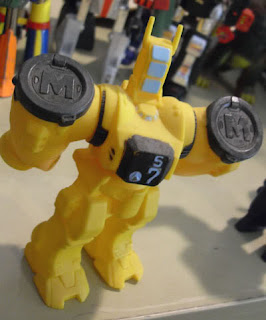


The toys in this Takatoku Macross 4 Part II set are a curious amalgam of 'bath toy' and 'action figure' - if they were made of slightly softer vinyl they'd be able to squeak when squeezed, but the detailing and colors are a step above your standard rubber ducky. At 5" tall they are big enough to stand against your medium-sized Shogun Warriors but dwarfed by your Jumbo Machinders, and they're sturdy enough to be hurled across the room by your rambunctious cousins. What really made this an artifact seething with universe-expanding revelations? The packaging.


If you're used to the cheap production art on any American toy of the period, the detail and craftsmanship of the Macross paintings on this box top are something special. This artwork tells us that whatever the hell Macross was, it was carefully planned by people with vision and talent, who knew of the deep desires of prepubescent boys to immerse themselves in worlds of detailed, high-tech fighting machines. Yes yes, now we know Studio Nue was responsible, but such knowledge was hidden from us in 1984. This literally was a window into another world, a world of animation not aimed at the lowest common denominator, a world where even Armored Valkyries could have cheesecake nose-art painted on their legs.


Decades later the American entertainment industry would appreciate the visual appeal of the Japanese logotypes and leave them as-is when localizing anime and anime products - but the art on this Macross toy set was unretouched for economic, not aesthetic reasons. Why create new line art when the Japanese packaging has English written all over it?


In a few years I learned what a "Tactical Pod Glaug" really was and why Minmay sounded better singing in Japanese, and I came to enjoy Macross in all its myriad forms. But in 1984, for me the "Macross Summer" was represented solely by a well-packaged set of toys found in a corner of the local mall.


-Dave Merrill

Thanks for reading Let's Anime! If you enjoyed it and want to show your appreciation for what we do here as part of the Mister Kitty Dot Net world, please consider joining our Patreon!


Thursday, April 8, 2010

Tezuka Trash Palace Tomorrow - Alakazam!


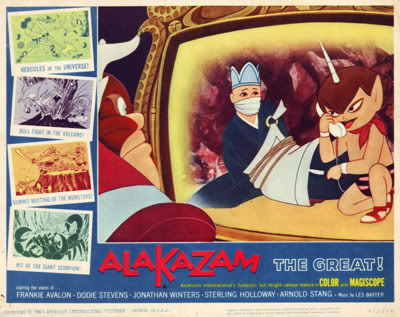
Tomorrow night the Trash Palace will play host to a Toronto Tezuka thrill trip as the '61 color classic explodes across the big screen in glorious 16mm! And the only question is: ARE YOU GONNA BE THERE, THERE BEING THE LOCATION OF THE LOVE-IN? Doors open at 8:30, movie starts at 9:30, 9:45 is when the long-haired rock dude shows up with his current trophy girlfriend to huff disgustedly at the lack of seating. Torontonians are welcome to drop by our secret Toy Factory lair and we'll get noodles or something before we walk the 4 blocks to the secret Trash Palace location - make sure to ditch work early to pick up your tix at Eyesore! Cash only.

Tuesday, April 6, 2010

ROBOTECH: THE FREE VERSE CHRONICLES


(all text and images from ROBOTECH BOOBY TRAP BOOK AND RECORDING, (c) Harmony Gold / Peter Pan Industries, Inc)


Wait a minute, did they just...


Yes. Yes they did.


NEXT: COUNTDOWN

(c) 1985 Harmony Gold / Peter Pan Industries, Inc

Friday, March 12, 2010

book report

MANGA KAMISHIBAI: THE ART OF JAPANESE PAPER THEATER
Eric P. Nash
Harry N. Abrams, 2009


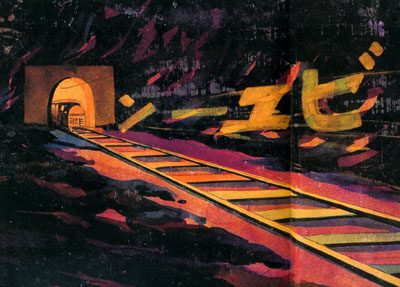
This one got past me at first, but it made a great Valentine’s Day gift from my sweetie. Kamishibai is Japanese paper theater – a mysterious 1930s phenomenon that peaked mid-century whereby a storyteller would wheel his pushcart to a convenient park, ring the bell or clack the hiyogoshi sticks a few times to gather a crowd of kids, sell homemade candy, and tell an exciting story illustrated with lurid handpainted drawings. Half prehistoric proto-gekiga, half addled carnival sideshow art, the kamishibai paintings vibrate with pulpy, unstoppable energy as giant monsters battle skull-faced heroes and weeping atom bomb survivors escape derailed trains. Gangsters battle spacemen and masked cowboys as underpaid, overworked kamishibai artists whip out painting after painting in a fast, cheap, out of control frenzy. This is (or ought to be) the real Japan; not some computerized plastic mass-produced robot, but red-faced, hollering, crazy, hand-crafted, one of a kind fury.


I saw the figure BYIIIIN in gold.


Predating TV and the manga boom, the kamishibai was a Japanese original, a bastard hybrid between the town crier and Punch & Judy, presenting thrilling adventure, funny animals, myths, legends and the day’s news. Our kamishibai master would display the paintings one at a time in the proscenium arch of his wooden pushcart, describing the action and mimicking all the voices to create… what? Stone-age television? Talking comics? Still-picture theater? As an art form kamishibai is all these things; like comics, a melding of words and pictures, but with a theatricality and a vital essence that a printed comic or a TV show could never match, an experiential medium that demands a live audience, a sleepy neighborhood park in summertime, a genial narrator selling sweet potatoes, and the friendly hum of cicadas in the background...

Flipping out.


During wartime, government-scripted kamishibai highlighted exploits of the Emperor’s army as it defended the Greater East Asian Co-Prosperity Sphere. Civilians were instructed via paper-theater on proper civil defense against the Bi Ni Ju Ku and its Electronic Incendiary Bombs. Occupation Japan’s kamishibai had to follow a whole new set of rules designed to repress the fighting spirit, but like Code-stricken American comics, stories merely shifted to fairy tales, spooky fantasy, westerns, and crimefighters. Television dealt kamishibai its death blow – when you can see Golden Bat on your TV set at home, why go to the park? Even a kamishibai Batman couldn’t save the medium.


Kintaro and animal chums fight the evil colonialists.

Today a few remaining kamishibai ply their trade as a historical re-enactment of sorts, a cultural touchstone in a Japan that embraces the past as strongly as it dreams of the future. As the Showa Era becomes the idealized past of a generation, the paper theater remains alongside teetering Asakasa amusement parks and caged fighting beetles as signposts of pop culture childhood history.


Nash’s MANGA KAMISHIBAI book is a big hefty full-color cultural treasure, filled with detailed reproductions of kamishibai paintings in all their rollicking glory. As a cultural institution and as a uniquely Japanese entertainment medium kamishibai deserves study, but this book is worth the price of admission for the paintings alone, hundreds of lurid folk-art monsters, aliens, cowboys, commandos, ninjas, junior G-men, Jungle Boys, all vividly rendered with fat strokes of ink and paint. The dust jacket unfolds into a giant Golden Bat poster. Bonus!

Golden Bat should visit an optician sometime soon.
Why don’t you already own this book? Is it because you’re afraid to learn manga superstars like Kazuo “Lone Wolf & Cub” Koike and Shigeru “Ge Ge Ge No Kitaro” Mizuki got their start in kamishibai? Fearful of the furious raging Japanese id that lurks beneath the serene salaryman exterior? Too much of a scaredy-cat to let the raw power of these images into your skull? I though so. Well, don’t be a wuss all your life – get out there and get MANGA KAMISHIBAI today!

-Dave Merrill

All illustrations from MANGA KAMISHIBAI, Eric P. Nash, Abrams Comic Arts 2009

Thanks for reading Let's Anime! If you enjoyed it and want to show your appreciation for what we do here as part of the Mister Kitty Dot Org world, please consider joining our Patreon!

Wednesday, February 24, 2010

Flying Phantom Sonorama


I’m a big fan of the 1969 Toei film FLYING PHANTOM SHIP – I paid cash money to have it translated into English, even though its story of a ultra-advanced flying battleship fighting super destructive giant robots controlled by an evil capitalist conspiracy masterminded by an undersea monster is easy enough to grasp, no matter what language it’s in. And as a big fan, I can’t quit writing about it.

So when I spotted this Asahi Sonorama children’s book-and-record set among the Kamen Rider singles and jazz LPs of Tokyo’s Kanda/Jinbucho neighborhood, there was no question that it would be coming home with me. And it did!


A highly abbreviated version of the film, what makes this scratchy Sonorama single stand out are the original Shotaro Ishinomori color illustrations. I can’t get enough of moody Ishinomori watercolors of tattered sailing vessels looming ominously in the background as Hayato, our audience-identification hero, bravely faces killer crabs and deadly soft drinks.


Not that those make it onto this Sonorama record, of course. Hey, even at 331/3 rpm you only get seven minutes per side, so something’s gotta get cut. But the important stuff remains, including the mysterious skull-masked captain of the Flying Phantom Ship, the robot Golem, and its ending in a giant explosion (cue producer of “Bride Of The Monster”). The opening song and music cues from the film remain, though the dialog is completely rewritten.


There are enough short Toei films from the late 1960s-early 1970s to outfit an entire fleet of Flying Phantom Ships, and while most of them can’t boast this movie’s pedigree, they’re all worth a look if you can dig ‘em up. Until that day, however, enjoy the scratches and pops of this representative sample.


Monday, February 1, 2010

Sailing With Sindbad


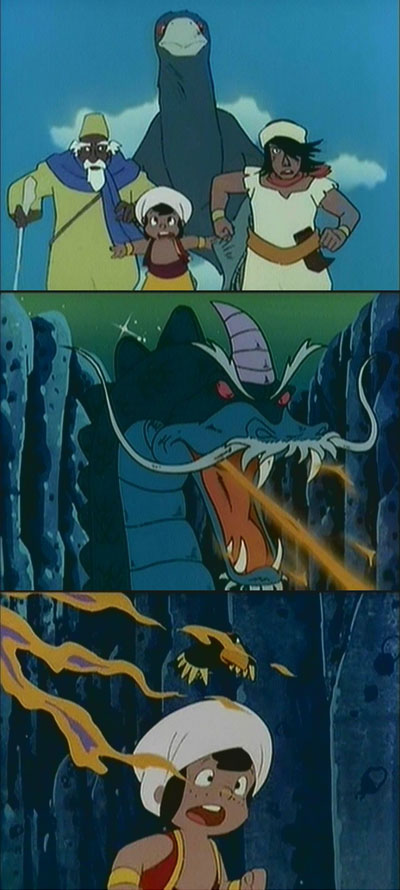
First broadcast in 1975, the Nippon Animation Company's SINDBAD THE SAILOR ("Adventures Of Sindbad") follows the adventures of the eponymous character Sindbad - here presented as slightly younger than in other versions - and his pals Aladdin the wizard, Ali "40 Thieves" Baba, and Yasmila the mynah bird as they voyage through the mysterious, magic-filled world of Arabian fairy tales. Broadcast in Japan, Spain, Poland, Italy, the Netherlands, France, China, and of course the Arabian Peninsula, SINDBAD became a worldwide hit beloved by children everywhere, except the United States.


A shame, too, because the 52 episodes of SINDBAD are fun, full of action without being too violent and filled with exotic faraway places. We could have used a little SINDBAD in the dark days between "Speed Racer" and "Battle Of The Planets." Directed by veteran Fumio Kurokawa, who also worked on Attack No. 1, Blinky The Koala, Around The World With Willy Fog, and that Jungle Book anime that was on TV here in the late 80s, SINDBAD boasted episode direction by several hands including that of Kunihiko Okazaki, who also gave us the grim pond life saga The Brave Frog


Instead of exciting adventure with Sindbad we had to endure "Scooby-Doo" reruns, the effects of whatever Sid & Marty Krofft were on that week, and drek like "Funky Phantom". Did "Funky Phantom" ever go to the jungle to meet a jungle boy and Tusk the Cocoa Krispies mascot? Well, Sindbad did!


Tusk is looking a little p.o.'ed there. Those better not be Cocoa Pebbles in your bowl kids!

With a memorable theme song sung by Mitsuko Horie, colorful and chunky 70s style anime character designs, and animation work by veterans like Noboru Ishiguro, SINDBAD is a show that carved out its own little Arabic niche of anime history. Sure, it would be neither the first nor the last Sindbad to appear in the medium of Japanese cartoons, but it's certainly the only one to be used as a restaurant mascot. Oh, you don't believe me? Witness photographic evidence of a "Sindbad" themed restaurant in, of all places, Canada's federal capital Ottawa!


Cruising through Ottawa recently, I caught that sign out of the corner of my eye. I passed two intersections before I was able to convince myself I just saw a restaurant with "Sindbad" signage. And then I made an illegal U-turn. Always have your camera ready, kids! Sindbad might be coming your town - he made an appearance in Toronto recently!


How many more Japanese cartoon characters are being used in an unauthorized fashion as restaurant mascots? Keep watching the roadsides, and look out for monsters, Sindbad!


-Dave Merrill

Thanks for reading Let's Anime! If you enjoyed it and want to show your appreciation for what we do here as part of the Mister Kitty Dot Org world, please consider joining our Patreon!
Monday, January 25, 2010

talkin' about fans

That's right, this LET'S ANIME column will be all about fans! You know, the kind you hold in your hand and move back and forth that kinda keep you cool? Oh, you thought we were going to talk about the OTHER kind of fan, the kind that moves from the couch to the computer and isn't EVER cool. Well, too bad.

Nope, today I'm clearly in the category of "what the hell", the kind of thing you notice out of the corner of your eye when you're digging through some Crazy Grandma antique mall out in the butt-end of nowhere, when you CLEARLY are not expecting to find evidence of the Mighty Power Of Japanimation. And you blink a few times and you ask yourself if you just really did see that, and then you ask the clerk for the key to showcase #G-7, and then you buy the thing and take it home. That's exactly what I did when I found these things.


Crazy googly-eyed Japanese fans! And not the kind that camp out waiting to ambush their favorite idol singers, either! Nope, these are little paper souvenir fans with cartoon characters printed on 'em.


The first one is an androgynous festival child wearing his or her matsuri happi coat. In the background, a crowd of revellers hoist what may or may not be the Ark Of The Covenant.


This was a promotional piece advertising the '57 Tokyo International Trade Fair, at which I bet you coulda picked up North American Tetsuwan Atomu merchandising rights for twenty bucks and a carton of Luckies. Quick, where's my time machine?

Next up is our favorite comic-strip husband, Dagwood Bumstead!


A slightly puffy, rosy-cheeked Dagwood poses with a minimalist Daisy. Star of "Blondie", a comic strip that enjoyed tremendous if inexplicable popularity in Japan, here Dagwood gets the kind of fat, slick brush line he'd never get in American comic pages, except for that week Walt Kelly and Chic Young traded strips. But what of the Japanese comic tradition? Will the Japanese powerhouse of manga-style comic art be represented in googly-eyed fan form? But of course.


Machiko Hasegawa's Sazae-San, the modern Japanese housewife who first appeared in 1946 and whose animated television series has been continually broadcast since 1969 (!!), here recieves the ultimate accolade Japan can offer by being depicted upon a cheap, possibly unlicensed paper fan. What the hell a paper fan featuring Sazae-San was doing locked in a showcase in an antique mall in Ohio is a mystery best left to professional archeologists. I am only thankful to whatever cosmic forces placed it in my hands, in all its googly-eyed glory.


OH NO MOMMY'S DRUNK AGAIN

More "what the hell" stuff to come here at Let's Anime! Stay tuned!