It's that time of year again and it means I've been spending important anime-blogging time working on presentations for Anime North! If you're in the area and had the forethought to pick up your admission before they all sold out - yeah, they cap the membership, and they need to because this con is huge - then why not drop my one of these events I'm involved in eventing?
Friday night is the traditional Anime Hell Night In Canada, full of shorts and clips and assorted assembled Frankensteinian non-contextural oddities that make it a delight to the eyes and other senses.
On Saturday at noon join myself and Shaindle Minuk and whoever else we can grab who's been to Japan recently as we discuss the tourist experience in Tokyo and beyond.
At 1pm on Saturday Helen "Anime Encyclopedia" McCarthy and Mike "Anime Jump" Toole will discuss their entertaining and profitable anime-journalistic careers!
At 2pm noted anime translator Neil Nadelman will tell you all about a classic anime series he's been localizing - the Tatsunoko future-police comedy Urashiman!
When 3pm rolls around that means it's time for Mister Kitty's Stupid Comics, as Shaindle Minuk and myself take you on a trip through our crumbly, yellowing archive of six decades of terrible comic books. Prepare to have your intelligence insulted!
It's 8pm at Anime North and that can only mean one thing - we open up the International Ballroom and Neil Nadelman brings out the most totally lame anime that ever lurched out into the public eye!
Not to be outdone, at 10pm Mike Toole unlocks the landfill of terrible with the Worst Anime Ever!
at 1pm on Sunday, Mike Toole and Dave Merrill dig deep and uncover some dubbed anime that history has forgotten, sometimes rightfully so.
And at 3pm on Sunday, Dave, Neil, and a cast of old-timey anime fan veterans tell you what it was like to be an anime fan back in the 1980s, in the days of tube TVs, VHS, and print fanzines!
It's gonna be a wild weekend at Anime North so if you're anywhere in the southern part of Ontario or the northern parts of New York, Pennsylvania, Ohio, or Michigan, you ought to come on over!
Thanks for reading Let's Anime! If you enjoyed it and want to show your appreciation for what we do here as part of the Mister Kitty Dot Net world, please consider joining our Patreon!
The movie starts. The Toei logo fades to a windswept
landscape and a wordless struggle between a boy and a pack of wolves; no
soundtrack, no dialogue, just panting and grunts and the whistle of a thrown
hatchet whirling around on its thong, knocking wolves for a loop, an
orchestrated piece of desperate, synchronized violence that immediately tells the
audience they aren’t in fairytale land. This land belongs to the Prince
Of the Sun, Horus.
太陽の王子ホルスの大冒険, "Taiyou no Ōji Horusuno Daibōken"akaLittle Norse Prince akaHorus, Prince Of the Sun is not only a great film and a groundbreaking piece of animation involving darn
near everybody who ever made a Japanese cartoon you liked, it’s also a prehistorical
race-memory flashback from a time when civilization
was nothing more than scattered villages of hunter-gatherers, iron the wonder
technology of the age, and agriculture the disruptive new startup; when the
forces of nature itself are the enemies mankind must unite and conquer. This is a movie about killing winter and
bringing back spring, and if that’s not something we can all get behind
(especially after last winter!) I don’t know what is.
Horus is also the source, the Rosetta Stone, the Ur-text for
what would make Japanese animation an international phenomenon, moving past storybooks
and toy ads to become appealing, boundary-pushing films striving against the
medium’s stereotypes. Most of what
made Japanese animation tops for the next forty years - the yodelly pleasures
of Heidi and other World Masterpieces, the dashing Lupin III of Cagliostro, the global,
Oscar-winning brand that Ghibli would become, and a raft of Pokemon designers
and super robot animators and Rocky Chuck supervisors –they all passed through
the eye of Horus.
The on-screen drama reflected the behind-the-scenes
struggles of Toei animators battling their own studio, which would bury the
finished product after only ten days in the cinema. Rescued from obscurity by a generation of
devoted fans, the film would reach a worldwide audience almost in spite of its
parent corporation. And now, after decades of scratchy prints and pan &
scan dubs, Horus is finally a legit North American DVD
release in a package that presents a terrific movie in tandem with enlightening
amounts of context and background.
But back to 1000 BC. Our heroic hatchet-boy Horus – we’re
pretty sure what the screenwriters and the voice actors were going for was “Hols”,
but “Horus” is what Toei wants to run with, so “Horus” it is – Horus here is the
Mk 1 version of the Anime Boy Hero we’ll later see piloting giant robots,
rescuing girls from flying castles, and surviving both tsunamis and industrial
fascist plots with a strong right arm and a gleam in his eye. His struggle with the wolves is interrupted
by the film’s sharp left turn into fantasy; the awakening of the rock giant
Maug, from whose rocky shoulder Horus pulls a rusty but impressive sword,
Aesop’s Fables style. Reforged, sharpened, and wielded properly, Maug tells
Horus this sword will make him the Prince Of The Sun. Cue title.
The next ninety minutes deliverthe full, unchanging panoply of human
experience; tragedy, desire, friendship, deceit, betrayal, bravery, regret,
heartbreak, perseverance, vengeance, fellowship. An orphaned Horus sets sail to
leave his solitary life and enter the world his father abandoned; to battle the
winter elemental Grunwald himself with his axe and, if he can reforge it, the
Sword. Along the way he’ll fight wolves,
rats, and a giant monster pike, confront trickery and self-doubt, and learn
that only the strength of an entire community can enable mankind to survive the
elements and perhaps finish an exhaustingly ambitious animated film.
Found wandering
in ruins, the cursed Hilda and her beautiful songs distract the village and
serve the venal purposes of the egg-stealing Drago, who has the ear of the
weak-willed headman. Will the village survive bearing the full force of the
Grunwald’s divide-and-conquer attempt to destroy humanity? His rats are coming;
his wolves are already here. Crippled by her pain and cursed by her fear, Hilda
fights her own internal battle; and her scornful remark to Horus, trapped in
his own forest of doubt, may instead the key that frees them all. We learn
through struggle and fire that working together, men can fight monsters, and that even the damned can find humanity
through acts of mercy. The film climaxes
with an astounding sequence involving ice mastodons, flaming towers, and the
white-hot reforged Sword Of The Sun sliding onto the ice, ready for Horus, soaring
skyward on a ghost-wolf to do battle with the Grunwald himself, a stirring
moment of cinema that may just transcend culture, language, space and time
itself.
A sprawling, bold work, Horus is nothing less than a
masterpiece. Pop anthropology aside, the film is an artistic triumph; but
cinematic victory would prove Pyrrhic. Visually, Horus transformed Japan’s
animation aesthetic, moving from the 50s superflat commercial-art style of
earlier Yasuji Mori/ Yoichi Kotabe joints like Gulliver’s Space Journey or
Little Prince & The Eight Headed
Dragon, towards the more naturalistic, expressive characters we’d see everywhere
later. Traditional cartoon kids and talking animal friends mingle with
rough-hewn warriors and rock men while the Grunwald’s simpler design marks him
as heir to Disney’s “Night On Bald Mountain”. Horus features technical callbacks to films as
disparate as Walt’s Pinocchio and Grimault’s The King And The Mockingbird,
and also reflects earlier Toei works including the offbeat Jack & The Witch, as loners with only animals for friends are intrigued & betrayed by
girls in thrall to evil powers, finding themselves trapped in weird
psychoanalytical dimensions.
The screenplay for Horus was taken from Kazuo Fukazawa’s
puppet play “Chikisani No Taiyo”, in turn based on “Okikurumi To Akuma No Ko”,
a song-poem epic from the Yukar, the oral tradition of the vanishing Ainu peoples of Hokkaido. This deep-cut ethnicity would be blurred and vaguely
Nordicized for a potential international audience. Admittedly, the culture of Horus could be of any early Iron Age village within spitting distance of the Arctic
Circle; the landscape becomes a character in its own right, filled
with desolate, almost post-apocalyptic vistas and abandoned, overgrown
settlements. However, echoes of the Ainu can be seen in many places in the
film, particularly in Hilda’s costume design. The film’s underlying themes of
strength through unity are universal enough, and laid over almost primal myths
of seasonal change and rebirth, Horus becomes a story as old as man itself.
Production of Horus began in fall of 1965, marched past
deadlines and cost overruns, and finally wrapped in spring of ’68. In the
meantime, Toei completed twoCyborg 009 films, Jack & The Witch, and a Hans
Christian Andersen film. Clearly Little Norse Prince was a fractious beast, driven hard by a
determined crew spearheaded by future Oscar nominee Isao Takahata. Toei, ambitiously
striving to be the Walt Disney of the Orient, would match The Mouse in both
animation and labor disputes, having survived one round of strikes in ’61. More
unrest would follow. Hayao Miyazaki (Poli Sci, Gakushuin University, ’63) after
working less than a year at Toei, was already Chief Secretary of Toei Doga’s
labor union, and he, union vice-chair Takahata, and director Yasuo Otsuka
pledged to take as long as necessary to complete Horus, which they feared to be
the last gasp of real film animation in Japan. Labor and management struggled
to come to terms in a late 60s atmosphere of rebellion and confrontation, as
Toei proposed replacing salaried veterans with a staff of contract freelancers
- a move rejected at the time, but now almost universal. Horus was
greenlit with a 100 million yen budget, negotiated upwards from 70, at a time
when most animated films ran fifty to 80. The ambitious, uncompromising plans
of novice director Takahata and his close-knit staff added 30 million yen and
two years to the film’s completion. Animation director Yasuo Otsuka would later
detail the production in his memoir, luridly titled “Cels Covered In Sweat.”
let us vigorously confront the struggle of collective action in the worker's paradise
Director
Takahata paid for the labor disputes, the cost, and the late delivery of Horus with
a demotion from the feature film department. He, Miyazaki and other Horus veterans would leave
Toei entirely in ’71, but Toei’s loss was the animation world’s gain. The key collaborative team for
Horus was an all-star anime team, including first-time direction by Isao “Grave
Of The Fireflies” Takahata, Yasuo “Puss
In Boots” Otsuka as animation director, key animation by some
guy named Hayao Miyazaki and Yasuji “Future Boy Conan” Mori, Reiko “Taro
The Dragon Boy, Belladonna” Okuyama, and Yoichi “30,000
Leagues In Search Of Mother” Kotabe. These remarkable talents would
go on to produce masterpieces for studios like Zuiyo Eizo, Nippon Animation,
Top Craft, and eventually Ghibli.
Was Toei chastened
by the collectivist pro-labor subtext of Horus? Weirded out by the scene where
Horus flies around Grunwald on a ghost wolf while a giant rock-man battles an
ice elephant? Who knows. All we know is after Toei buried Horus with a mere
10-day theatrical release, the movie achieved certifiable cult status, living
on in the hearts of nascent otaku who’d champion it for years to come in
fanzines and magazine articles.
Internationally the film was a slow starter, hampered by Toei’s official
disinterest and confusing insistence in giving the film the English title“Little
Norse Prince Valiant”, which conflates this film with the Hal Foster Arthurian-legend
comic strip. American International would license the film for American
television in 1971, titled “Little Norse Prince”. The Fred Ladd-directed dub features an
all-star 60s anime cast including Billie Lou “Kimba” Watt, Corinne “Trixie” Orr,
Gilbert “Superbook” Mack, and Ray “Gigantor” Owens.
Italian DVD cover art.
American fans made do with off-air copies of the AIP
pan & scan television print until a Japan-only LD release in 1995. British
media firm Optimum released a R2 DVD of the
film in 2010, with English subs only. In contrast, Discotek’s current Horus DVD release is all-inclusive and essential. The print is flawless and
includes the original Japanese soundtrack and the AIP
dub. Special features abound; Mike“Anime Jump” Toole’s commentaryincludes interesting details about the Disney-like ambitions
of Hiroshi Okawa and a great story of the time Miyazaki and Takahata danced together. Daniel Thomas Macinnes aptly praises Horus as
“the Citizen Kane of anime.” There’s footage of a fascinating French TV interview
with Takahata from 1995, a production art gallery, the original Japanese
trailer, a Yoichi Kotabe interview detailing their real-life research, and a
slideshow feature demonstrating both the inspiration Horus took from earlier
films and later works that would be influenced by Horus. The invaluable Benjamin Ettinger delivers an essay about Reiko Okuyama, pioneering female Horus key animator
who key-animated her husband’s directorial debut,Flying Phantom Ship.
Everyone should
own Horus, Prince Of The Sun, and I say that without reservation or
qualification. The reason we’re even watching Japanese animation on this side
of the Pacific is its ability to transcend national borders and to speak to
people on a basic human level, and Horus is one of the best examples of the medium’s
universal appeal. Japanese animation of this vintage isn’t often awarded this
degree of respect here in North America, and as anime fans we should support these efforts. But
beyond mere fandom or even the appeal of animation in general, Horus succeeds
as a work of cinema that should be celebrated by all who love film for its
own sake. Toei would never again be as bold as it was with Horus, Prince Of The
Sun, and even decades later, the sweat and struggle of Takahata, Otsuka, Miyazaki, and their comrades continue to reward
us all.
Thanks to Mike Toole and Rockor for their assistance
Thanks for reading Let's Anime! If you enjoyed it and want to show your appreciation for what we do here as part of the Mister Kitty Dot Net world, please consider joining our Patreon!
The FCC started licensing UHF TV stations back in the early
50s, it wasn’t until 1965 that all new televisions were required to receive UHF
signals, and it was 1975 before Ted Turner turned his local Atlanta
channel into a satellite “Superstation” to forge a media empire. But in UHF’s
heyday every market had two or three or four struggling local stations
competing for eyeballs with old reruns, cheap movies, weird local programming,
cartoons, and shows aimed at the ethnic minorities underserved by local media;
an anything-goes free for all where creatives could experiment (see: MST3K) and
where a spin across the dial might bring you Jesus, Hercules, the Beaver, El
Santo, Gilligan, or in the case of a few markets, translated and subtitled
Japanese TV cartoons.
Unsuspecting American homes
received uncut jolts of super robot action, space piracy, heartrending girly
melodrama, football team UFO psychics, and combination-supercar races, airing in
Japanese cultural blocks next to news shows, sumo scores, flower arranging
how-tos and business reports. Cities with large
Japanese populations like NYC, Chicago, and the San FranciscoBay area found themselves lucky enough to get their anime
fix straight without any Jim Terry or Sandy Frank cutting the dosage. Classic
anime series like Raideen, Getter Robo G, Candy Candy, UFO Dai Apolon, Gattiger
The Combo-Car, Cyborg 009 and Space Pirate Captain Harlock all made their
Western debuts via these Japanese-language UHF transmissions.
These broadcasts would jumpstart
American anime fandom in the dark interregnum between Speed Racer and Battle Of The
Planets, and would be videotaped off-air on primitive wired-remote, top-loading
VCRs and distributed throughout the country in conditions of extreme obscurity.
As the 80s progressed, shows like Dr. Slump and
Fist of the North Star would confuse cable TV-watching Americans until Fuji-TV
realized what was going on and pulled the plug.
KIKU-TV (13 on your dial) in Honolulu
led the charge in the early 70s with programming aimed at Hawaii’s
large Japanese-speaking population, hungry for terebi from home. One particular KIKU success was Toei’s
live-action Kikaida, sparking Hawaiian love of the character that continues to
this day. KIKU would keep the Toei tokusatsu parade
marching with shows like Kamen Rider V3, Rainbowman, Ganbare!! Robocon, Goranger and Battle Fever J. KIKU would phase out their
Japanese programming in the early 1980s and another station would eventually
take over the call sign, but in their 70s heyday they provided Japanese
programming for stations across America, both subtitled and unsubbed, including,
along with their robots and spaceships, some possible cultural significance
with titles like ghost comedy Obake Q-Taro, Manga Folktales Of Japan and the Zen Buddhist monk sitcom Ikkyu-San.
In 1976 KIKU teamed up with the Marukai Trading Co. to bring
the English-subtitled adventures of Brave Raideen to markets in California
and New York. Marukai, the
Osaka-based export company that would later open American price-club stores and
the “98cent Plus” chain, sponsored Raideen to advertise the Raideen import toys
they just happened to be distributing. Was this a case of Japan
making an end run around Mattel, who’s Shogun Warriors toys were just starting
to be sold in America
without the marketing benefit of TV cartoon tie-ins? Only Prince Sharkin knows.
One thing we do know: the New York/New Jersey station WNJU-47’s broadcast of
Raideen in March of ’76 may well be the first ever American broadcast of a
super robot cartoon.
In this
late 70s-early 80s period, Japanese animation would air on a variety of
stations. Chicago’s Channel 26 WCIU, home of Mulqueen’s Kiddie A-Go-Go,
Soul Train, and horror host Svengoolie, would screen untranslated films like
Sanrio’s Ringing Bell in between ads for Kokuho Rose Brand Rice. The New York City area’s WNJU, which once aired Cool Ghoul Zacherle’s
“Disc-O-Teen,” broadcast a full package of subbed anime hits including Cyborg 009, Galaxy Express, Raideen, and Harlock, and would later form Hispanic
broadcaster Telemundo. Sunday
nights in SacramentoCA, KMUV-31 showed Raideen with subs and
Goranger without. The SF Bay Area would get
anime via two stations, KTSF-26’s “Tokyo TV“ block and KEMO-20’s Sunday night
“Fuji TV” package, confusing generations to come by sharing names with Japanese
broadcasters TV Tokyo and Fuji TV (now FCI), which also further clouded the
issue by providing Japanese programming to American audiences via the Nippon
Golden Network cable TV station.
Demon Motor Co. chairman Bob Snakehead McMustache
Why, we
may ask, were these shows subtitled in English to begin with? To let third and fourth generation Japanese
enjoy Getter Robo G along with Grandpa and Gramma-san? To help promote Japanese
language facility via pop cultural means?
As a nod to the vast audiences of Anglos inadvertently exposed to the
raw power of “Japanimation”, as it began to be called at the time? Or did some marketing genius at Marukai
realize they could sell more Raideen toys to an audience that knew who Raideen
was and why Raideen was awesome?
Space Joe Incorporated: For All Your Space Joe Needs
KIKU-TV’s
English localization was rudimentary at best, reducing dialog to the bare
minimum and presenting the subtitles in a crudely character-generated all-caps
font. Precise these were definitely not. However, for fans eager to experience
uncut Japanese animation in its original language, these subtitled shows were
an intoxicating look into a world usually denied viewers on this side of the
Pacific. For some fan subtitling groups, KIKU’s subs would provide a base
for more comprehensive versions (for instance, CPF's Captain Harlock fansubs). Copies of these shows were
rare. This wasn’t merely taping Robotech off-air or spending a few hundred
dollars on import VHS; you had to know someone who knew someone who happened to
be operating a video recorder in a very specific place at a very specific
time, and that someone had to owe you a favor, Godfather style.
sorority girl mating call
For those
intent upon distribution through fan networks, these subtitles pushed
consumer-grade video-reproduction technology to their limits. Already weakened
via whatever stone-age video processing system KIKU and Fuji TV were using to
generate their subtitles, these episodes were recorded off-air by the primitive
two-headed VCRs of the late 70s and early 80s.
By the time they were passed from fan to fan via daisy-chained,
overheated VHS decks, the barely adequate signals were nearly unwatchable,
forcing desperate viewers to hope for dark backgrounds during important plot
points.
bending the envelope of illegibility via multiple VHS iterations
Fuji-TV HQ, Odaiba
KIKU
would end their anime experiment in the early 80s but the Japanese-language
cable station Nippon Golden Network would pick up the slack a few years later.
Since 1981, NGN has brought Japanese TV, including news, J-drama, karaoke, and
children’s programming, to markets in Hawaii, mainland United States, and Guam,
and interestingly enough is now partially owned by Japanese telecom giant J-COM. In the late 80s and early 90s NGN broadcast
subtitled episodes of Galaxy Express 999, Dr. Slump, Dragonball, and Fist of
the North Star, provided to them by Japan’s original broadcast network, Fuji TV. At some point somebody somewhere inside the
cavernous sci-fi Fuji-TV headquarters building on Odaiba in Tokyo – two blocks
from where the life-size Gundam now stands guard – somebody there noticed that
popular Japanese programs were airing on American television, possibly
forestalling any future licensing of said popular Japanese programs to the
wider American TV market. This led to a
fascinating press release from Fuji-TV; turns out some “entertainment programs…
were briefly distributed to the US west coast via Hawaii, and inadvertently appeared with
subtitles”. The delicate and very
Japanese wording of this piece presents the facts without assigning any actual
blame to the seemingly accidental translation and subtitling of hundreds of TV
episodes. Sorry, it was inadvertent, won’t happen again.
Fuji TV sets the record straight on that accidental subtitling, sorry about that
Fortunately for anime fandom, by 1998 there was not only a
underground samizdat network of fan translators and subtitleists delivering
anime in readable English, but also a sizeable and growing North American anime
localizing industry releasing Japanese animation to the home video market. The
day of the barely legible, barely translated UHF broadcast had passed. Only
dust and piles of shedding VHS remained in its trail, a faint air of mystery
and bewilderment drifting in the snow between the channels, taking us back to
the time when UHF television was a frontier where anything was possible, even
uncut Japanese animation with fuzzy, barely legible subtitles.
Thanks
to August Ragone, Evan Chung, Patrick Drazen, Shaun Camp, Chet Brier, and Fred Patten
The New Adventures of Gigantor! Sure, this 1980 remake of
the popular 1963 boy-and-robot anime series (based on the Mitsuteru Yokoyama manga) didn’t make it to American TV until
thirteen years after its Japanese premiere, and even then it ran in a weird
time slot on a niche cable station best known for Twilight Zone marathons and
later, a series of deliberately inane made-for-TV monster epics. And yeah, most
anime fans ignored it; in 1993 they were binge-watching Ninja Scroll or Ranma ½
instead. Okay, so the company that released it has been bought and sold more
times than I can count and the licensing rights are probably entangled in an
unsolvable legal morass. But all these
caveats can’t erase 51 episodes of clean, colorful, very TMS,
very 1980s giant robot remake that doesn’t rest on its legacy, but instead
takes off running and never stops.
Part of a wave of color reboots that included Astro Boy and
Cyborg 009, 1980’s Tetsujin 28 series is
distinguished from the ’63-66 Tetsujin right from the show’s full title, which
is Taiyo no Shisha Tetsujin nijuhachi-go, or "Solar Messenger Tetsujin-28". Originally the ’80 Tetsujin series was going to be a sequel,
starring ’63 hero Shotaro’s son and featuring the first Tetsujin along with the
updated model. This storyline was abandoned for the 1980 show, but would
resurface in 1992’s Tetsujin-28 FX. Perhaps picking up on this fork not taken, original
60s Gigantor producer Fred Ladd brought over the 1980 Tetsujin series and merging
the past with the (1980) present was exactly what he did. These New Adventures Of Gigantor explicitly
link the new with the old, starting with a colorized clip of the ’63 series and
including needle drops of the original 60s theme song mixing incongruously with
the surprisingly jazzy Japanese soundtrack.
questing for cartoons
Cable’s Sci-Fi Channel aired the show from Sept. ‘93 to June
1997 in a programming block known as "Cartoon Quest," remembered
today mostly for having embarrassingly cheesy bumper segments. Viewers who made
it past the bumpers were pleasantly entertained by the show's commitment to
world-threatening giant robot action, and frequent use of animators like
Yoshinori Kanada to liven things up in pursuit of said world-threatening giant
robot action. The show is just as emblematic of its time period as the original
black and white 60s series; while the 1963-66 show whizzed and bumped through
its sepia-toned adventures with a whimsical mania, the 1980 series is smooth,
colorful, well-designed, and filled with a sleek yet simple modernity that holds
up 35 years later.
Jimmy Sparks (Shotaro
Kaneda), whose scientist father created 27 remote-controlled super robots along
with Dr. Bob Brilliant (Dr. Shikishima) until finding success with #28, now
looks a little less like a 50s advertising mascot and a little more like an
actual tween. He’s old enough to pilot a giant robot, but young enough to not
have to worry about pimples or embarrassing voice changes. His companion throughout the show is Dr.
Brillant’s daughter Bonnie (in Japan,
Makiko Shikishma), a new character created just for the 1980 series. As always, the forces of law and order are
represented by Inspector Blooper (Chief Ohtsuka) of the International Police, a
goofy, mustached policeman with a beautiful wife and an upcoming role in the
next TMS robot anime.
1980’s Gigantor launches from an underground hangar hidden
beneath a tennis court, a sports-related note that brings to mind both Mazinger
Z’s swimming pool egress and TMS’s
successful shojo sports series Aim For The Ace.
Jimmy’s natty blazer, tie, and short-shorts ensemble has been updated to
a more casual short-sleeve high-collared IP shirt over a T-shirt. Relax; he’s
still wearing shorts. And yes, Jimmy Sparks is still duly authorized to drive
and carry a firearm. Let’s face it, you’re trusting a 12 year old to control a
super robot capable of destroying cities; might as well let him drive.
As in the original, different criminal gangs dress up in
various uniforms and use super robots of varying types to carry out evil
schemes involving theft, destruction, war, and other bad things. Recurring villain Professor Murkybottom is
always after the secret of Gigantor’s solar energy converter, and even went as
far as to kill Jimmy Sparks’ father in search of it. However, it isn’t long before the show moves
beyond the original series’ 60s motif of evil villains, henchmen legions, and
secret Bond-villain lairs. We might love the kitschy, clunky charms of the black
and white show, but this version is a little more coherent.
beautiful but deadly Marana
Gigantor faces Viking robots, Sphinx robots, space alien
monsters, evil arms dealers, and monster Mediterranean octopi. There’s an episode involving the Guinness Book
Of World Records, and a three-part Horror Thriller series involving robot
ghosts, vampires, and zombies. Yes, there is a Kung-Fu Robo. The beautiful robot designer Marana visits
from a different TMS show, maybe Cobra or
Cat’s Eye, and makes two appearances to disturb Jimmy’s tween hormones AND
use her super robot for crime. An amusement park roller
coaster turns into a giant robot and kidnaps children. A robot King Kong wreaks
havoc. The Jolly Roger pits his flying pirate ship against Gigantor. Murkybottom returns with a third, a fourth, a
fifth, even a sixth super robot. The evil
Doctor Doom hijacks bullet trains and threatens to send them into high-speed
head-on collisions. Professor Graybeard,
whom viewers of “Giant Robo” may recognize as a certain Dr. Franken Von Vogler,
creates Gigantor’s rival, the almost sentient Jackal (in Japan, “Black Ox”). Against these menaces Gigantor triumphs, usually using the Hammer Punch or his signature finishing move, the Flying Kick.
evil master of darkest space Modark
Halfway through the run, the show takes a left turn into
outer space with the appearance of Modark, the alien overlord who is always
referred to as The Evil Master Of Darkest Space. When his UFOs invade Earth and capture Prof.
Murkybottom, an evil alliance is formed that will take our heroes into the
void, wrestling Gigantor out of its robot crime roots and placing it firmly
into Star Wars territory. Modark and Murkybottom together throw robots and
space monsters and a cameo by vintage Gigantor foe “Brainy The Robot With The
Dielectronic Brain” as Modarkian robot Antark against Sparks, Brilliant,
Interpolice, and the Earth Defense Forces. Transformed into a far-flung space
melodrama, the series pits Jimmy against Modark and forces Bonnie to cope with
strange new feelings for the space prince Coldark. This hesitant outer space
romance would blossom more fully in TMS’s
next robot series, another Yokoyama adaptation about a young man’s super robot
legacy, titled God Mars.
Bonnie's space boyfriend
Like many anime shows neglected here, Tetsujin-28’s new
adventures would prove more popular in Europe (“Iron Man
28” in Spanish and “Super Robot 28” in Italy)
and in the Arabic-speaking world, under the title “Thunder Giant.” However, The
New Adventures Of Gigantor was a tough sell for the American mid 90s kidvid
market, being not kitschy or retro enough for baby-boomer appeal and not cutesy
enough for actual kids. Anime fans
accustomed to Robotech or Streamline’s more adult titles might have felt Gigantor
lacked a certain sophistication, and after 1990s icons like Sailor Moon and
Pokemon impacted North American popular culture, Jimmy Sparks and his space-age
robot would become a footnote. Contemporaneous anime fans eager for their
throwback Yokoyama robot anime would find that itch more than scratched with
the Giant Robo series of OVAs.
Neglected at its airing, the series has never been released
on home video in the United States,
and that’s a shame. It’s a solid show that deserved more attention than anime
fandom gave it at the time. Apart from the colorized 60s inserts, the
localization is well-done and unobtrusive; violent scenes that might have been
edited out a few years earlier are left intact. The competent and frequently
snappy dub includes longtime industry veteran Richard Epcar and avoids the
staccato Peter Fernandez direction of the original, in favor of more
naturalistic dialog. Mr. Ladd reports
that the home video rights were held by LIVE Entertainment Inc., a production
company formed out of the merger of home-video corporations Family Home
Entertainment and International Video Entertainment, all under the corporate
ownership of Carolco Pictures.
According to Wikipedia, Carolco sold its shares
in LIVE to Pioneer, which became Geneon, and which is now NBCUniversal
Entertainment Japan. This tangled web of corporate ownership presents myriad
complications to any potential English language release, the rights of which
may involve one Japanese corporation and a completely different Japanese
corporation both with a stake in an IP owned in part by the Mitsuteru Yokoyama estate. Merely locating watchable
episodes of The New Adventures Of Gigantor is a nostalgic exercise in fan networking,
a throwback to the tape-trading days of its original broadcast. If Let's Anime's referrals are any indication, the interest for this series is definitely out there.
Who knows whether we’ll ever see this show in North American
media again? Will it surface on a streaming video site, as its Japanese
iteration currently is? Will some forward-thinking exec cut some red tape and
release it on DVD? Perhaps Gigantor’s new
adventures remain buried beneath a tennis court, waiting only for someone to
take the remote controls in hand and command it to life.
Thanks to Fred Ladd and Daniel Vucci for their assistance.
Thanks for reading Let's Anime! If you enjoyed it and want to show your appreciation for what we do here as part of the Mister Kitty Dot Net world, please consider joining our Patreon!
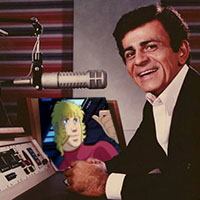
Hello, this is Casey Kasem, back from the beyond to count down the 10 biggest classic-anime hits in the 50 states. And now for our long distance dedication. Here's one we can all understand, whether we have kids or pets or neither. It's the top ten Western pop music songs that were either written about anime characters, or are covers of anime theme songs, or in some way became connected to classic anime. Does that make any sense, that Japanese cartoons were enough of a part of the pop culture landscape to inspire musicians for decades? It does to me. Is Don on the phone? And I also want to know what happened to the pictures I was supposed to see this week! I want someone to use his freaking brain to not come out of a gosh-darned record that is, uh, that is up-tempo and I gotta talk about a... um... uh... and now, on with the countdown. Here's number ten.
Modern power pop troubadour Matthew Sweet spent time in Athens GA playing in a band that also featured Michael Stipe's sister before recording his debut solo LP, which failed to impact the music scene. Its followup also fizzled. It took a rock retooling, an embrace of his inner fanboy, and a couple of eye-catching videos to put Sweet on the charts, and one of the hits from his third album 'Girlfriend' was this tune, "I've Been Waiting". The song was paired to visuals from the first Urusei Yatsura film "Only You" to create a unique music video experience, even among the outlandish landscape of music videos.
As The Buggles, new wave bad boys Trevor Horn and Geoff Downes inadvertently turned the world on its ear when the Russell Mulcahy-directed music video for their song "Video Killed The Radio Star" gained fame as the first ever video broadcast on the nascent cable channel MTV. They'd later be picked to form a short lived iteration of prog rock legends Yes, which in the early 80s would doom The Buggles as a creative entity. Horn would go on to produce ABC, Frankie Goes To Hollywood, and The Art Of Noise, while Downes would leave Yes to form prog-rock supergroup Asia with members of ELP and King Crimson. However we can look back fondly at The Buggles' first album, which featured sharp, tightly produced nervous New Wave hits like this song, "Astro Boy (And The Proles On Parade)" Does it have anything to do with the cartoon Astro Boy? You decide.
Moving on to number 8 in our countdown, SoCal punkers The Dickies gave the hardcore scene a swift, humorous kick in the pants with their speedy, goofy, un-serious brand of aggressive punk rock. This led to The Dickies being featured as the first punk band to make an appearance on American network television (on C.P.O. Sharkey) and the first punk band to have a top ten single that was a cover of the theme song to a TV show starring people in giant dog outfits (with their cover of "Tra-la-la The Banana Splits Song"). Here The Dickies regale us with their excellent cover version of the theme to everybody's favorite show about the young boy and the super robot whose power is in his hands, Gigantor.
Here at number seven, we have the odd yet strangely fitting combination of a 1972 hit single from an Irish singer-songwriter and a single episode of a 1986 anime series. What interesting alignment of cosmic forces placed the Gilbert O'Sullivan single "Alone Again (Naturally)" as the opening credits song for episode 24 of Maison Ikkoku? Was the new theme song - "Suki sa" by Anzen Chitai - simply not ready yet? Or was there a slip-up or a prankster at master control? O'Sullivan's song would spend six weeks at the top of the charts in 1972 but in '86 it would flash past our TV screens in ninety seconds, and would never make it onto American releases of the the Maison Ikkoku TV series, for obvious copyright reasons.
Coming in at number six we have the three or four nice girls who make up the self-styled "dyke rock" combo Two Nice Girls, bridging the gap between radical lesbian feminism and sarcastic punk rock, delivering an Austin-style twang to their cover of the theme song to everybody's favorite cartoon about the Greatest Race Car Driver In The World, young Speed Racer. Keep an ear out for the new lyrics!
At the other end of the musical Speed Racer spectrum, here at number five we have Alpha Team's techno-dance track "Speed Racer", which is pretty much the early 1990s condensed into one four minute headache full of drum machines and samples, promoted by what may be the worst music video ever made.
Meanwhile back in the 1980s, LA new wavers the Gleaming Spires ask the musical question, "Are You Ready For The Sex Girls?" Almost members of Sparks, the Gleaming Spires would have a KROQ hit with this tune. "Sex Girls" would wind up in Hollywood films and as music in one of Pinesalad Productions' parody dubs of television episodes of seminal 80s action anime Dirty Pair, bringing the Gleaming Spires to an audience far beyond the reach of Rodney Bingenheimer. Also, the Spire's music video for this song is an all-time classic.
"We never had a manager. We never had a booking agent. We never had a lawyer. We never took an advance from a record company. We booked our own tours, paid our own bills, made our own mistakes and never had anybody shield us from either the truth or the consequences. The results of that methodology speak for themselves: Nobody ever told us what to do, and nobody took any of our money." Steve Albini; Nirvana engineer, outspoken rock industry gadfly, techno-brutalist noise innovator, and all around tough as nails music legend, brings us to number three on our countdown as he and his band Big Black deliver a 1984 tune about the coolest character to ever walk through a 1960s Japanese cartoon about auto racing. I'm talking about Racer X, of course. Find out where he keeps his speed!
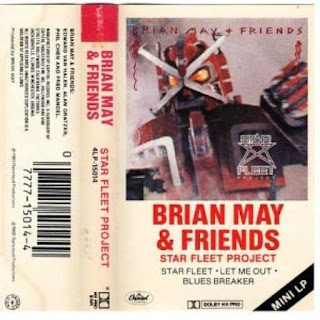
From the industrial punk of Big Black to the orchestral glam of Queen, we come to Queen guitarist Brian May and HIS mid-80s EP flirtation with Japanese pop culture, Star Fleet Project. Enchanted by the sci-fi adventures then enthralling his young son, May found himself fascinated by the show Star Fleet, the English version of the Japanese puppet adventure X-Bomber. This 1978 series starred puppet characters designed by manga legend Go Nagai and a space-opera aesthetic that lay somewhere between Leiji Matsumoto star-romance and George Lucas pyrotechnic adventure. What could be more natural than to recruit some accomplices, including Van Halen guitarist Eddie Van Halen, into the studio for some outer space puppet robot space cover-song action? Nothing, that's what, and the result takes the number two slot our countdown- Brian May and the Star Fleet Project with "Star Fleet".
Of course, if you want to be like top animation director Hideaki Anno and sing along to the original Japanese X-Bomber theme song by BOWWOW, you're in good company.
And now we're down to the number one song in the United States, if the United States was one guy making an arbitrary list. The Number One song is... yes! It's Matthew Sweet back on the countdown with the title track from his 1991 album, Girlfriend. This driving, top-10 single brought Sweet to the
attention of the music industry, rock fans, and anime nerds alike with its brilliant production and clear power-pop alternative rock sound, which still plays as fresh as it did on college radio back in '91. Was the still-infant anime industry in North America boosted by seeing Space Adventure Cobra on MTV sixteen times a day, intriguing audiences with its mix of sexy ladies and Psycho Guns? I like to think so.
I'm Casey Kasem from Hollywood, and you've been listening to Classic Anime Top Ten. Join us each week at this same time as we count down the biggest hits in the classic anime world. Until next time, keep your feet on the ground, and keep reaching for the stars!
Thanks for reading Let's Anime! If you enjoyed it and want to show your appreciation for what we do here as part of the Mister Kitty Dot Net world, please consider joining our Patreon!
This is an article from Japan Echo vol VI, No. 1, 1979, about the Space Cruiser Yamato phenomenon as seen by Mitsuru Yoshida, whose qualifications to speak on the subject are beyond dispute; he served on the actual battleship Yamato during World War Two. His memoir "Requiem For Battleship Yamato" should be required reading for anyone interested in the Pacific War in general, or super-battleships in particular. I xeroxed this article from the bound periodicals section of my university library some years ago, and present it here as a public service.
Thanks for reading Let's Anime! If you enjoyed it and want to show your appreciation for what we do here as part of the Mister Kitty Dot Net world, please consider joining our Patreon!