Saturday, February 19, 2022

Star Blazers And The Start Of A Fannish Journey

Editor's note: So back in 1999, I was on an email mailing-list of Star Blazers fans we called "The Cosmolist". Seeing as how 1999 was the 20th anniversary of Star Blazers' first appearance on American TV, it seemed to me that we ought to put together a commemorative print fanzine, a "Cosmo-zine," if you will. Was it my idea? I can't remember. Fans on the list swapped ideas for articles - recipes, funny bumper stickers, a series of Troy McClure gags, and a lengthy piece by long time anime fan Walter Amos about experiencing Star Blazers for the first time. But the zine never came together, mostly because it was 1999 and everybody had more important things to do. Print fandom was being digitally replaced by websites, primitive social media, and the Cosmolist itself. Subsequently 1999 came and went without that Cosmozine, an unfulfilled promise that’s bothered me ever since, left me feeling like one of those Fans With Plans who talk a good game but never finish what they start. Sure, I’ve piled up a lot of completed projects, but one left undone always sticks up like a nail that needs hammering down.
Well at last, that nail is finally getting the hammer. Let's Anime now presents what would have been the centerpiece of 1999’s Cosmozine - Walter's memories of Star Blazers, a piece that not only details the experience of seeing the show for the first time, but also captures the zeitgeist of Star Blazers fandom at the turn of the century, a sentence I honestly never thought I'd write. Enjoy, and thanks for waiting these, uh, twenty-three years. -Dave Merrill 


Life in the Before Time: Star Blazers and The Start of a Fannish Journey
by Walter Amos 

1979. 

Twenty years ago.(Can it really be so long?) 

Jimmy Carter was President. The Shah of Iran was deposed, and Americans were introduced to a new political force: Islamic Fundamentalism. The Soviet Union invaded Afghanistan, prompting us to boycott the 1980 Olympics. Margaret Thatcher was elected as Britain's first female Prime Minister. The first computer spreadsheet software, VisiCalc, began the process of convincing America that personal computers were more than mere toys. 

But none of that mattered to me. I was 12. What mattered to me was Star Blazers

Young fans discovering anime for the first time these days probably can't understand what it was like to be an anime fan back then, when most people (certainly my family) didn't even have VCRs, let alone laserdiscs or subtitles or all the other things that have made modern anime fandom possible. Journey back for a moment and hear one person's tale of a strange and wonderful Japanese TV show that changed the lives of a great many people. 

 Early in 1979, before Star Blazers aired for the first time (at least before I first saw it), I remember the other stuff I was into. I was always a science fiction fan, loving stuff like Star Trek (the Original Series, of course; the first Trek movie wouldn't come out for some months), as well as cartoons of all stripes. I suppose I've always had a certain predisposition toward animation in general, whether it was from Japan or not. I remember my parents finding it a little odd that I continued to watch Saturday morning cartoons well past the age at which they thought such things really "normal." 

Before Star Blazers first aired I was, oddly enough, into another Japanese import showing on weekday afternoon kidvid. A live action show. I doubt one person in fifty who reads this will remember the show Space Giants. And probably deservedly so. In retrospect the show was really pretty dorky. Space Giants was, I later learned, the U.S. adaptation of the live action Japanese TV version of a manga series titled "Ambassador Magma," created by the great "God of Manga" Dr. Osamu Tezuka. Its hero, the eponymous Magma (called "Goldar" in the US) was this giant metallic robot guy (who happened to be gold colored) who could transform into a giant golden space rocket and fly all over the place. Generally he spent most of his time flying to the places where the nefarious villain Rodak ("Goa" in Japanese) was attacking the helpless people of Earth in order to subjugate them under his iron-clad (or, well, at least foam-rubber-clad) heel. 

Now one major scene from the show involving Rodak really sticks in my mind (and is the main reason I am bringing this up at all in an article which is, after all, supposed to be about Star Blazers). In one of the early episodes we see Rodak (who is this curly-orange-haired devil sprouting little fangs and pointy ears and this ridiculous foam rubber body armor suit) briefing his faceless minions (literally! I mean all these guys were dressed in identical long black Supreme Court Justice robes and had black nylon panty hose over their faces. No, really.) on their plans to take over the Earth. While waving his arms dramatically back and forth he intones, "This is Earth, our next target. Our strategy shall be to send down giant monsters to destroy their cities. At first we shall concentrate our attacks in their Northern Hemisphere." 
 
 
Rodak: foam-rubber clad Space Giants villain

Now this is certainly a strategy destined to live in the annals of military history. Of course I don't know why he used the plural "monsters", because he only ever sent down one at a time. And usually to downtown Tokyo. I always wondered why he never saved up a few monsters and sent them to several cities at once. Or sent a bunch of them to gang up on Goldar who of course defeated the single monster he sent down every afternoon. Or maybe even sent the one somewhere else besides Tokyo. I mean, do you know how good the giant monster defenses must be in Tokyo considering they get hit with one at least once a month? I'd be willing to lay odds that Poughkeepsie, New York probably has no giant monster defenses of any kind whatsoever. 

"But what does this have to do with Star Blazers?" I hear you cry. I'm getting there. Some time later in the year Space Giants was replaced on WTAF TV Channel 29 in Philadelphia by another Japanese import. A cartoon this time. A cartoon about a really big battleship that flew out in space and had weapons like you would not believe. Now being a cartoon, in the American mindset it of course had to be for little kids, right? Well check out the basic premise of this cartoon for kids:

 Mankind is basically dead. The nefarious planet Gamilon has been dropping planet bombs on the Earth in an attempt to purge the planet of humanity so they can take over. The last remaining humans are cowering in under ground cities to escape the bombs and residual radiation, but within a year the radioactivity will seep deep enough into the surface to poison even these last redoubts so that humanity will be finished. 

Yup, comforting kiddie pablum. 

Now let's compare for a moment the basic badguy military strategies in these two shows. 

Space Giants: "We will send down monsters to destroy their cities." 

Star Blazers: "We will drop GIANT NUCLEAR BOMBS on them until everything on their planet is DEAD!" 

Can you understand why I and so many other people glommed on to this show as the greatest thing since sliced bread? This was something sui generis, totally unlike anything anyone on these shores had seen before.
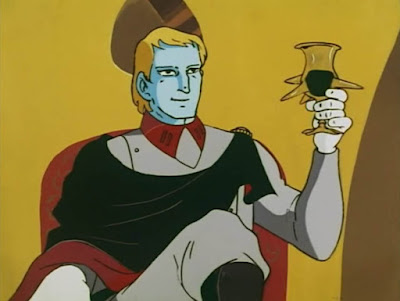
Desslok Of Gamilon: More Style Than Rodak
 

But the Star Blazers cool factor didn't end there. It had: 

 • good guys - good guys mind you - flying around in a ship that had a gun that could kill planets. 

 • bad guys who could spend their days conquering the Universe looking cool all the while, and on the weekend could still get babes.  

• real human drama. My favorite example of this last one: As our heroes leave Earth's solar system in an attempt to retrieve a device from a distant planet which can remove the deadly radiation created by all those nasty nuclear bombs the bad guys were dropping on us, they begin to move outside the range of possible communication with Earth. Everyone on the ship is encouraged to say a last farewell to loved ones before moving out of range. At the end, the principal male hero, Derek Wildstar, is corralled by the ship's nurse, Nova, into the radio room to make his call. When she pokes her head into the room wondering why Wildstar has been avoiding making this call all day and is just sitting there not turning on the communicator, Wildstar shouts mournfully, 

"There's no one left for me to talk to on Earth!!" 

...whoa. 
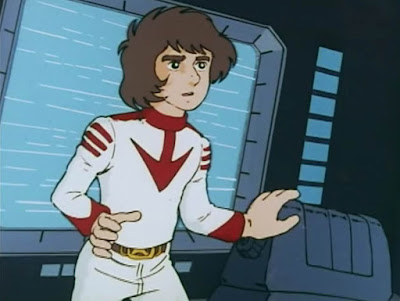
if you wish to make a call please hang up and try again


And at the end of the same episode, as the last images of their home disappear off their viewscreen, being replaced by static and the blackness of space, the ship's radio operator intones,

 "We have now moved beyond communication range. From this point on communication with Earth will be impossible." 

...whoa. 

This was heavy stuff. Certainly unlike anything I'd ever seen on TV, and I couldn't get enough of it. 

Of course, the reason it was all so cool was because, unlike every other Japanese TV show imported to the US, the people who licensed this series made a remarkable and farsighted decision. They didn't screw with it. Again, this was something totally unheard of. These things almost always had to be "improved" for the American market. Compare Star Blazers to any other Japanese import of the time and you'll see what I mean. Take a few examples: 

• Music: Save for writing English lyrics to the opening and closing themes, all the music in Star Blazers is the original music heard in Japan. One would think this should be a natural thing to do, because NOT rewriting all the music would mean less work for the importing company. But no. More often than not when people decide to import popular Japanese TV shows, rather than stick with a proven popular score into which frequently great amounts of energy and creativity are invested, for some reason producers get the bright idea to have their cousin's kid's rock band do a score since it will be popular with the kiddies. And we end up with stuff like Reba West singing "Stage Fright" in Robotech and the incessant droning thumpa-thumpa-thumpa background music in G-Force. Ugh. Fortunately Westchester Films had the intelligence to realize that a theme song that could be popular enough to be referred to as "a second Japanese national anthem" probably had something going for it. 

• Story: Once again the good people at Westchester Films had the bright idea that a story that could catapult a show to record-breaking popularity in Japan from out of the morass of scores of run-of-the mill TV animation shows was probably something that didn't require a lot of "tweaking". Save for some fairly minor overall edits to bring the Japanese original in compliance with U.S. kid-TV broadcasting standards (can't show the kids that too many people die during a war after all) Star Blazers' storyline is in the main untouched. Compare this again with my favorite targets of derision, Robotech and Battle of the Planets. Robotech took three totally unrelated series and created a new hackneyed plot to try and glue these disparate things together.
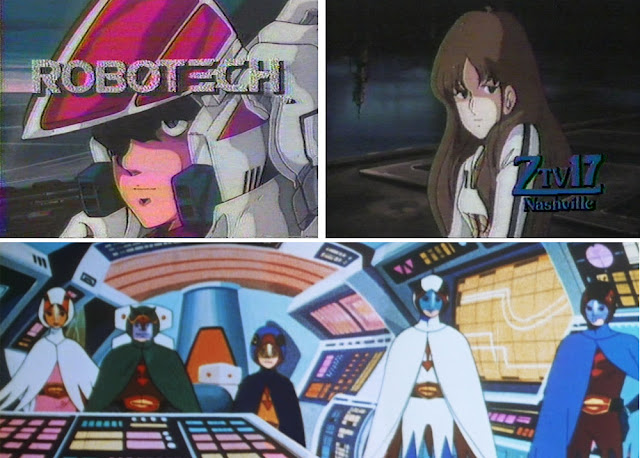
Robotech and Battle Of The Planets

This required making action which takes place on alien planets appear to be taking place on Earth (including editing out all the footage of the multiple moons in the night sky). Battle of the Planets took the opposite approach, deciding to make action that all took place on Earth appear to be happening on other planets. There really is just no pleasing these people. 

• Episode Sequence: Like most Japanese animated drama series, the story in Yamato was told sequentially, developing from one episode to the next. This kind of story telling allows for much more sophisticated drama and the possibility that the characters may grow and change over the course of the show. And this is exactly why it couldn't be allowed to remain in most other imported shows. After all the idea that people can grow and change is probably too sophisticated for U.S. kids, right? 
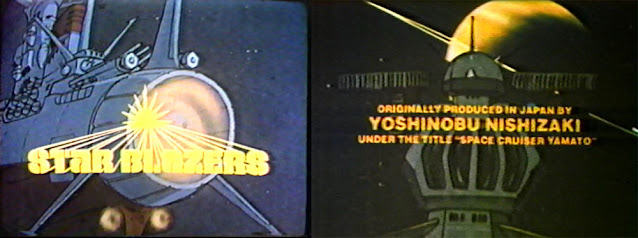


Well, with all this and more going for it, I was certainly hooked, line and sinker, on the show back then in Junior High school. Ample testament to this fact can be found throughout most of my later Junior High and High school notebooks wherein the margins were festooned with little sketches of Gamilon space destroyers and guys in Desslok-style capes. But while I knew I was hooked, what was unknown to me for a few years was just how many other people were similarly hooked. 

The discovery of that fact would have to wait a few more years, until about 1981 or 82; because that was when I attended my first convention. Well I shouldn't really call it a convention, knowing better as I do now, but at the time I thought it had to be the most amazing happening ever. In New York in the late 70s and early 80s a sort of convention / dealer's show for Sci-fi fans had cropped up called "Creation Cons". Some of you may have heard of these. Basically they would usually get a guest or two from Star Trek to give a talk, show some movies, and have a large huckster's room where eager fans could buy all sorts of related merchandise. It is really these type of shows more than anything else that get lampooned in things like William Shatner's famous "Get a Life" sketch on Saturday Night Live. It was only later that I came to understand that these things were really not true conventions: nothing that ended at 7pm with no parties or fan-run programming could really be called a convention! But I didn't know any better yet. 

Anyway, round about '81 or '82, Creation decided to hold its first show in Philadelphia. To publicize it they sent out little cards to various people who would likely be interested in this sort of thing, including subscribers of Omni magazine, which I was at the time. So here I am with a little card indicating the big Star Trek con was coming to downtown Philly. After the requisite whining and pleading with the overprotective parental units to be permitted to take the train downtown by myself, I was able to go. Now as I recall the little card advertising this thing focused mainly on Star Trek, Star Wars, and other well known Sci-Fi shows of the time. This is of course what I was mainly expecting to see. 

Imagine then my shock and surprise when entering that magical dealers' room for the first time and finding that while, sure, there was some Trek stuff and so on, easily 75% of the dealer's tables seemed to be selling Star Blazers stuff! STAR BLAZERS STUFF!! I walked up and down the aisles like a kid in a candy store. Looking over the mysterious but beautiful color art books called "Roman Albums" (the meaning of that title not being explained to me until years later) I noticed something odd. By this point I had most of Star Blazers fairly well committed to memory, but looking over these books I saw numerous scenes obviously involving the characters from my favorite show, but not in any way resembling anything I could remember. Here was a picture of the generals in the throne room of the Comet Empire wearing uniforms unlike anything I could remember from the show. In fact the Generals themselves looked different too. And there was a picture of Leader Desslok sitting on a comfy couch having a friendly chat with . . . Derek Wildstar?!?! WHAT?? I turned to the dealer and pointed out some of these scenes and asked, "Hey what's the deal here? I have this show fairly well memorized but don't remember any of these scenes here." And I remember being told: 

"Oh, those are from one of the later movies." 

"What?" 

"Oh yeah, Yamato is like, bigger than Star Wars in Japan. They had a third series of the TV show and a bunch of full length movies."

 My young brain reeled. "Movies . . . There are Star Blazers movies . . . WHY AREN'T WE GETTING THESE OVER HERE?!?!" As I pondered this important question I continued to wander around spending all of my meager saved allowance on Roman Albums and art books, gleefully freeing myself from the need to continue photographing the TV screen. Oh I forgot to mention that did I? Ah let me backtrack for a moment. One of the other several things that attracted me to Star Blazers was that its spaceship and uniform designs were the coolest things since sliced bread. I simply had to learn how to draw things like that (hence the aforementioned notebook margin decorations.) Now at the time VCRs were available but they were still kind of expensive, and quite beyond my family's usual means. Not to mention that in my parents' view, anything that would allow me to watch more TV was probably evil to begin with. So with no VCR, I had to find some way of getting images of these cool ships and uniforms on record so that I could study how to draw them. I could think of no way to do this until one day, visiting a friend's house, I noticed on the table a Polaroid Instamatic photo taken of a TV screen showing another import anime series, Tranzor Z. The screen was only a 1-inch square in the middle of the photo and everything around it was black, but you could see what was on it! Inspired I began copiously wasting my father's Instamatic film attempting to preserve this remarkable show that I knew I would probably never see again. But now having found out that there were such things as Roman Albums, with wonderful full color and line art drawings of all the ships and characters in all kinds of perspectives all right there, the need for my father's camera disappeared. Hurrah! 
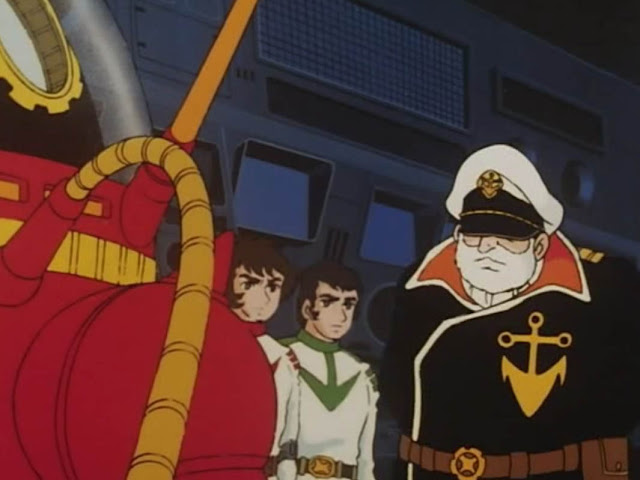


Even as I was blowing my allowance buying these books, I noticed also that there were books with characters in them that looked very much like those in Star Blazers but were in fact totally unrelated. Shows with names like Captain Harlock and Galaxy Express 999. I began to learn that all these were the product of the creative genius of one man, Leiji Matsumoto. At the time I had no idea what these shows were about since there was no way I knew of to see them here in the USA, but I filed them away for future investigation. 

However I soon learned that I was wrong on that "no way to see them" point because, continuing to wander around the con, I noticed flyers around for a group of fans with an odd name called the "Cartoon/Fantasy Organization". Here were a bunch of people like me, who loved these weird Japanese cartoons, and who somehow could manage to get videotape copies of some of the aforementioned Captain Harlock and Galaxy Express 999, as well as the fabled Yamato movies I longed to see. And I later learned, people who thought very much like I did, people who also had stashes of Polaroid photos of TV screens and audio cassettes recorded off TV broadcasts in attempts to capture background music. Getting in touch with them and the nascent Star Blazers Fan Club, I was at least able to learn of the plot of some of these magical later Yamato shows. However the sad fact remained that my family was adamantly opposed to having one of those useless VCR machines in our home, so my ability to actually see these things for myself was stymied for a number of years, until I got to college. 
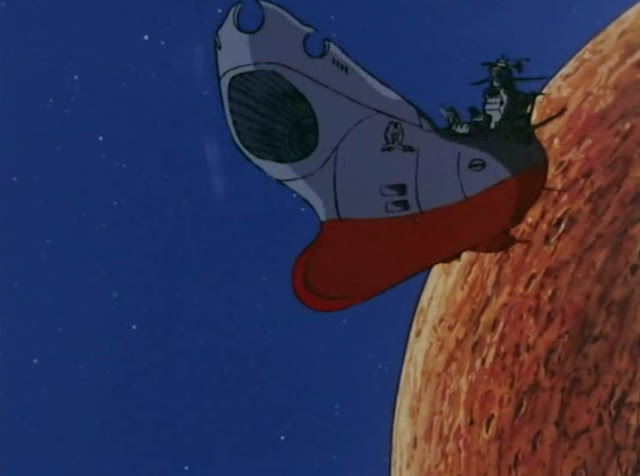


As my High School years progressed I continued to attend Creation Cons when I could (since these were the only conventions I had any means to get to.) As other new shows such as Britain's Dr. Who became popular I noticed that these Cons began to invite guests from these other shows as well. One of these was John Leeson, the man who played the voice of the Doctor's robotic dog, K-9. This set me thinking: "Why don't we try to invite the American voice actors who portrayed the characters in Star Blazers ?" Another of the features that set Star Blazers so far apart from the rest of the afternoon cartoon wasteland was that the voice acting was absolutely superb. These characters portrayed real emotions; despair, anger, joy. The strength of emotional scenes like the ones I mentioned earlier in this article could not have come across unless that actors dubbing the show took their job seriously, unlike so many other dub jobs where no matter what the nature or content of the show concerned, since it was a cartoon it was deemed to need "cartoony" voices. (Can you imagine what Star Blazers would have been if we had lines like "Hee-yuk! Guess it's time to fire that thar big ol' Wave Motion Gun, yesiree Bob!") 

Unfortunately such an appearance never took place, and I later learned that the American actors who had helped make Star Blazers a success had all sort of vanished off the face of the Earth, and the likelihood of ever finding most of them again was about as good as, oh, ever having an all anime convention where they would actually bring guests over from Japan. (Yeah right, like that was ever gonna happen!) 

Thanks to my new found contact with the Star Blazers Fan Club, I learned a year or two later that in fact the third season of Star Blazers had finally been dubbed and was available in the US! I wrote numerous letters to good old WTAF TV 29 in Philadelphia begging, pleading with them to pick up the show for broadcast, but to no avail. I later learned that, due to different licensing methods, this show was actually only ever shown in a tiny handful of cities around the country. Of course, I also later learned that not only could we fans not find the original voice actors to invite them to speak to us at a convention, but neither could the people at Westchester Films! They were forced to use a totally different voice cast and more importantly, different script writers as well, since there were a number of huge glaring continuity errors between the fondly remembered first two series and this third one. 

With the apparent failure to get Star Blazers season 3 on the air, there was little more I could do Japanese animation-wise for several years, at least until I got to college. Fortunately there I met numerous other likeminded people, people who had VCRs and cars with which we could travel to REAL conventions like Philcon in Philadelphia and Lunacon in New York. Conventions that didn't stop at 7pm. Conventions that had parties with booze! Conventions that had full-time anime screening rooms. And as a note to all you junior fans out there, these were called "Star Blazers rooms" for a number of years. It was at these cons in places like this that I finally got to see some of the other works by the amazing Mr. Matsumoto, as well as some other really mind blowing stuff like Nausicaä of the Valley of the Wind and Lupin III:Castle of Cagliostro by some guy named Hayao Miyazaki. 

With all these wonderful and shiny new things, and the Yamato franchise itself coming to an end in 1983 with the aptly named movie Final Yamato, Star Blazers gradually began to fade into the background. Anime fandom continued to grow and moved on to other things. For over a decade and half, despite the odd blip here and there, nothing much happened with Yamato and Star Blazers. So let's advance my anime time clock... 

past Saint Seiya... 

past Laputa: Castle in the Sky... 

past the invention of fan-subtitling (and all that did to broaden this fandom in which we find ourselves!)... 

past Totoro and Kiki's Delivery Service, past Wings of Honneamise, past Nadia of the Mysterious Sea, past Legend of the Galactic Heroes and Giant Robo... 

(and by the way, to those younger fans reading this, if you don't recognize any of the shows mentioned above, please CHECK THEM OUT! These things form some of the core of what made this fandom what it is today, and deserves to be recognized. There is more to anime after all than Dragonball, Sailor Moon, Ranma and Pokémon.) 

It is only within the last three or four years that some remarkable things have begun happening concerning Yamato fans once again. 

First, Japan is experiencing a wonderful resurgence in popularity of the works of Leiji Matsumoto. Several new anime productions based on his comics have been released in Japan and subsequently here, including The Cockpit and Queen Emeraldas. Viz Comics is publishing an English translation of his new Galaxy Express 999 comics (which features a cameo appearance by the Yamato itself!) and both dubs and subtitles of the Galaxy Express movies. The new Space Battleship Yamato Playstation game featuring new Matsumoto-style artwork has been a top seller in Japan for several months now and sequels are soon to be released. And perhaps best of all, a remake of the original Yamato story featuring snazzy new animation is slated for next year ("next year" meaning 2013- Dave). 

But for true old-time Star Blazers fans the biggest news has come thanks entirely to the growth of the Internet. As I mentioned earlier, it was nearly impossible to find any information about the American actors who played the voices in Star Blazers because few records were kept. The great dreams of Star Blazers fans - of locating these actors, meeting them at conventions, and maybe even creating that fannish holy grail: a dub of some of the later Yamato movies into English with the voices we knew and loved - it all seemed an unattainable fantasy. However, it was probably inevitable that with the explosive growth of the Internet, some highly motivated fans would create numerous Star Blazers web pages, and it was through one of these (specifically the superb Wave Motion Web Page) that the impossible happened. Webmaster Bud Cox received an e-mail about two years ago saying basically "Hi! I loved your web page. My brother found it on the Internet and said I should check it out, since I played Nova years ago!" 

Wowsers. Now you've gotta understand, after more than 15 years of hoping to locate any of these people with no success at all, to suddenly have "Nova" basically walk up and announce herself is like, say, being Sir Galahad and spending decades in search of the Holy Grail with no luck, and then one night to hear a knock on the door from a fellow who says, "Hi there, I'm Joseph of Arimathea. Would you mind holding this cup for me?" 

Being as excited as we were to find so much interest in her past work, Amy "Nova" Howard has been a guest at several regional anime conventions, to the delight of all who have had the chance to meet this vivacious lady. And better still, within just the past 8 months, with the help of Amy and further contact through the Wave Motion Web, we have also located Ken "Derek Wildstar" Meseroll and Tom "Mark Venture" Tweedy, both of whom will be making their first appearances in fandom at the upcoming Project A-Kon 10 convention. This amazing and totally unbelievable development, coupled with the resurgence of Leiji Matsumoto mentioned above and just in time for the 20th anniversary of Star Blazers, will make 1999 the most exciting time for Yamato fans since, well, since those glorious days in the early 80s when anime was new and its American fandom didn't even exist. And considering how far we have all come since those days in the "Before Time", I think that means some really amazing things are yet to come. 

I can't wait.


Thanks to Walter Amos for this article, and my apologies for the delay in publication. See you in 2029, Star Blazers fans!


Thanks for reading Let's Anime! If you enjoyed it and want to show your appreciation for what we do here as part of the Mister Kitty Dot Net world, please consider joining our Patreon!

Monday, January 10, 2022

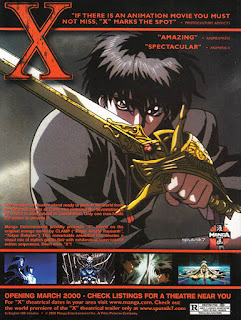
X: Mild Gift


 Author's note: This article was originally published in the twelfth (Spring 1999) issue of the fanzine "Let's Anime," and was intended to be titled "X: Mild Gift", though this title somehow got deleted. It was written as one unbroken sentence, and is reproduced here as before, minus the transcription errors born from trying to read my handwriting.


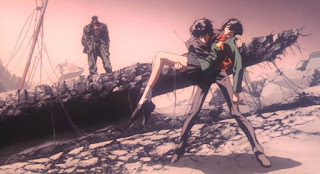
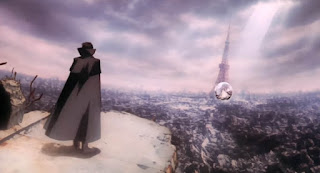
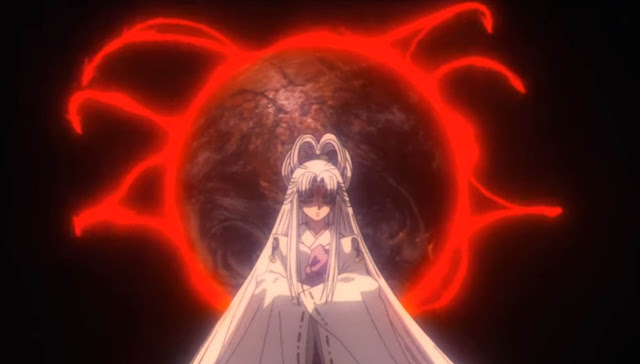
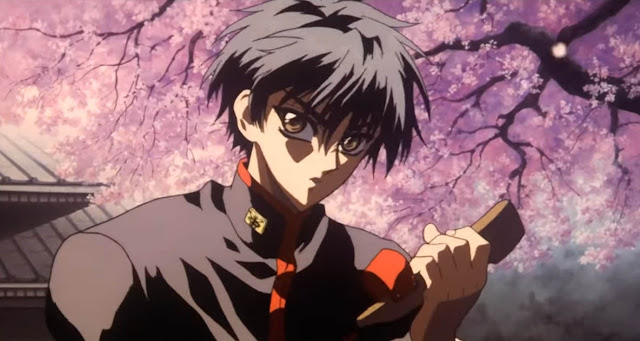
Traditionally, the letter "X" has been used, amongst other things, to denote the location of buried treasure, but if there is any treasure to be had hereabouts, it has apparently been safely sequestered beneath so many strata that it could casually rub hips with Australopithecus, many of whose slump-backed and shambling contemporaries could have doubtlessly penned -- would that there had been pens available -- a less inchoate smattering of surface detail and subsurface void than this gucky goofwad of angst and somnolence from the much-vaunted, all femme banal studio CLAMP, for oozing languidly in and about the flickering frames of this latest stack of overhyped Japsquiggles is an all-too familiar premise handled all too ineptly: that of more super-psychics rending more abstract art out of more Tokyo in accordance with that least empathetic of all motives -- DESTINY, with a capital everything -- thereby bequeathing us with a film wherein opposing spoon-benders extraordinaire regularly meet and throw down in the inner city like astral-traveller Crips defending their turf for no reason even they could provide after slipping around some universal corner in the form of a big computer animated Espo-Barrier to ensure that nothing untoward resulting from their clandestine
tête-à-tête should bring undue mental or physical stress to any passing salaryman or other perpetually unseen denizen of the soon-to-be slowly melting and crumbling down skyscraper arena once all hell - no wait; that sounds too exciting - all heck breaks loose within this rendition of the long venerated monster magnet Tokyo, a Tokyo which would seem - would that such a thing were possible - to be even emptier than the ground-floor characterizations of our disgruntled ex-Psychic Hotline goon squads, whose members snuff their porchlights like Black Flag-shooting junkie fireflies in a microwave mere minutes after their passing introductions, leaving these unidentified saboteurs (from space) to remain unidentified, unwept and unsung even as the cycle begins anew, a trend which inevitably and most unfortunately bleeds copiously over into what most closely approximates a central theme here and is ultimately manifested in this two-hour Nyquil substitute's most egregious failing: the film's utter inability to handle with any amount of honesty the very real-world tragedy of the dissolution of friendship, a thematic concept it would seem to have borrowed from the far more deftly executed Akira and subsequently stripped of all its considerable impact by once again forsaking deliberate choice and personal motivation as reasons for conflict in favor of advocating a hackneyed "devil-made-me-do-it" stance of predestination that manipulative charlatans the likes of Nostradamus, Jean Dixon, and countless other two-bit fakers in between have used to bilk and delude the credulous layman throughout the ages, a shortcut cheat that robs the viewer of any possible emotional connection with these characters via either a personal recognition of the pain inherent in a breach of trust, or identification with the fate of one who has chosen their steps a tad too recklessly and must lie in the bed they've burned with their own two hands, each of which
presumably held a match or other incendiary device in this hypothetical metaphor that serves to illustrate, albeit in an unnecessarily aggrandized way that has doubtlessly begun to become at least mildly obnoxious to many readers who may tire of unending and, for the most part, mindless digressions like this one, the undeniable fact that while some personal style, mostly apparent in the big, dreamy, mascara-encrusted eyes of our pretty-boy cast members, may still show through and betray the film's origins, by no means is an all-female animation studio any more intrinsically interesting or creative than an all or at least predominantly male animation studio due to the simple fact that the wellspring of their success was a common one, a shared history of stories, style, and executions whose overuse in innumerable examples of the Japanese animation industry's progeny has created a vast landscape of homogeneity in which various constituent ingredients are mixed seemingly at random and squirted forth by the corporate machine for public consumption like elementary school lunches, the ingestion of which merely provides temporary satiation and no real nutritional value for anyone save the over-hungry wallets of a breed of providers whose past innovations have become today's codified laws, whose once adventuresome spirit now staggers, choked and wheezing, down a well-travelled path like a pioneer who has stumbled across one boa constrictor too many and no longer dares to take chances on new avenues of exploration, until a form of creative expression that once shone like the sun wore out its welcome with random precision and sits stripped of its luster as content winds its spinless coils and slithers out of sight, to be replaced by prefab plastic gloss whose cross-format focused and scientifically harmonious sheen nevertheless manages somehow to remain dull and lifeless as it is gradually lacquered over a once superlative accomplishment like a film of dirt, slime and verdigris slowly encrusting a long-since touched fire extinguisher that hangs
within the cobweb-ridden hallway of a rickety, unkempt hotel on the lame side of Tepidtown and waits with fingernail-chomping impatience for gallons of rubbing alcohol to flow through the strip and burn it clean, spiralling downwards ever further into oblivion as the city fathers watch with little interest, cold and implacable like a rock, like a planet, like a fucking atom bomb, counting their ill-gotten and undeserved gain as decay slowly encroaches upon and erodes the foundations from beneath the toxin-spewing industrial infrastructure out of which their atrophied livelihood was once begotten, until comes the fated hour that their sleep is broken by the somehow unanticipated news that the city is burning that night and they are left to wonder, with some measure of chagrin, if there might possibly be a handy fire extinguisher about someplace now that they might appear to be consigned to immolation in the beds they had always thought were kept well clear of both fire and flame-producing agents as their own dearth of maintenance washes the whole dumb town into the bowels of the earth with a final climactic "slurp" that goes forever unmourned, much like those people in that stupid X movie, which, as you may have forgotten, is the alleged subject of this overwrought diatribe, and the suddenly recurrent mention of which serves as a convenient stepping-stone from whence to dive face-first into the final salient point remaining to be discussed within the helter-skelter syntax of this bastard collection of adjectives and similes: my utter and unending confusion as to why there exists any such thing as a new anime fan, for whether you take that to mean one who has newly become a fan of anime, or one who is a fan of new anime, the puzzle remains an insoluble one in that it requires some understanding of how, when a film like X is a pretty average example of storytelling quality, superior animation or no, anyone can sustain interest in the medium long enough to become so singularly a fan of Japanese animation instead of cinema in general beyond a passing, or at least what would be passing in a brighter, saner world, sense of novelty stemming from the obvious differences from American animation it clearly possesses, a novelty which, though
notable, is hardly sufficient to rescue this film from empty genericism, as were the efforts of exceptional animation director Rin Taro, who, like his comrade-in-charms Mamoru Oshii with Ghost in the Shell, simply was given nothing of meaning or value around which to weave his often beautiful images, an unrealized strike in the positive column that most anime is bereft of from the very get-go, encumbered as it so often is by a collection of demerits weightier than James Cameron's Titanic budget, or for that matter, his Titanic ego, leaving the true film lover out in the cold with his nose pressed against the glass and his tongue stuck to a lamppost because he was an idiot to mourn the paucity of artistic achievement remaining since the passing of the Good Old Days, a time which, though hardly devoid of crap, nevertheless boasted a more varied range of quality, so that amongst the myriad ranks of product packed sardine-like in those J-trains downtown would be the occasional good film or series that actually stood a decent chance of rubbing hips with another good or at least decent idea instead of some swill-penning cave bum with bad posture, a regrettably lapsed state of affairs for an artform that once invited and bore close scrutiny for good reason and now continues to plow forward as a mere result of its own inertia instead of true content, a fact somehow lost on the masses of trendseeking New Anime Fans who grope for whatever quick-fix, flash and dazzle ephemera they can most easily reach and crown Best Show Ever until it too deteriorates and quickly fades away so that its place may be subsequently filled with yet more of the same exact same, and who may indeed honestly continue to be entertained by films of this type and style, but whose enthusiasm no longer parallels mine, which once gripped me with such fervor back in Year One but has long since passed out on the couch due to one - or one thousand, for that matter - too many examples of all style and no substance born out of a medium that once showed true promise, which is why, in not so many words, I think that this film sucks horse butts.

-review by Matt Murray

X/1999, a Madhouse film based on the 1992 manga by CLAMP, was directed by Rintaro and distributed by Toei, with production assistance from Kadokawa Shoten, Victor Company Of Japan, MOVIC, Sega, and Bandai Visual. The film was released in Japanese theaters in 1996 and on DVD in the US in 2000.
 

Thanks for reading Let's Anime! If you enjoyed it and want to show your appreciation for what we do here as part of the Mister Kitty Dot Net world, please consider joining our Patreon!

Sunday, December 12, 2021

ninteen anime eighty-one part two


Last time here at Let's Anime, we looked at the Japanese anime television of 1981. And let's make no mistake; that was so much TV, you’d think people didn’t have any time to get out to theaters to see anime films. Remember movie theaters? I miss seeing movies in theaters. Anyway, now we're going to take a look at what those people were looking at when they quit looking at their TVs and instead hit their local cinemas to look at anime films, those anime films of 1981. I'm gonna throw some TV movies and specials in here too, just to confuse everybody. 

 
cosplay at the Gundam I premiere

Mobile Suit Gundam might have not been a big success in 1979, but the show refused to vanish, and two compilation films were released in 1981 to great fanfare with a third, final film screening in 1982. Much like the success of the earlier Space Battleship Yamato film, this new theatrical re-imagining of a television series put Mobile Suit Gundam on the pop culture map, and soon Gundam model kits would be standard issue in every otaku's survival kit. The movies received both dubs and subs here in North America through a variety of formats and localizers, and you can watch all three right now on Netflix.
 
 
The twelfth-century fairy tale of the runaway four musical animals is known in German as "Die Bremer Stadtmusikanten" and was made famous by the Brothers Grimm. Here the story become the basis for Bremen 4 - Angels In Hell, Osamu Tezuka’s fourth TV movie produced for NTV's annual 24-hour charity program Ai wa Chikyū o Sukū ("Love Saves the Earth"), as a space alien sent to save the Earth from war transforms woodland animals into people that just happen to form a rockin' band. Sure, this brings to mind Tezuka’s 1960s series Wonder Three, and why not?


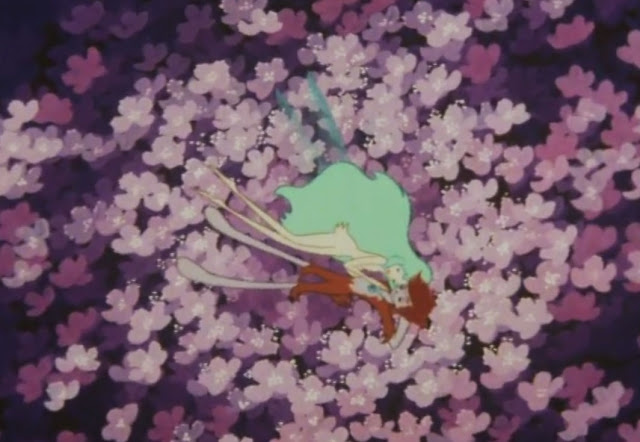
The Hello Kitty company Sanrio front-loaded the rollout of their late 70s magazine Lyrica with a lineup of manga all-stars. Osamu Tezuka’s contribution was Unico, the story of a little unicorn wandering lost through lands of myth and legend. This became a 1981 feature film from Sanrio with animation by Madhouse, and it is an absolute gem, at turns beautiful, haunting, psychedelic, and Margaret Keane-level sugary. Columbia released an English version in the 1980s to home video and cable TV markets, and you can relive your 80s youth today with Unico on DVD and blu-ray from Discotek, and streaming on various platforms.  


Sanrio continued its theatrical anime assault with Sea Prince & Fire Child aka the Legend Of Sirius, a Disneyesque re-telling of Romeo and Juliet recast as a romance between children of the gods of the ocean and of fire. Darker and less cutesy than Unico, Sea Prince & Fire Child also received an English-language Columbia release & subsequent Discotek disc.


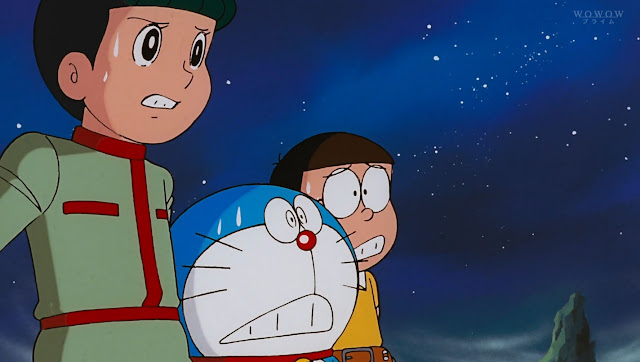
Slightly less mythological is Doraemon: The Legend of Spaceblazer Nobita, an extra-dimensional adventure where amazing robot cat Doraemon and doofusy human kid Nobita must save the planet Koya Koya from total destruction! Popular throughout the world, Doraemon has yet to make it in the American market, and it's a shame because American kids would really enjoy the knock-offy Star Wars vibe of this feature.


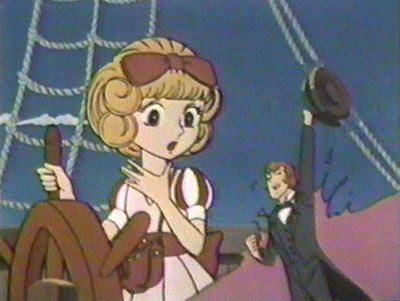
Speaking of total destruction, that’s what Tatsunoko did to the original source material when they adapted Jules Verne’s 20,000 Leagues Under The Sea into Kaitei Daisensou Ai no 20,000 Miles aka Undersea Encounter, sometimes called The Great Navy Battle: 20,000 Miles of Love. In the future, the Emperor Darius seeks to rule the entire world, but is opposed by the Nautilus, captained by Captain Nemo with the help of two castaways Ricky and Ben. Harmony Gold had the license to this TV movie, but their English dub is hard to come by.


Mary Shelley’s Frankenstein got slightly better treatment when Toei adapted her groundbreaking, genre-inventing novel for a TV special. Toei's Kyōfu Densetsu Kaiki! Frankenstein was directed by Toei's all-star tag-team of Yugo Serikawa and Toyoo Ashida, and in true Dr. Frankenstein style, great liberties are taken with the original source material. Part of the Toei/Marvel Comics deal that gave us Hamburger Dracula and Spiderman's giant robot, it's unclear how much this feature draws from the Gary Friedrich/Mike Ploog Marvel comic series.  Dubbed by Intersound, this was released on VHS in the United States.


The original master thief battles the original master detective in the Toei TV special Lupin Vs Holmes. The two Victorian-era rivals are pitted against each other in this adventure, based on a 1906 novel that featured Arsene Lupin and a Holmes pastiche that was written by Lupin creator Maurice LeBlanc. This anime has had home video releases in a few countries, but not Japan.


The inspiring true story of Helen Keller became a quadruple-Tony winning stage play, an Academy Award winning film, and also a Japanese anime TV special from TV Asahi. The only version I've ever seen has Finnish narration on top of the Japanese dialogue, making audiences perhaps appreciative of a little silence.


Tchaikovsky's Swan Lake comes to the anime screen in this theatrical version produced by Toei that manages to capture the majesty of the original ballet while also delivering anime-style entertainment. Was the Swan Lake character of "Odille" the inspiration for Vampire Hunter D's Lamika? Hmm.  Swan Lake got an English dub from Turner Program Services for the cable TV market and is currently streaming and on DVD from Discotek.


Jack London’s gritty tale of up-North survival and the journey of Buck from former pet into pack leader alpha dog becomes a telefilm from an obviously overworked Toei. Their Call Of The Wild stays reasonably close to the source material and was dubbed by Intersound, achieving immortality through VHS and bargain-bin DVD releases and screenings of "Totally Lame Anime."


In Enchanted Journey, Gliko the chipmunk punk leaves his comfortable tame life and battles his way to freedom in the great north woods. Known in Japan as The Adventure Of Glicko, this animals-in-peril feature is from Studio Korumi and is based on the children's book by Atsuo Saito. The English dub, featuring voice work from Orson Welles and Jim Backus, aired on HBO and got several home video releases.


Last time Let's Anime discussed the TV anime Jarinko Chie aka Downtown Story aka Chie The Brat, the TMS series based on the Etsumi Haruki manga. That TV show was a followup to this Jarinko Chie film, a Toho/TMS/Telecom feature directed by future Ghibli star Isao Takahata. This cinematic adventure of Osaka's scrappy street kid played in theaters in a double bill with our next feature.


Based on the 4-koma gag manga by Masashi Ueda, Furiten-kun is a goofball salaryman appearing here in his only feature film. Furiten's cinema debut consists of 7 short segments and is a production from Oh! Production and the studio that brought you Chargeman Ken, Knack.


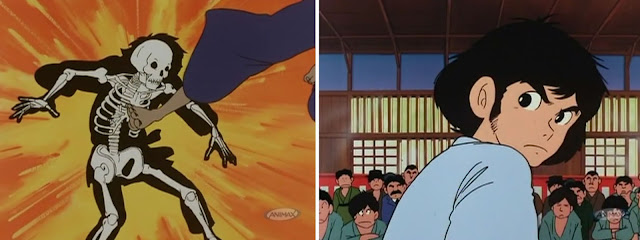
Sanshiro comes to Tokyo to become a martial arts champion, becomes the disciple of judo master Yano, and falls in love with Sayo Murai whose father teaches martial arts to police. Along the way Sanshiro battles his rival, the jujitsu fighter Higaki Gennosuke. It's all happening in the Sugata Sanshiro anime TV special (aired June 8) from TMS/Telecom, based on the novel by Tsuneo Tomita and with character designs by Kazuhiko Kato / Monkey Punch!


Joe Yabuki meets his destiny in the boxing ring in Tomorrow’s Joe 2, a feature based on the immensely popular Tetsuya Chiba manga, as directed by Osamu Dezaki with character designs by Akio Sugino. Is this the first time the Dezaki/Sugino team would revisit a property they'd brought to animated life on television? 


Space Warrior Baldios, the Ashi Pro/MIC environmental disaster super robot series, wrapped up its 1980 TV series with a 1981 feature that recapped the story and added a downer ending. This got a dub courtesy Peregrine Film which made it to VHS and some UHF TV markets in the States in the late 80s before being license-rescued on disc from Discotek and streaming via Crunchyroll/Retrocrush.


Tetsuro Hoshino re-embarks on the 999 for one last trip through and beyond the galaxy to defeat a revived Mechanized Empire and discover the truth about himself in Adieu Galaxy Express 999: Final Stop Andromeda, in theaters August 1, 1981. This is the second 999 film from Rintaro (Shigeyuki Hayashi) and some might say the movie is a redundant retread of the first 999 picture. However, this gorgeously animated story claims its own visual territory while forcing Tetsuro - and the viewer - to re-evaluate everything they thought they knew about eternal machine life. It’s on several streaming services and you can buy the DVD and Blu-Ray from Discotek.

First TV, then movies; that's our roundup of 1981 in Japanese animation. Of course there are series and films that didn't make the cut due to time and space constraints, the limits of research, and me wanting to get this thing done with before 2021 ends. I didn't even mention the shows that carried over from 1980, like Fishing Sanpei, Tetsuwan Atom, Tetsujin-28, Doraemon, Sazae-san, etc. So if I missed something, and I definitely did, don't blow a gasket. But what are the winners? What are the standout anime titles from forty years back that still have an impact today? What are the anime series that keep kicking around inside my skull after decades, and what therapy exists to make them stop?
 

Well, Superbook might have had some extra name recognition on account of it being attached to a two thousand year old religion. There's that. However, this simplistic, clunky show achieved syndicated Japanese cartoon eternal life thanks to cable and broadcast runs that lasted decades, scores of different home video releases distributed via the American Christian media ecosystem, and the show's remarkable popularity in former Soviet bloc nations.


Queen Millennia was the last Leiji Matsumoto property to come out of that 'anime boom' era, the last time his mashup of SF, vintage tech, kids and dream girls would manifest itself in Japan's popular culture. The subsequent succession of Matsumoto remakes, reboots, and reimaginings have had varying degrees of artistic and commercial success, but none have become as popular as his late 70s - early 80s adaptations. The 1981 Queen Millennia show would find itself on American TV screens a few years later, uncomfortably Frankensteined together with 1978's Captain Harlock to make Harmony Gold's "Captain Harlock And The Queen Of 1000 Years," the first many of us would see of either series.


1981 was the year Nippon Sunrise's Mobile Suit Gundam came roaring back out of obscurity to remind us all this series was still in the fight for, and would eventually assume, the throne of Robot King. Sunrise and Gundam's success story has helped move Japanese animation out of our small anime-nerd world and into universal popular culture, and the word "Gundam" itself has come to stand for "SF robots" the world over.


Urusei Yatsura showed up to electrify the anime world in October of 1981. This boy-meets-space-alien series inverted shojo manga tropes and built a subversive, stylish, surrealist romantic-SF-comedy anime empire that would influence the entire field for the next decade and beyond. 


Some of my own personal 1981 favorites might not have been as earth-shakingly impactful. Adieu Galaxy Express perhaps let the visuals get way ahead of the script, but those visuals make a film that sheds its 70s skin and reveals shining neon colors bursting out of the absolute blackness of space, enormous extra-galactic mechanical contrivances contorting in miles-wide convulsions, and a surprise 2001-style Stargate sequence, all to get Tetsuro to yet another showdown with the Mechanized Empire.


And of course, one of my faves from 1981 is the MIC comedy-adventure Honey Honey, based on the 60s Hideko Mizuno shojo manga. If you blinked in either Japan or the US you might have missed this show, but it still made a few fans.

1981 still echoes in today's animation landscape. Urusei Yatsura's manga is being reprinted in English and the films are getting Blu-Ray releases, while Superbook is still on the air in some markets. Grown up kids still talk about Unico and forming Voltron's Blazing Sword. And while Furiten-kun and Bremen 4 remain obscure, while the anime Frankenstein and the Call Of The Wild have passed into kitsch, and nobody anywhere gets to watch Arsene Lupin Vs Sherlock Holmes, the mobile suit aesthetic of Mobile Suit Gundam has conquered the Earth Sphere along with the real world, one plamodel at a time. So long 1981! 
 
-Dave Merrill

Ninja Dog says "see you next time!"

Thanks for reading Let's Anime! If you enjoyed it and want to show your appreciation for what we do here as part of the Mister Kitty Dot Net world, please consider joining our Patreon!